
905nm High-Frequency Laser Distance Sensor Modules
Explore ERDI's 905nm high-frequency laser distance sensor modules for robotics, positioning, and industrial measurement systems. Based on Direct Time-of-Flight (DTOF) technology, the series offers ranging options from 20m to 1500m, with selected models supporting measurement frequencies up to 10kHz. Compare ultra-lightweight VB sensors and H-series modules with adjustable or adaptive frequency configurations for OEM integration.
-
905nm High Frequency Drone Rangefinder Module - 20mLRF20VB · 0.05-20m · 200Hz · UART/IIC · 1.5g
-
905nm Integrated Lidar Module for Robot Sensor - 50mLRF50VB · 0.05-50m · 100Hz · UART/IIC · 1.3g
-
905nm High Frequency Robot Sensor Module - 50MLRF50H · 0.05-50m · 20Hz~10kHz · 100KLux · 15g
-
905nm DTOF Laser Rangefinder Module - 100mLRF100H · 0.05-100m 90%reflectivity · 20Hz~10kHz · 100KLux · 33*34*18mm · 20g
-
Diode Laser Rangefinder Module 905nm - 200mLRF200H · 0.05-200m · 10kHz · 4mrad · 20g
-
905nm Automotive Lidar Sensor Module - 300mLRF300H · 300m · 50Hz/1kHz · 100klx · 20g · UART/IIC
-
905nm High Precision DTOF Laser Ranging Sensor - 600mLRF600H · 600m · 50Hz/1kHz · 100 klx · 4mrad · 20g
-
High Frequency DTOF Laser Ranging Lidar Module - 1500MLRF1500H · 1500m · 50Hz/1kHz · 100klx · 4mrad · 20g


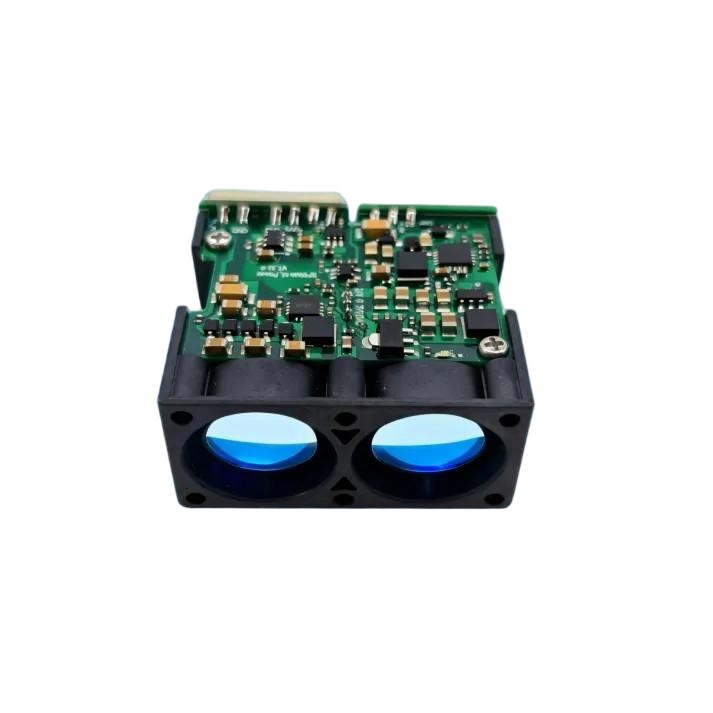
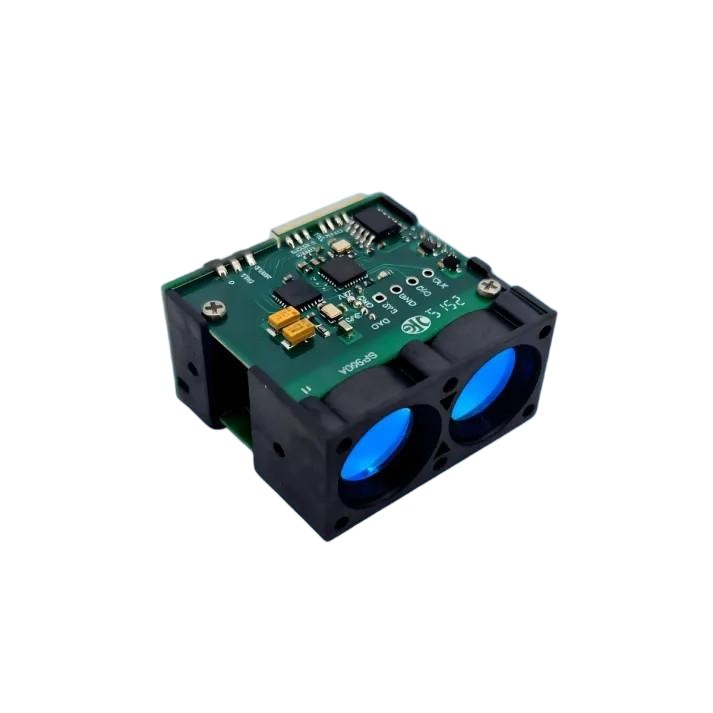


Compare High-Frequency Laser Distance Sensor Modules
How to Select a High-Frequency Laser Distance Sensor
FAQs
Can a 10kHz laser distance sensor maintain its maximum range at the highest update rate?
Maximum ranging distance and maximum measurement frequency are specified performance parameters. Their simultaneous achievement depends on the model and operating conditions. Refer to model-specific test data for confirmation.
What is the difference between adjustable and adaptive measurement frequency?
Adjustable-frequency models, such as the LRF50H, LRF100H, and LRF200H, support user-configurable measurement frequencies from 20Hz to 10kHz. Adaptive-frequency models, including the LRF300H, LRF600H, and LRF1500H, automatically switch between 1kHz and 50Hz according to reflected signal intensity.
Does the LRF50H include a visible aiming light?
es. The LRF50H includes a switchable coaxial 650nm visible red aiming light for alignment. Its 905nm ranging laser is classified as Class 1, while the visible aiming light is classified as Class 2. Refer to the product datasheet for safety precautions.
What is the minimum measurement distance of ERDI's high-frequency sensors?
The eight models in this series specify a minimum measurement distance of 0.05m (5cm). Measurement accuracy and maximum range vary by model and target conditions.
Which interfaces and power supplies are available for OEM integration?
The VB series offers low-voltage configurations, with LRF22VB specified at 3–3.6VDC and LRF50VB at 3.3–5VDC. The H-series models specify 9–36VDC. UART is available across the series, while I²C support varies by model. Refer to the individual product specifications for interface and wiring details.