1.1 Overview
-
Function of laser target designator
In the development of precision strike technology, laser target designators emerged as the times require. Now, it has been equipped with troops in large quantities, and its number is equivalent to that of laser range finders. The laser target designator has the following functions:
Indicate targets and provide guidance information for laser semi-active guided weapons;
Guidance for aircraft equipped with laser trackers;
Provide target data or optical path information for other weapons;
Implement target lighting for all-weather operations.
The laser target designator can be carried by an individual soldier on the ground (hand-held or supported by a tripod) and becomes a portable equipment. It can also be vehicle-mounted, airborne, or ship-mounted to improve its mobility, survivability, and battlefield adaptability.
-
Basic structure
The basic structure of the laser target indicator includes the laser, the transmitting system, the laser receiving system and the range finder, the target aiming system and the tracking mechanism, the self-checking autonomous system, the fixed structure, the optical axis stabilizing mechanism, etc. Figure 1 is its typical structure.
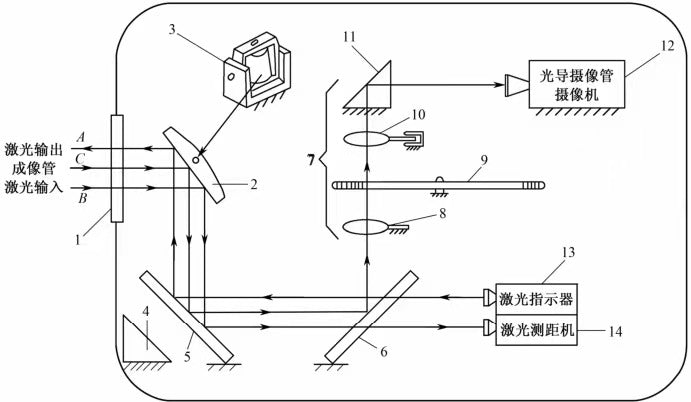
Figure 1 A target designator
1-window; 2-controllable stable reflector; 3-gyro; 4-corner prism; 5-adjustable reflector; 6-beam splitter; 7-optical system; 8, 10-lens; 9-neutral Density filter; 11-prism; 12-TV camera; 13-laser pointer transmitter; 14-laser range finder
In the target indicator, the optical image signal C of the target enters the system through the optical window 1, passes through the controllable stable reflector 2, the adjustable reflector 5, the beam splitter 6 and the imaging system 7, and is imaged on the television camera 12; operation The operator selects the target according to the image on the display, controls the rotation of the gyroscope 3 and the reflector 2, so that the tracking window on the display covers the target and keeps it in an automatic tracking state. After aiming at the target, the coded laser beam A is fired at the target. The laser light that reaches the target "illuminates" the target; part of the laser light returned from the target enters the laser ranging system in reverse direction to measure the target distance and provide guidance information.
The corner cube 4 in the system is set up for system self-test. When the gyro-stabilized reflector turns to the corner cube, the emitted laser returns along the original path, and an image coincident with the aiming point should appear on the TV camera, which indicates that the three optical axes of the laser transmitting, receiving system and aiming system are consistent. Otherwise, adjust the position of the tracking window on the TV screen to correct it. The TV aiming system has two fields of view: large and small. When searching for a target, use the large field of view system (Figure 5.1); while when tracking the target, it is better to use the small field of view system (at this time, the lens 10 is moved out of the optical path). Neutral filter 9 ensures good contrast in TV images.
After the three optical axes of the entire system are calibrated to be parallel to each other, aligning the visual sighting system to the target becomes the key to correctly pointing the laser beam. In order to ensure day and night operation and poor weather conditions, the visual sighting system should be equipped with systems such as low-light night vision devices and thermal imaging cameras in addition to ordinary visible light sights.
1.2 Laser and optical system
-
Laser
Most of the laser target designators currently equipped use Nd:YAG solid laser (Q-switched repetition frequency). Figure 5.2 shows a structure.
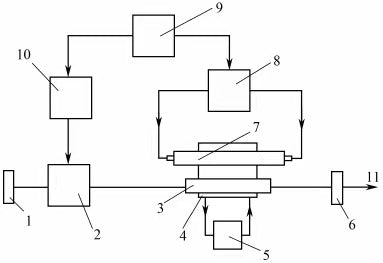
Figure 2 YAG Q-switched laser system
1-Total reflection mirror window; 2-Q switch; 3-YAG rod; 4-Pump cavity; 5-Cooler; 6-Partial reflection mirror; 7-Flash lamp; 8-Power supply; 9-Frequency control/encoder; 10-Delay; 11-Output beam
Module 9 in Figure 2 is a pulse repetition frequency control/encoder. On the one hand, it sends out a signal to ignite the pump lamp 7, and on the other hand, it gives a slightly delayed Q-switch signal through the delayer 10; the pulse interval is determined by the code in it. The device decides. In order for the laser target designator to provide a sufficiently high data rate, when dealing with fixed targets, the pulse repetition frequency should be 5p/s (5 pulses per second); while for moving targets, it should be above 10p/s . However, experiments show that when the repetition frequency is greater than 20p/s, the effect is no longer significantly improved, but the volume and mass of the laser system are greatly increased, so it is usually 10 to 20p/s. In this repetition frequency range, only pulse interval coding (PIM) technology is available. The idea is to use two or more pulses as a group, and the time intervals between the pulses in each group are different. This integrated circuit-implemented encoder has a dial indication. The user presses the dial to set the code, and the laser target indicator sends the coded laser beam to the target as required. This beam is diffusely reflected by the target surface and becomes an information carrier with the same encoding characteristics. There is a decoder (number indicated by the dial) at the own side's receiving end, and the same set of codes is installed by prior agreement (or temporary contact) during combat.
Obviously, one of the functions of "encoding" is to prevent external interference and reject false laser signals. In addition, it can also be adapted to the situation of multiple targets on the battlefield. When multiple targets appear, each indicator indicates its respective target according to a different code, and the seeker is "settled".
Electro-optical Q-switching technology is usually used in laser target designators. Electro-optical crystals (generally using lithium niobate or potassium dideuterium phosphate KDP) work at around 2000V or 4000V (corresponding to the λ/4 and λ/2 states respectively), and are combined with the corresponding polarizer (such as Glanouac prism) Form a Q switch.
The effective range of the laser target indicator is closely related to the laser power P emitted by the laser, and P can be calculated by the following formula:

In the formula, P is determined by the pulse energy E and pulse width τ, that is, P=E/τ; Ps is the power received by the receiving end; Tt is the transmittance of the laser transmitting system; Tr is the transmittance of the receiving system in question rate; σ is the atmospheric attenuation coefficient; Rd is the distance from the indicator to the target; RM is the distance from the receiving end in question (such as the seeker) to the target; ρt is the target reflectivity; θr is the target reflection angle; Ar is the receiving Aperture area.
The empirical data of the main parameters of the laser are as follows:
Wavelength λ=1.06μm;
Pulse energy E=50~300mJ (varies depending on the purpose of the indicator);
Pulse width τ=10~30ns;
Repetition frequency 10~20p/s (encodable);
Beam divergence angle δ=0.1~0.5mrad.
-
Optical system
From the perspective of the operational needs of the laser target indicator, it should include three sets of optical systems: a beam expansion collimation system for emitting laser beams, a receiving and converging system for ranging beams, and an imaging system for aiming at the target. In order to reduce the volume and quality of the entire system, the three often have a certain degree of "common optical path" design. At the same time, the "common optical path" can also reduce the offset errors of the three, which is beneficial to the stability of the system.
Figure 5.3 is the optical system of an airborne target indicator. Modules 4 and 6 in the figure form a Galileo telescope-type beam expansion collimation system, which is responsible for laser emission tasks. At the same time, module 4 also serves as a laser receiving objective lens and a television camera objective lens. The television camera 12 can change the field of view by switching the prisms 10 and 11 . The corner cube 13 and the lens 14 can complete the self-check of the three-axis parallelism.
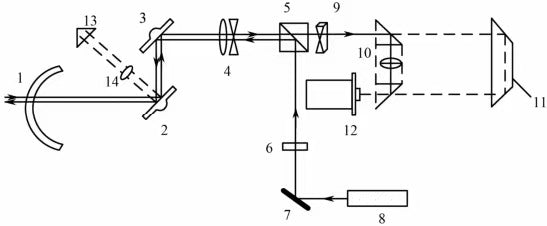 Figure 3 Airborne laser target designator
1-ball cover; 2-gimbal mirror; 3-gimbal/sight adjustment mirror; 4-objective lens; 5-beam splitter; 6-negative eyepiece; 7-reflector; 8-laser; 9. 14-Lens; 10-Wide field optical element; 11-Narrow field prism; 12-TV camera; 13-Corrector prism
1.3 Examples
-
"Pennies Paving the Road" Indicator
The "Pave Penny" is a small airborne laser designator used early by the U.S. Air Force. It can indicate and identify ground targets in all weather. It is mounted on the back seat of a Phantom aircraft and emits a laser to a target area and receives the echo. With the support of onboard electronic equipment, the scene illuminated by the laser is displayed on the monitor.
2.LANTIRN system
LANTIRN ("Blue Shield") is a newer generation airborne system in the United States. It is composed of the AN/AAQ-13 navigation pod and the AN/AAQ-14 targeting pod. It can be used for both nighttime low-altitude navigation and targeting. One of the most complete pod systems available.
1.4 Active measurement of target distance
The beam emitted by the laser rangefinder is reflected by the target and then returns to the rangefinder. By measuring the propagation time Δt of the light wave between AB and the propagation speed c of the light wave in the atmosphere, the distance is calculated according to the following formula:

According to the method of measuring time Δt, it is divided into pulse ranging method that directly measures time and phase ranging method that indirectly measures time. High-precision rangefinders generally use phase type.
The ranging principle of the phase laser rangefinder is: after the light emitted by the light source passes through the modulator, it becomes modulated light whose light intensity changes with the high-frequency signal. The distance is calculated by measuring the phase difference ϕ of the modulated light propagating back and forth over the distance to be measured. If the angular frequency of the modulated light is ω, and the phase delay generated by one round trip on the distance D to be measured is Φ, then the corresponding time t = Φ/ω, so the distance D can be expressed as
Write the phase delay as the sum of its two parts, that is
Φ=2π(N+ΔN)=2πN+ΔΦ (5-4)
According to equation (5-3), the corresponding distance

In the formula, N is the number of modulation wavelengths contained in the measuring line; ΔN is the fractional part of the wavelength contained in the measuring line; λ/2 is the length of the measuring ruler, also known as the "light ruler". At this point, the measurement of distance becomes the measurement of the number of wavelengths contained in the measuring line and the fractional part less than one wavelength.
In the phase distance meter, the phase meter can only measure the mantissa ΔN of the phase difference, but cannot measure the integral period number N, so it cannot measure distances larger than a light ruler. In order to expand the measuring range, a longer light ruler should be selected. In order to solve the contradiction between expanding the measuring range and ensuring accuracy, short-range rangefinders generally use two modulation frequencies, that is, two types of light scales. For example, a long light ruler (called a coarse ruler) f1=150kHz, λ1/2=1000m is used to expand the measuring range and measure 100m, 10m and 1m; a short light ruler (called a fine ruler) f2=15mHz, λ2/2 =10m, used to ensure accuracy, measuring 1m, 0.1m, 1 cm and 1mm.
Interference ranging is also a phase method ranging. This ranging method does not measure the distance by measuring the phase of the laser modulation signal, but by measuring the changes in the interference fringes of the laser light wave itself. In comparison, the ranging principle of lidar is much more complicated. In addition to timing method and interference method, there are also optical rotation method and gain modulation method.
The development trend of laser target designators is: (1) Combined with other systems to form a target indicating and tracking system with multiple functions; (2) The laser wavelength develops towards medium and long wavelength bands and is continuously adjustable; (3) Develop towards serialization, generalization and componentization.
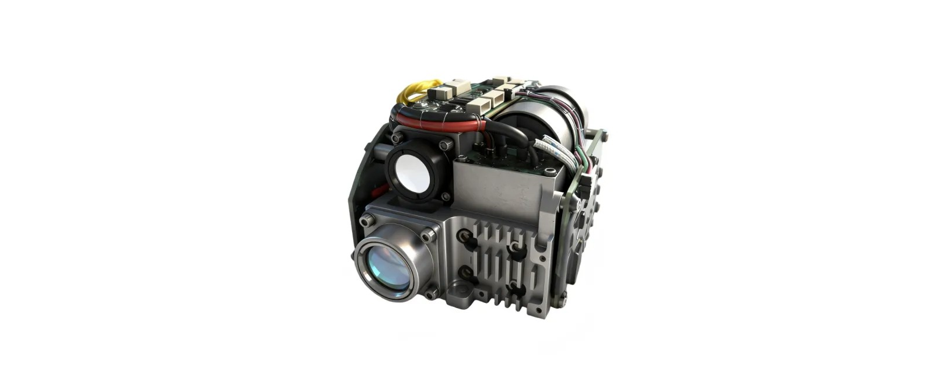
Based on the current market demand, ERDI TECH LTD has launched the compact and miniaturized Laser Target Designator. The product has stable performance and is widely used in pods, vehicles, airborne and other photoelectric countermeasures.
ERDI 1064nm Laser Target Designator Product Portfolio
ERDI offers a complete family of 1064nm laser target designator and laser rangefinder modules, ranging from ultra-lightweight UAV payloads to long-range surveillance and fire-control systems. The portfolio covers pulse energies from 20mJ to 160mJ, enabling customers to select the optimal solution based on platform size, target distance, and mission requirements.
|
Model |
Pulse Energy |
Divergence |
Weight |
Ranging Distance |
Designation Distance |
|---|---|---|---|---|---|
|
20mJ |
≤0.6mrad |
<290g |
5km |
2km |
|
|
25mJ |
≤0.5mrad |
<380g |
5km |
2km |
|
|
40mJ |
≤0.5mrad |
<420g |
5km |
3.5km |
|
|
40mJ |
≤0.4mrad |
<460g |
10km |
4km |
|
|
60mJ |
≤0.3mrad |
<680g |
12km |
6km |
|
|
80mJ |
≤0.3mrad |
<680g |
16km |
8km |
|
|
80mJ |
≤0.25mrad |
<850g |
20km |
10km |
|
|
100mJ |
≤0.15mrad |
<1500g |
20km |
15km |
|
|
50–70mJ / 80–100mJ / ≥120mJ |
≤0.15mrad |
<2kg |
>30km |
Long-range designation |
|
|
85mJ / 160mJ Switchable |
≤0.2mrad |
≤3.3kg |
30km |
Ultra-long-range designation |
LDR20K1 – Ultra-Lightweight UAV Laser Designator
The LDR20K1 is designed for small UAV gimbals, portable reconnaissance devices, and lightweight observation systems. Delivering 20mJ pulse energy in a package weighing less than 290g, it combines laser ranging up to 5km with target designation capability up to 2km. Its compact size and low SWaP profile make it an ideal choice for mini-UAV integration.
LDR25K1 – Enhanced Energy in a Compact Platform
The LDR25K1 provides increased pulse energy while maintaining a lightweight form factor. With 25mJ output energy, ≤0.5mrad beam divergence, and a weight below 380g, it offers improved designation performance for tactical UAVs, portable targeting systems, and compact EO payloads requiring higher optical efficiency.
LDR40K3 – Lightweight Tactical Designation Module
The LDR40K3 combines 40mJ pulse energy with a compact 420g package. Designed for airborne EO/IR gimbals and tactical surveillance platforms, it supports 5km laser ranging and target designation distances up to 3.5km. Its balance of size, weight, and performance makes it one of the most versatile solutions in the ERDI product family.
LDR40K1 – Longer-Range Multi-Mission Solution
Compared with the LDR40K3, the LDR40K1 offers significantly extended ranging capability. With 10km ranging performance and 4km target designation distance, it is suitable for medium-sized UAVs, border monitoring systems, and vehicle-mounted reconnaissance platforms where longer engagement distances are required.
LDR60K1 – Mid-Range Precision Target Designator
The LDR60K1 increases pulse energy to 60mJ while maintaining a compact weight below 680g. With laser ranging up to 12km and target designation capability reaching 6km, it is well suited for tactical ISR platforms, medium-altitude UAVs, and advanced surveillance systems.
LDR80K1 – Extended Range UAV Designator
The LDR80K1 is optimized for users requiring longer target designation distances without increasing payload size. Delivering 80mJ pulse energy and up to 16km ranging capability, it supports accurate target designation at distances up to 8km, making it suitable for high-performance UAV and airborne targeting applications.
LDR80K2 – Long-Range High-Precision Designator
The LDR80K2 enhances beam quality through a narrower ≤0.25mrad divergence angle. Combined with 20km ranging performance and 10km designation capability, it provides improved energy concentration on distant targets and is ideal for long-range reconnaissance and precision guidance missions.
LDR100K1 – High-Energy Long-Range Designator
The LDR100K1 represents a significant step toward fire-control-grade performance. With 100mJ pulse energy, extremely low beam divergence of ≤0.15mrad, and target designation distances reaching 15km, it is designed for large UAVs, vehicle-mounted targeting systems, and advanced EO/IR surveillance platforms.
LDR120K1 – Modular Long-Range Designation Platform
The LDR120K1 is available in multiple energy configurations ranging from 50mJ to over 120mJ. Featuring ≤0.15mrad beam divergence and a weight below 2kg, it supports target detection and ranging beyond 30km. This platform is designed for long-range ISR missions, strategic surveillance systems, and high-performance target designation applications.
LDR160 – Ultra-Long-Range Dual-Energy Designator
The LDR160 is ERDI's flagship long-range target designation solution. It features switchable 85mJ and 160mJ pulse energy modes, enabling operators to optimize performance according to mission requirements. With ranging capability from 0.2m to 30km, ≤0.2mrad beam divergence, and a maximum weight of 3.3kg, the LDR160 is intended for large EO pods, airborne surveillance platforms, coastal monitoring systems, and long-range precision engagement missions.
FAQ
What wavelength is commonly used in laser target designators?
Most military laser target designators operate at 1064nm because of its high energy output and compatibility with laser-guided munitions.
Can a laser target designator also measure distance?
Yes. Modern systems often integrate both laser ranging and target designation functions into a single module.
What is the difference between a laser rangefinder and a laser target designator?
A laser rangefinder measures distance, while a laser target designator provides coded laser illumination for guidance systems.
What laser designator is suitable for UAV integration?
Compact modules such as the ERDI LDR20K1 and LDR40K3 are designed specifically for UAV and gimbal integration.
Related Articles
Contact ERDI TECH
If you need technical information, specification sheets, prototype tests or customized solutions for the 1064nm laser target designator, please contact the ERDI TECH engineering team.
📧 yeva@erdimail.com (responses within 24 hours)
We will provide the most suitable laser technology solutions for your platform.