I. The Era Value of Precision-Guided Munitions and Laser Ranging & Designation Technology
As battlefield environments grow increasingly complex—with urban warfare, asymmetric threats, and real-time tactical decisions—precision has become the cornerstone of military effectiveness. Precision-guided munitions (PGMs) allow forces to neutralize high-value targets while minimizing collateral damage and civilian casualties. This capability not only enhances combat efficiency but also aligns with evolving rules of engagement and public scrutiny over military actions.
Lasers play a central role in enabling this precision. Thanks to their high energy density, directionality, and near-instantaneous transmission speed, laser systems have become essential in distance measurement, target designation, and guided weapon operations.
The integration of laser rangefinders and laser designators forms the technological foundation for PGMs—providing “point-and-strike” capabilities that deliver accuracy, speed, and strategic impact on the battlefield.
II. How 1064nm Lasers Enable Precision-Guided Munitions
Target Designation
Laser Marking
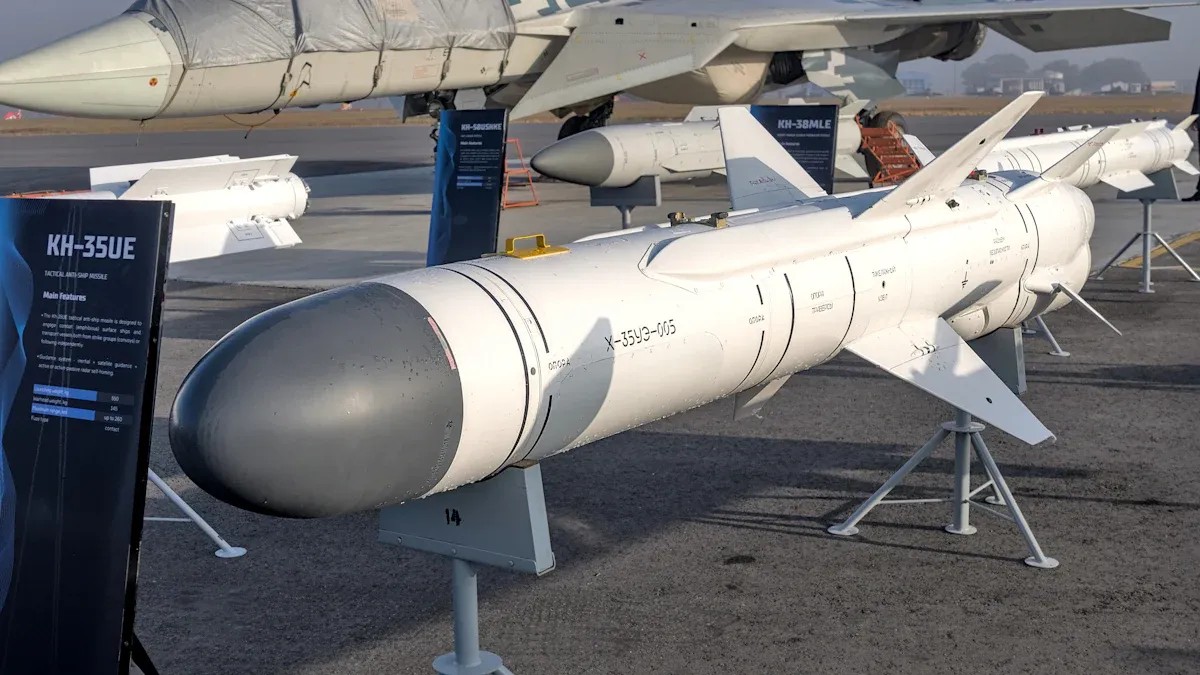
Military teams use a 1064nm laser Precision-guided munition to "paint" or mark a target with an invisible beam. This process involves an external laser designator, which can be handheld, vehicle-mounted, or airborne. The designator emits a focused 1064nm laser pulse directly onto the intended target. The laser spot remains invisible to the naked eye, ensuring stealth and reducing the risk of enemy detection. By marking the target with this specific wavelength, operators guarantee that only compatible munitions will recognize and engage the correct point.
Seeker Detection
The seeker head inside the munition plays a critical role in the targeting process. It detects the 1064nm laser radiation reflected from the designated target. Advanced silicon quadrant detectors, sensitive to short-wave infrared, pick up these reflections. The seeker analyzes the angular error between its current flight path and the laser spot, then generates guidance commands to correct its trajectory. To avoid confusion from decoys or countermeasures, the seeker matches the pulse repetition frequency (PRF) code of the laser designator. This coding ensures the munition locks onto the genuine target, even in environments with multiple laser spots or attempts to mislead the system. The seeker can withstand extreme conditions, including high G-forces and temperature swings, maintaining reliable performance in combat.
Tip: The use of coded pulses at 1064nm allows multiple targets to be engaged simultaneously, each with a unique code, reducing the risk of friendly fire or misidentification.
Guidance Process
Homing Mechanism
Once the seeker locks onto the reflected 1064nm laser signal, the munition begins its homing phase. The guidance system continuously adjusts the munition's flight path, steering it toward the laser spot. This process relies on real-time feedback from the seeker, which tracks the position of the laser reflection and corrects any deviation. The high power and precision of the 1064nm laser ensure a strong signal-to-noise ratio, even at long distances or in challenging environments.
Impact and Detonation
As the 1064nm laser Precision-guided munition approaches the target, the seeker maintains lock on the laser spot until the final moments. The munition's onboard systems calculate the optimal point of impact, ensuring maximum effectiveness and minimal collateral damage. Upon reaching the designated spot, the munition detonates with pinpoint accuracy. This level of precision allows military forces to neutralize threats while protecting nearby civilians and infrastructure.
| Operational Scenario | Description and Technical Details |
|---|---|
| Long-distance targeting (up to 15 km) | 1064nm pulsed lasers enable precise illumination and engagement over extended ranges. |
| Laser 'painting' for multiple targets | Unique PRF codes allow simultaneous engagement of several targets, each marked by a different laser code. |
| Operation in complex environments | Integration with IR systems enables targeting through smoke, fog, or haze, maintaining accuracy in adverse conditions. |
| Compact, robust system design | Lightweight, multispectral optics support deployment on various platforms, including drones and vehicles. |
| High power output for clear designation | Strong laser pulses improve detection and guidance, even in cluttered or contested environments. |
A 1064nm laser Precision-guided munition delivers unmatched accuracy, flexibility, and reliability in modern combat. Forces that adopt this technology gain a decisive edge, ensuring every strike counts.
III. Product Applications: ERDI’s 1064nm Laser Rangefinder & Designator Systems
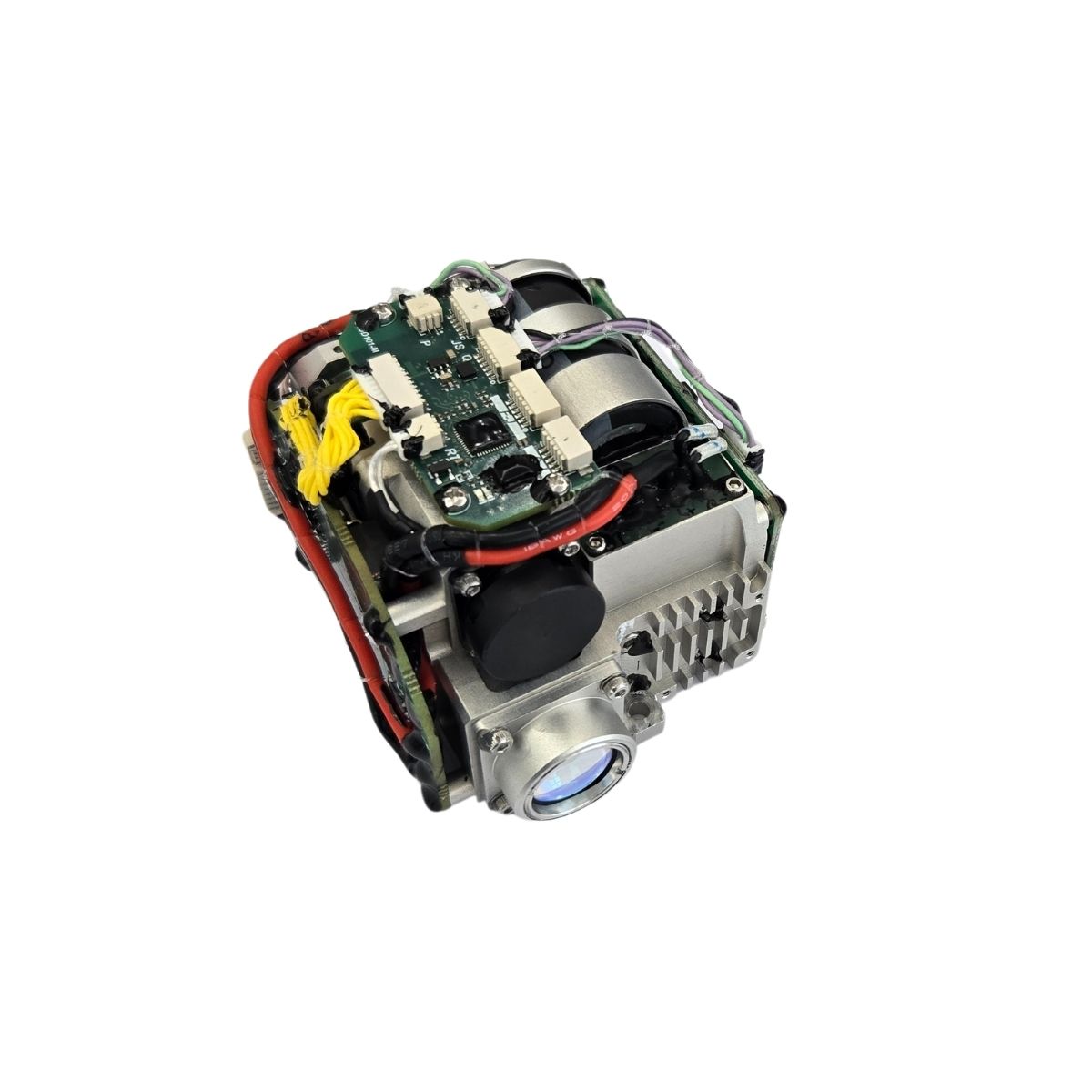
The Erdi 1064nm Laser Rangefinder stands out as a top choice for military targeting. Its compact design and advanced features deliver reliable performance in the field. Soldiers can depend on this device for fast and accurate distance measurements, even in harsh environments. The rangefinder’s lightweight build makes it easy to carry and mount on various platforms. Its high measurement accuracy ensures that every shot counts.
| Feature Category | Key Specifications and Features |
|---|---|
| Model | LDR20K1-03 |
| Laser Wavelength | 1064 nm (1.064 μm) |
| Pulse Energy | ≥ 20 mJ |
| Measurement Accuracy | ±1 meter |
| Weight | ≤ 290 grams |
| Operating Temperature Range | -40°C to +55°C |
| Ranging Frequency | 1 to 20 Hz |
| Maximum Measuring Distance | ≥ 5000 meters (visibility 13.5 km, target reflectivity 0.2, target size 2.3 m × 4.6 m) |
| Minimum Measuring Distance | ≤ 300 meters |
| Ranging Success Rate | 98% |
| Beam Divergence Angle | ≤ 0.6 mrad |
| Pulse Width | ≥ 15 ns ± 5 ns |
| Laser Energy Stability | Fluctuation within 10% during a target indication cycle |
| Control Functions | Serial interface commands, illumination mode, encoding, and more |
| Laser Coding | MIL-STD-810G compliant, user-expandable coding, precise frequency code |
| Environmental Adaptability | Vibration and shock resistant, suitable for military operational conditions |
| Power Requirements | 20V-28V operating voltage, average power ≤ 55W, peak power ≤ 100W |
| Dimensions | ≤ 92mm × 67mm × 53mm |
| Operating Modes | Ranging and target indication |
| Laser Target Designation | Short-cycle and long-period modes for flexible operation |
The Erdi rangefinder’s robust construction and advanced coding features help military teams achieve mission success with confidence.
ERDI Laser Designator
The Erdi Laser Designator empowers forces to mark and track targets with unmatched precision. This device emits a near-infrared laser beam tuned for compatibility with laser-guided bombs and missiles. Its closed-loop targeting system ensures that the weapon’s seeker detects the reflected signal and guides the munition directly to the target. Operators benefit from stabilization and tracking components, such as gimbals and gyro stabilization, which keep the laser locked on moving targets and compensate for environmental disturbances.
- The designator integrates a laser rangefinder and control interfaces for seamless connection with fire control systems.
- Its wavelength selection matches the sensors in guided weapons, boosting targeting accuracy and real-time illumination.
- The system’s components work together to provide continuous, precise guidance signals, ensuring the munition stays on course.
With the Erdi Laser Designator, military teams gain a decisive edge in dynamic combat scenarios.
Integration in Munitions
Modern munitions platforms achieve new levels of effectiveness by integrating 1064nm laser systems. Inertially stabilized platforms and advanced tracking sensors maintain precise line-of-sight, even on moving vehicles, aircraft, or ships. High-precision beam control systems deliver pointing accuracies in the microradian range, which is critical for effective targeting. Compact, efficient solid-state lasers with adaptive optics compensate for atmospheric disturbances, ensuring reliable performance in any environment.
Power and thermal management systems support sustained high-power operation, allowing laser weapons to engage targets accurately while on the move. Solid-state lasers, such as ceramic Nd:YAG models, offer ruggedness and compactness, making them ideal for integration into military vehicles and aircraft. These systems provide speed-of-light engagement, highly precise targeting, and low collateral damage. Their versatility across ground, naval, and aerial platforms gives military forces the flexibility to respond to any threat.
Integrating advanced 1064nm laser technology into munitions platforms increases mission success rates, reduces operational costs, and enhances operational flexibility.
IV. Conclusion: A Strategic Asset in Modern Warfare
As a key enabler of precision-guided strike capabilities, the 1064nm laser rangefinder-designator system offers unrivaled performance in terms of speed, accuracy, and reliability. Its integration into munitions guidance infrastructure represents a decisive force multiplier on the modern battlefield.
Looking ahead, the combination of laser systems with emerging technologies—including artificial intelligence (AI), multi-sensor fusion, and intelligent perception algorithms—will further improve autonomous targeting, threat identification, and mission execution. These innovations will continue to reshape the future of smart weapons and military operations.
As the global defense landscape evolves, the continued optimization of 1064nm laser rangefinder-designator systems will be central to shaping the next generation of precision strike capabilities. ERDI remains committed to advancing this technology, contributing to the modernization of both China's and the world’s defense forces.
Want to learn more about how ERDI’s 1064nm laser rangefinder and designator solutions can improve your defense system’s accuracy?
👉 Contact us or visit our product page: https://erditechs.com
Frequently Asked Questions (FAQ)
Q1: Why is 1064nm the preferred wavelength for military laser designators?
A: 1064nm is emitted by Nd:YAG lasers and offers high beam quality, excellent atmospheric transmission, and invisibility to the human eye. This makes it ideal for covert target designation and long-range guidance in precision munitions.
Q2: What is PRF coding, and why is it important?
A: PRF (Pulse Repetition Frequency) coding assigns a unique pulse pattern to each laser beam. This ensures that only the intended munition locks onto the correct target, avoiding interference and preventing friendly fire.
Q3: How accurate are 1064nm laser rangefinder-designator systems?
A: Most systems, including ERDI's integrated modules, offer ranging accuracy within ±1 meter, even at distances exceeding 10 km—ensuring effective engagement of high-value or moving targets.
Q4: What platforms can ERDI’s 1064nm laser systems be integrated into?
A: ERDI’s laser rangefinder-designator units are designed for versatile deployment on UAVs, ground vehicles, targeting pods, handheld systems, and marine platforms.
Q5: Are 1064nm laser systems safe for operators?
A: Yes. Most 1064nm systems are engineered to meet IEC 60825-1 Class 1 eye safety standards, ensuring user safety while maintaining performance in the field.
Q6: Can 1064nm laser systems operate in poor weather or obscured environments?
A: Yes. Near-infrared 1064nm lasers penetrate dust, haze, smoke, and light fog better than visible lasers, and can also be paired with thermal imagers or IR sensors to maintain accurate designation.