

1064nm Laser Designator & Rangefinder Module - 120mJ
MOQ
After-Sales Support
Choose ERDI modules with confidence.
OEM/ODM Capabilities
Support Global Delivery
30-day TrialTake


PRODUCT DESCRIPTON
The ERDI LASER LDR120K1 is a compact 1064 nm laser designator and rangefinder module designed for long-range target acquisition, precision ranging, and coded laser illumination. The system supports multiple designation modes, online coding, and high-energy output up to 120 mJ, making it suitable for UAVs, EO/IR pods, and fire control systems operating in harsh environments.
Key Advantage
-
Long-range performance: laser ranging up to 30 km on large targets
-
High precision: ranging accuracy ±1 m with ≥98% valid measurement rate
-
Flexible designation: supports short-cycle, long-cycle, and emergency illumination modes
-
Coded laser output: built-in fixed codes with online coding support
-
Rugged design: compact ≤2 kg and compliant with MIL-STD-810G
TECHNICAL PARAMETERS
|
Functional Characteristics |
|
|
Provides laser ranging capability |
|
|
Supports long-cycle laser designator, short-cycle laser designator, and emergency laser designator modes. |
|
|
Includes built-in fixed frequency codes and supports online coding |
|
|
Supports receiver detector lockout via command control; the receiver is locked by default at power-on. |
|
|
Provides product temperature reporting. |
|
|
Supports both internal trigger and external trigger operating modes. |
|
|
Supports querying the laser emission count (cumulative count). |
|
|
Provides energy adjustment capability for product maintenance. |
|
|
Performance Parameters |
|
|
Operating wavelength |
1064 nm ± 3 nm |
|
Energy (minimum) |
≥ 120 mJ |
|
Energy levels |
50 mJ, 80 mJ, 120 mJ |
|
Energy ranges per level |
l 50–70 mJ l 80–100 mJ l ≥ 120 mJ |
|
Energy stability |
≤ ±10% per cycle (calculated after 2 s of laser designator) |
|
Effective range (large target) Laser ranging: |
a) ≥ 30 km (conditions: visibility ≥ 45 km, target reflectivity 0.2, relative humidity ≤ 80%) |
|
Ranging accuracy |
± 1 m |
|
Repetition rate |
Laser ranging: 1 Hz, 5 Hz laser designator: 20 Hz |
|
Valid measurement rate |
≥ 98% |
|
Pulse width |
15 ns ± 5 ns |
|
Beam divergence |
≤ 0.15 mrad |
|
Optical axis parallelism |
Parallelism between mounting datum plane and optical axis ≤ 0.3 mrad |
|
Operating modes |
a) Laser ranging: continuous operation ≥ 10 min, rest 5 min |
|
Laser designator coding |
a) 16 coding patterns |
|
Weight Requirements |
|
|
Total unit weight |
≤ 2 kg |
|
Weight consistency |
≤ 50 g |
|
Structural Requirements |
|
|
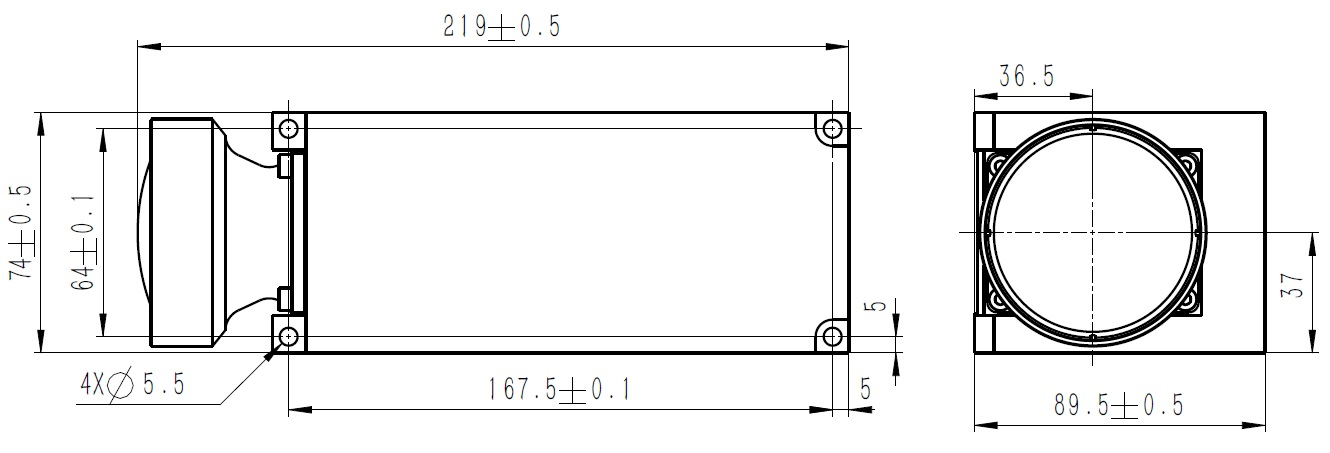
Overall dimensions |
≤ 75 mm (W) × 90 mm (H) × 220 mm (L) |
|
3D digital model requirements |
The external model shall be complete and comprehensive, including details such as screws, cable routing, and mating connectors. |
|
Load cable routing shall be included in the model design to avoid interference with the system. |
|
|
Electrical Interface |
|
|
DC input |
18 V–32 V, typical supply 28 V |
|
Average power consumption |
≤ 120 W @ 28 V |
|
Peak power consumption |
≤ 200 W @ 28 V |
|
Power-on inrush current |
≤ 5 A @ 28 V |
|
Digital ground, power ground, and mechanical housing shall be electrically isolated. |
|
|
Environmental Adaptability Requirements |
|
|
Operating Temperature |
−40 °C to +60 °C |
|
−40 °C to +60 °C |
−45 °C to +65 °C |
|
Vibration |
|
|
Equipment vibration testing shall be conducted in accordance with MIL-STD-810G, Laboratory Environmental Test Methods for Military Equipment. |
|
|
Vibration conditions |
8.2 Hz – 86.4 Hz: 0.1 g²/Hz 156.4 Hz – 172.8 Hz: 0.025 g²/Hz 234.6 Hz – 259.2 Hz: 0.006 g²/Hz Other frequency points within 15 Hz – 2000 Hz: acceleration spectral density of 0.004 g²/Hz Vibration shall be applied along the X, Y, and Z axes, 15 minutes per axis. |
|
Shock |
|
|
Vertical axis |
≥ 20 g |
|
Lateral and longitudinal axes |
≥ 15 g |
|
Pulse duration |
11 ms |
|
3 axes, 2 directions per axis, 18 shocks in total |
|
|
Shock testing shall be conducted in accordance with MIL-STD-810G, Laboratory Environmental Test Methods for Military Equipment. |
|
DIMENSION(mm)
INTERFACE
A standard isolated RS-422 communication interface is provided.
Interface chip model: SMUM2682MP.
A standard isolated CAN 2.0B bus communication interface is provided, with a transmission rate greater than 1 Mbps.
CAN transceiver chip model: SMUM3053MP or ADM3053.
No bus termination resistor is included.
Firmware upgrade can be implemented via the CAN interface (CAN protocol to be defined).
Firmware upgrade can also be implemented via the serial interface.
Laser target designator connector: Receptacle J106-4H14ZKSP-02
Electro-optical platform mating plug: Plug J106-4H14TJSL-01
Connector manufacturer: Guihang
Table 1 — Connector Pin Assignment Description
|
Pin |
Definition |
Description |
|
A1 |
+28 V Input Power |
|
|
A2 |
+28 V Input Ground |
|
|
4 |
Designator Serial TX+ (from designator to EO platform +) |
|
|
11 |
Designator Serial RX− (from EO platform to designator −) |
|
|
9 |
Designator Serial TX− (from designator to EO platform −) |
|
|
2 |
Designator Serial RX+ (from EO platform to designator +) |
|
|
8 |
Designator Serial Ground |
|
|
14 |
External Sync RS-422 RX+ |
RS-422 level input |
|
12 |
External Sync RS-422 RX− |
|
|
13 |
External Sync RS-422 GND |
|
|
5 |
CAN H |
Isolated CAN 2.0B, 1 Mbps, no termination resistor installed |
|
6 |
CAN L |
|
|
7 |
CAN GND |
|
|
B1 |
Laser Designation Sync Signal Output TX+ |
RS-422 level output, active low, pulse width 10 μs |
|
B2 |
Laser Designation Sync Signal Output TX− |
|
|
3 |
Laser Designation Sync Signal Output GND |
Information Download
-
PRODUCT DESCRIPTON
-
TECHNICAL PARAMETERS
-
DIMENSION(mm)
-
INTERFACE
-
Information Download
The ERDI LASER LDR120K1 is a compact 1064 nm laser designator and rangefinder module designed for long-range target acquisition, precision ranging, and coded laser illumination. The system supports multiple designation modes, online coding, and high-energy output up to 120 mJ, making it suitable for UAVs, EO/IR pods, and fire control systems operating in harsh environments.
Key Advantage
-
Long-range performance: laser ranging up to 30 km on large targets
-
High precision: ranging accuracy ±1 m with ≥98% valid measurement rate
-
Flexible designation: supports short-cycle, long-cycle, and emergency illumination modes
-
Coded laser output: built-in fixed codes with online coding support
-
Rugged design: compact ≤2 kg and compliant with MIL-STD-810G
|
Functional Characteristics |
|
|
Provides laser ranging capability |
|
|
Supports long-cycle laser designator, short-cycle laser designator, and emergency laser designator modes. |
|
|
Includes built-in fixed frequency codes and supports online coding |
|
|
Supports receiver detector lockout via command control; the receiver is locked by default at power-on. |
|
|
Provides product temperature reporting. |
|
|
Supports both internal trigger and external trigger operating modes. |
|
|
Supports querying the laser emission count (cumulative count). |
|
|
Provides energy adjustment capability for product maintenance. |
|
|
Performance Parameters |
|
|
Operating wavelength |
1064 nm ± 3 nm |
|
Energy (minimum) |
≥ 120 mJ |
|
Energy levels |
50 mJ, 80 mJ, 120 mJ |
|
Energy ranges per level |
l 50–70 mJ l 80–100 mJ l ≥ 120 mJ |
|
Energy stability |
≤ ±10% per cycle (calculated after 2 s of laser designator) |
|
Effective range (large target) Laser ranging: |
a) ≥ 30 km (conditions: visibility ≥ 45 km, target reflectivity 0.2, relative humidity ≤ 80%) |
|
Ranging accuracy |
± 1 m |
|
Repetition rate |
Laser ranging: 1 Hz, 5 Hz laser designator: 20 Hz |
|
Valid measurement rate |
≥ 98% |
|
Pulse width |
15 ns ± 5 ns |
|
Beam divergence |
≤ 0.15 mrad |
|
Optical axis parallelism |
Parallelism between mounting datum plane and optical axis ≤ 0.3 mrad |
|
Operating modes |
a) Laser ranging: continuous operation ≥ 10 min, rest 5 min |
|
Laser designator coding |
a) 16 coding patterns |
|
Weight Requirements |
|
|
Total unit weight |
≤ 2 kg |
|
Weight consistency |
≤ 50 g |
|
Structural Requirements |
|
|
Overall dimensions |
≤ 75 mm (W) × 90 mm (H) × 220 mm (L) |
|
3D digital model requirements |
The external model shall be complete and comprehensive, including details such as screws, cable routing, and mating connectors. |
|
Load cable routing shall be included in the model design to avoid interference with the system. |
|
|
Electrical Interface |
|
|
DC input |
18 V–32 V, typical supply 28 V |
|
Average power consumption |
≤ 120 W @ 28 V |
|
Peak power consumption |
≤ 200 W @ 28 V |
|
Power-on inrush current |
≤ 5 A @ 28 V |
|
Digital ground, power ground, and mechanical housing shall be electrically isolated. |
|
|
Environmental Adaptability Requirements |
|
|
Operating Temperature |
−40 °C to +60 °C |
|
−40 °C to +60 °C |
−45 °C to +65 °C |
|
Vibration |
|
|
Equipment vibration testing shall be conducted in accordance with MIL-STD-810G, Laboratory Environmental Test Methods for Military Equipment. |
|
|
Vibration conditions |
8.2 Hz – 86.4 Hz: 0.1 g²/Hz 156.4 Hz – 172.8 Hz: 0.025 g²/Hz 234.6 Hz – 259.2 Hz: 0.006 g²/Hz Other frequency points within 15 Hz – 2000 Hz: acceleration spectral density of 0.004 g²/Hz Vibration shall be applied along the X, Y, and Z axes, 15 minutes per axis. |
|
Shock |
|
|
Vertical axis |
≥ 20 g |
|
Lateral and longitudinal axes |
≥ 15 g |
|
Pulse duration |
11 ms |
|
3 axes, 2 directions per axis, 18 shocks in total |
|
|
Shock testing shall be conducted in accordance with MIL-STD-810G, Laboratory Environmental Test Methods for Military Equipment. |
|
A standard isolated RS-422 communication interface is provided.
Interface chip model: SMUM2682MP.
A standard isolated CAN 2.0B bus communication interface is provided, with a transmission rate greater than 1 Mbps.
CAN transceiver chip model: SMUM3053MP or ADM3053.
No bus termination resistor is included.
Firmware upgrade can be implemented via the CAN interface (CAN protocol to be defined).
Firmware upgrade can also be implemented via the serial interface.
Laser target designator connector: Receptacle J106-4H14ZKSP-02
Electro-optical platform mating plug: Plug J106-4H14TJSL-01
Connector manufacturer: Guihang
Table 1 — Connector Pin Assignment Description
|
Pin |
Definition |
Description |
|
A1 |
+28 V Input Power |
|
|
A2 |
+28 V Input Ground |
|
|
4 |
Designator Serial TX+ (from designator to EO platform +) |
|
|
11 |
Designator Serial RX− (from EO platform to designator −) |
|
|
9 |
Designator Serial TX− (from designator to EO platform −) |
|
|
2 |
Designator Serial RX+ (from EO platform to designator +) |
|
|
8 |
Designator Serial Ground |
|
|
14 |
External Sync RS-422 RX+ |
RS-422 level input |
|
12 |
External Sync RS-422 RX− |
|
|
13 |
External Sync RS-422 GND |
|
|
5 |
CAN H |
Isolated CAN 2.0B, 1 Mbps, no termination resistor installed |
|
6 |
CAN L |
|
|
7 |
CAN GND |
|
|
B1 |
Laser Designation Sync Signal Output TX+ |
RS-422 level output, active low, pulse width 10 μs |
|
B2 |
Laser Designation Sync Signal Output TX− |
|
|
3 |
Laser Designation Sync Signal Output GND |