
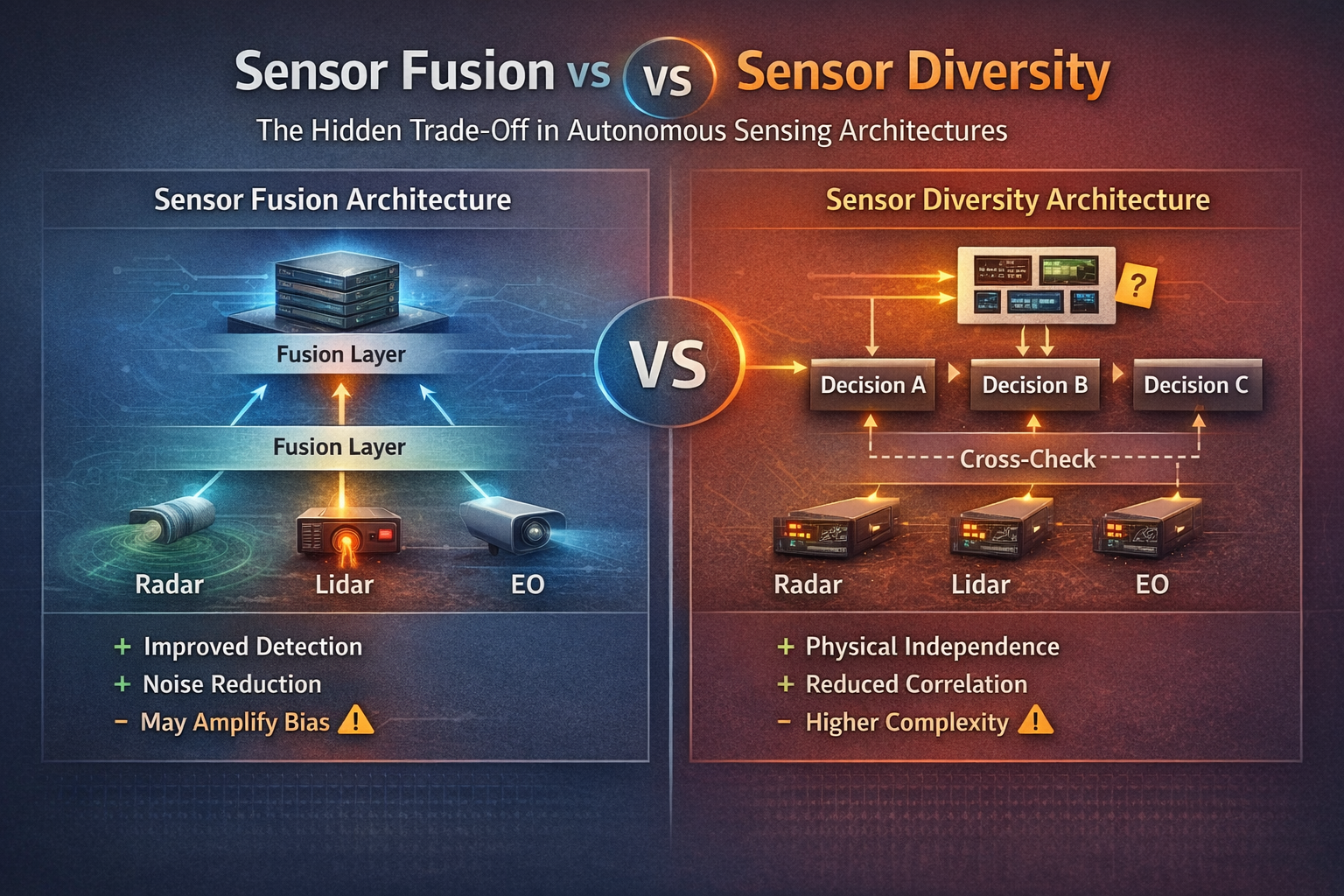
Введение
Современные автономные системы сенсорного восприятия в значительной степени полагаются на слияние датчиков. Объединяя данные из нескольких источников — таких как радар, лидар, электрооптические камеры и модули лазерного дальномера — алгоритмы слияния стремятся уменьшить шум, повысить уверенность в обнаружении и улучшить ситуационную осведомленность. Большее количество датчиков и слияние теоретически должны улучшить надежность восприятия. На практике надежность зависит не только от того, как датчики сливаются, но и от того, насколько они остаются независимыми. Если архитектуры слияния непреднамеренно вводят общую обработку, общие пороги или тесно связанные временные зависимости, несколько датчиков могут начать вести себя как одна коррелированная система, а не как независимые источники доказательств. Понимание баланса между слиянием датчиков и разнообразием датчиков имеет решающее значение для проектирования архитектур восприятия, которые остаются стабильными в условиях реального операционного стресса.
1. Обещание слияния датчиков
Слияние датчиков изначально было введено для устранения ограничений отдельных модальностей восприятия. Каждый тип датчика имеет свои ограничения:
-
Радар хорошо работает на дальнем расстоянии, но может испытывать трудности с классификацией мелких объектов.
-
Оптические датчики обеспечивают высокую пространственную детализацию, но чувствительны к условиям освещения.
-
Лазерный дальномер обеспечивает точные измерения расстояния, но может быть подвержен атмосферному рассеиванию.
Алгоритмы слияния пытаются объединить эти взаимодополняющие сильные стороны. При эффективном проектировании системы слияния могут:
-
уменьшить ложные срабатывания за счет перекрестной проверки датчиков
-
улучшить непрерывность отслеживания в условиях разрывов восприятия
-
увеличить уверенность в обнаружении за счет агрегации доказательств
В контролируемых условиях слияние часто приводит к значительным улучшениям производительности по сравнению с системами с одним датчиком. Но преимущества надежности слияния сильно зависят от того, как архитектура обрабатывает корреляцию между входами датчиков. Например, на платформах наблюдения БПЛА радар и электрооптические датчики могут казаться взаимодополняющими во время тестирования. Но когда оба канала зависят от одних и тех же предположений о фильтрации окружающей среды на уровне слияния, сильные помехи или атмосферные нарушения могут одновременно ухудшить оба вывода.
2. Когда слияние вводит коррелированные решения
Хотя слияние датчиков агрегирует информацию, оно также может непреднамеренно создавать коррелированное поведение между каналами восприятия. Несколько архитектурных механизмов способствуют этому эффекту.
Централизованный движок слияния может применять одинаковые пороги решений ко всем входящим потокам данных.
Общие предварительные процессы могут нормализовать сигналы схожими способами между датчиками.
Общая синхронизация времени может выравнивать ошибки измерений, которые в противном случае оставались бы независимыми.
В этих условиях датчики, которые изначально были независимыми, начинают производить структурно коррелированные выходные данные. Вместо того чтобы действовать как несколько источников доказательств, они становятся несколькими входами, питающими единую логику принятия решений. Результат тонок, но важен: согласие между датчиками может больше не указывать на независимое подтверждение. Это может просто отражать общий обработочный уклон. В рутинной работе эта корреляция часто остается невидимой. Она, как правило, проявляется только в условиях стресса, когда внешние помехи взаимодействуют с общими предположениями обработки.
3. Разнообразие датчиков как стратегия надежности
На практике достичь идеальной независимости редко возможно. Стоимость, ограничения по мощности и задержка обработки часто требуют частичной интеграции между каналами восприятия. Чтобы смягчить корреляцию, архитекторы систем все чаще подчеркивают разнообразие датчиков, а не простую избыточность. Разнообразие вводит различия между путями восприятия, которые уменьшают вероятность общих режимов отказа.
Эти различия могут проявляться в нескольких измерениях.
- Физическое разнообразие включает использование датчиков на основе различных принципов восприятия, таких как радар, лидар и электрооптическая визуализация.
- Спектральное разнообразие разделяет каналы восприятия по различным диапазонам длин волн, уменьшая чувствительность к одним и тем же внешним помехам.
- Алгоритмическое разнообразие вводит вариации в методах обработки, предотвращая идентичный уклон классификации между датчиками.
- Темпоральное разнообразие гарантирует, что измерения не идеально синхронизированы, позволяя независимые окна наблюдения.
Цель разнообразия не просто увеличить количество датчиков, а уменьшить вероятность того, что несколько датчиков выйдут из строя одинаковым образом в одно и то же время.
4. Балансировка слияния и независимости
Совершенно независимые пути восприятия редко практичны. Автономные системы все еще требуют слоев слияния для интеграции информации и поддержки согласованного принятия решений. Следовательно, задача заключается не в выборе между слиянием и разнообразием, а в балансировке обоих.
Многие современные архитектуры решают эту проблему с помощью иерархических или поэтапных моделей слияния.
- Ранние этапы обработки остаются децентрализованными, позволяя датчикам независимо интерпретировать данные.
- Промежуточные слои слияния объединяют доказательства, сохраняя метрики уверенности от каждого источника.
- Финальные слои принятия решений оценивают согласие между датчиками, оставаясь чувствительными к сигналам несогласия.
Эта структура позволяет системам извлекать выгоду из слияния, сохраняя при этом достаточную независимость для обнаружения аномалий или коррелированного уклона. В реальных развертываниях инженеры часто обнаруживают, что сохранение частичной независимости более ценно, чем максимизация немедленной точности слияния.
5. Проектирование с учетом осведомленности о несогласии
Традиционные архитектуры восприятия часто рассматривают согласие датчиков как основной индикатор уверенности. Но в разнообразных системах восприятия несогласие также может быть информативным. Если один датчик сообщает о сильном обнаружении, в то время как другой — нет, несоответствие может указывать на внешние помехи, алгоритмический уклон или деградацию датчика. Системы, которые отслеживают паттерны несогласия, могут, следовательно, обнаруживать тонкие режимы отказа раньше.
Проектирование с учетом осведомленности о несогласии включает:
-
сохранение метрик уверенности, специфичных для датчиков
-
избежание чрезмерной нормализации во время предварительной обработки
-
поддержание видимости индивидуальных выходов датчиков даже после слияния
Этот подход помогает предотвратить маскировку архитектур слияния тех сигналов, которые необходимы для выявления возникающей нестабильности системы.
Заключение
Слияние датчиков играет решающую роль в современных автономных системах восприятия, обеспечивая более богатое восприятие и улучшенную ситуационную осведомленность. Тем не менее, само по себе слияние не гарантирует надежности. Когда каналы восприятия становятся чрезмерно связанными через общую обработочную логику или централизованные пороги решений, несколько датчиков могут производить коррелированные выходные данные, которые кажутся независимыми, но таковыми не являются. Разнообразие датчиков помогает противодействовать этому риску, вводя вариации в физику восприятия, алгоритмы и временные структуры. Надежные архитектуры, следовательно, рассматривают слияние и разнообразие как взаимодополняющие принципы проектирования. Слияние улучшает производительность восприятия, в то время как разнообразие защищает надежность системы, когда условия эксплуатации становятся непредсказуемыми. Балансировка этих двух сил остается одной из центральных задач в создании устойчивых автономных платформ восприятия. В реальных развертываниях самые устойчивые архитектуры восприятия редко являются самыми сложными, а теми, которые сохраняют достаточную независимость для выявления скрытых корреляций.
Связанные статьи:
Как обновления глобальной пограничной безопасности стимулируют спрос на дальномерные лазеры
Почему дальномерный лазер становится необходимым в пограничном наблюдении