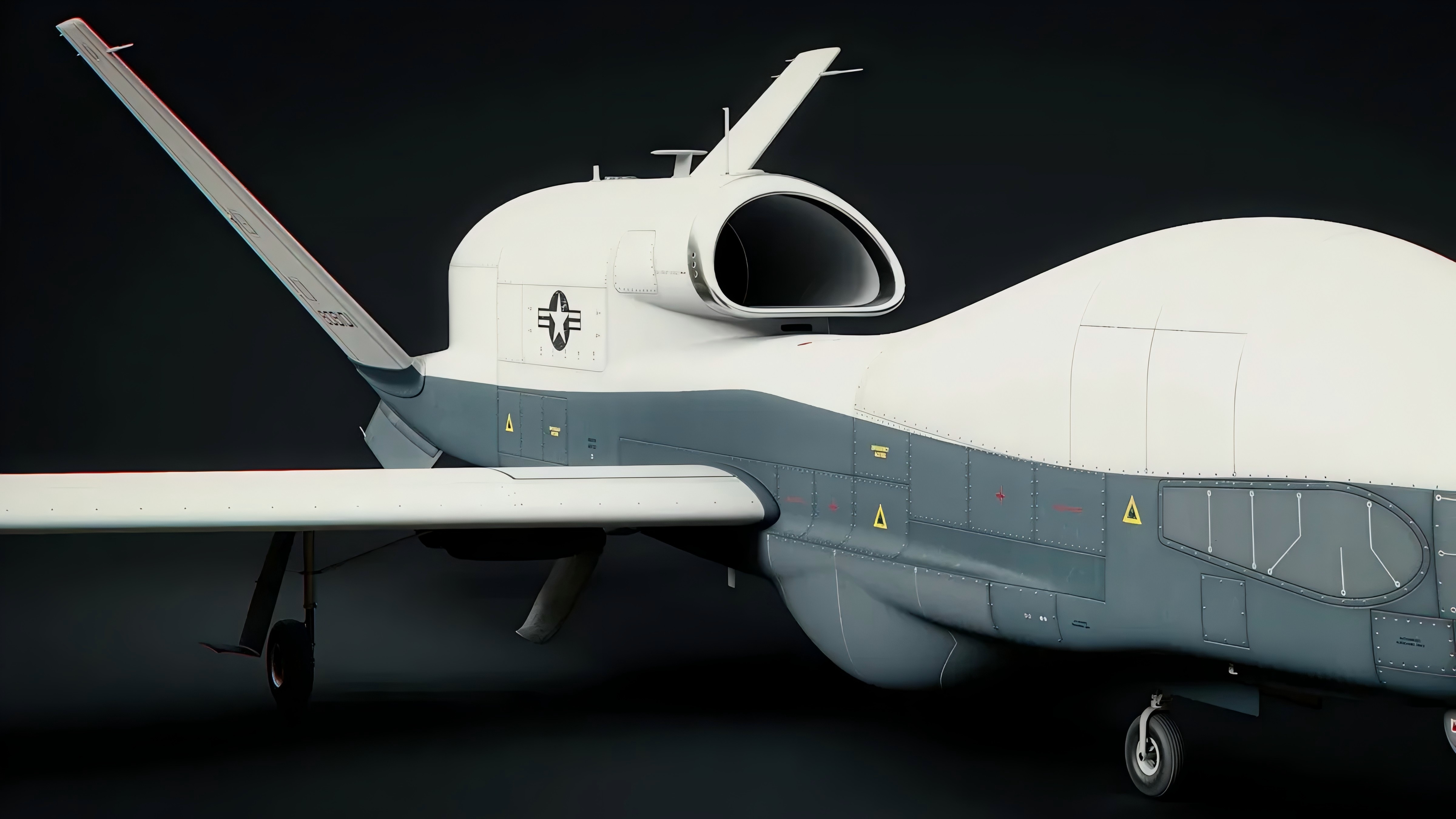
The electro-optical pod is a modular device that integrates an optical imaging system, sensors, and stabilization components. Leveraging advanced sensor fusion technology, it combines visual, infrared, and LiDAR data to capture various types of imagery—including visible light and infrared radiation. These systems support functions such as environmental monitoring, target detection, identification, and tracking, providing precise situational awareness for the overall platform. These pods are primarily deployed on unmanned aerial vehicles (UAVs), fighter jets, and helicopters.
As a leading manufacturer, this article explores the critical role these systems play in enhancing the performance of drones surveillance missions.
I. Operational Advantages of the Electro-Optic Pod
All-Weather Use
The Electro-Optical Pod excels in all weather conditions. Whether facing rain, fog, snow, or dust, operators can rely on this technology to deliver clear imagery and accurate data. The pod’s advanced thermal cameras, day-night sensors, and laser rangefinders work in tandem to ensure uninterrupted surveillance. These features allow unmanned aerial vehicles (UAVs) to capture critical intelligence, even in total darkness or extreme environments.
-
Electro-optical pod systems enable 24/7 situational awareness and rapid response.
-
Operators can detect, track, and engage targets in any weather or lighting condition.
-
Aircraft equipped with these pods are projected to account for 42.9% of the market share by 2025, highlighting their value in all-weather operations.
-
ISR (Intelligence, Surveillance, and Reconnaissance) applications dominate with a 45.1% market share, underscoring the importance of real-time monitoring.
-
High-sensitivity thermal cameras with zoom capabilities enable wide-area surveillance—even at night.
-
Multi-sensor integration and advanced thermal and laser technologies significantly improve target acquisition and engagement accuracy.
-
These pods also support precision-guided munitions by providing accurate detection and guidance regardless of weather.
Note: With all-weather capability, operators gain a decisive edge—missions continue uninterrupted, no matter the conditions.
Day and Night Performance
Whether it’s day or night, the Electro-Optical Pod delivers consistent, high-quality performance. During daylight, visible-light sensors provide crisp, high-resolution images. After dark, thermal imaging and short-wave infrared (SWIR) technologies take over, allowing operators to detect heat signatures and movement invisible to the naked eye.
-
FLIR (Forward-Looking Infrared) and laser designator pods lead the global market, accounting for a 35.2% revenue share in 2024.
-
FLIR sensors alone represent 22.6% of the revenue, due to their ability to detect and track targets in low-visibility environments.
-
Laser designator pods are seeing strong growth, with an 8.5% CAGR, reflecting their rising importance in precision targeting.
-
Modern military aircraft upgrades now prioritize these pods to maintain accuracy in all lighting conditions.
-
Recent advancements in cooled thermal infrared and SWIR integration make Electro-Optical Pods indispensable for 24-hour operations.
Tip: Thanks to seamless day-to-night transition, operators maintain mission focus around the clock—never losing sight of their targets.
Electro-optical pod with AI
Electro-optical pods equipped with AI and sensor-based collision avoidance are revolutionizing anti-collision technology by differentiating between objects and humans, minimizing false alarms, predicting safety risks, and enabling operators to stay vigilant.
| Advantage Category | Technical Principle | Practical Application Scenarios & Value |
|---|---|---|
| Enhanced Target Recognition & Classification | - Real-time identification of vehicles, ships, personnel, etc., using deep learning algorithms (e.g., YOLO, Faster R-CNN) - Dynamically updates target feature libraries to reduce misclassification of similar objects (e.g., distinguishing civilian vehicles from military equipment) | - Military reconnaissance: Automatically marks enemy targets, significantly reducing intelligence analysis time - Security monitoring: Accurately distinguishes intruders from ordinary pedestrians, reducing false alarms |
| Accelerated Real-time Data Processing & Decision-Making | - Embedded AI chips (e.g., NVIDIA Jetson) enable edge computing for image processing - Predictive algorithms analyze target motion trajectories in real time | - UAV reconnaissance: Analyzes data during flight, reducing transmission delays - Fire control systems: Aids missile systems in pre-locking moving targets, enhancing strike accuracy |
| Improved Adaptability to Complex Environments | - Adaptive filtering algorithms enhance imaging quality in fog, strong light, etc. - Multi-sensor fusion (visible + infrared + laser) enables intelligent noise suppression | - Adverse weather reconnaissance: Maintains reliable tracking in heavy rain or smog - Night operations: AI-enhanced infrared imaging detects hidden targets (e.g., camouflaged vehicles) |
| Autonomous & Intelligent Operations | - Integrates obstacle avoidance algorithms with visual SLAM for autonomous flight path planning - "Memory tracking" automatically retraces flight paths to reacquire lost targets | - Unmanned combat systems: Conducts uninterrupted reconnaissance without human intervention - Rescue UAVs: Automatically avoids obstacles and rapidly locates heat sources (e.g., survivors) |
| System Maintenance & Fault Early Warning | - Machine learning analyzes historical sensor data to predict component wear trends (e.g., alerts for lens motor degradation) - Anomaly detection (e.g., sudden vibrations indicate possible pod mounting issues) | - Logistics support: Identifies hidden faults in advance, reducing downtime - Mission reliability: Monitors pod status in real time, minimizing interruptions during operations |
II. Specific Applications in UAV Surveillance
Military Missions
The Electro Optical Pod gives military teams a powerful edge in the field. Soldiers use these pods for real-time reconnaissance, target tracking, and precision strikes. The system’s multi-sensor design lets operators see through darkness, smoke, and camouflage. Troops can identify threats, guide munitions, and monitor enemy movement from a safe distance. Anti-terrorism units rely on these pods to locate suspects and secure perimeters. The pod’s rugged build and high accuracy make it a trusted tool for high-intensity combat and border patrol missions.
Alert: Military operators gain unmatched situational awareness and mission flexibility with advanced sensor fusion.
Civilian Uses
Electro Optical Pod technology extends far beyond the battlefield. Civilian teams use these systems for life-saving and infrastructure-critical missions every day.
Disaster Relief
First responders deploy UAVs equipped with Electro Optical Pods to locate survivors after earthquakes, floods, or hurricanes. The pods’ thermal and optical sensors scan large areas quickly. Search teams find people trapped under debris or lost in remote locations. Real-time video and precise target localization help rescue crews act fast and save lives.
Forest Fire Prevention
Firefighters use these pods to monitor forests and detect wildfires early. Thermal imaging spots hotspots before flames spread. Crews track fire movement and plan safe evacuation routes. The pod’s stability and accuracy allow for continuous monitoring, even in smoky or windy conditions.
Power Line Inspection
Utility companies trust Electro Optical Pods for inspecting power lines and critical infrastructure. UAVs fly along transmission routes, capturing high-resolution images and thermal data. Operators spot damaged wires, overheating components, or encroaching vegetation without sending workers into dangerous areas. This approach reduces downtime and prevents costly outages.
Tip: Civilian teams benefit from the same advanced technology as the military, gaining speed, safety, and precision in every mission.
Airborne electro-optical stabilized platforms now play a vital role in topographic surveying and maritime search and rescue. These systems integrate infrared and optical cameras to maintain stable aiming and line of sight. An adaptive extended Kalman filter algorithm boosts target localization accuracy by 50% over older methods. Flight tests show a 25% reduction in error rate, proving the system’s value for real-time monitoring and precise results in civilian scenarios.
| Application Area | Key Benefit |
|---|---|
| Disaster Relief | Fast, accurate survivor location |
| Forest Fire Prevention | Early detection, safe monitoring |
| Power Line Inspection | Safe, efficient infrastructure checks |
The versatility of the Electro Optical Pod empowers both military and civilian teams to achieve their goals with confidence and efficiency.
III. Comparison with Traditional Systems
Legacy Limitations
Older surveillance systems often struggle to meet the demands of modern missions. Many legacy pods rely on single-sensor setups, capturing only visible light images. As a result, operators cannot see through darkness, fog, or smoke. The absence of thermal or laser sensors limits their effectiveness in complex environments.
Legacy systems also suffer from poor image stabilization. UAVs naturally shake and vibrate during flight. Without advanced stabilization, images become blurred and targets difficult to identify. Operators may spend extra time reviewing unclear footage—delays that can cost valuable seconds during critical missions.
Data transmission in older systems is often slow. Large files can clog communication channels, leading to lag and interruptions. Additionally, many legacy pods lack secure encryption, putting sensitive information at risk.
Alert: Outdated technology can compromise missions and endanger lives. Operators require reliable, clear, and fast surveillance tools.
Key Improvements
The ERDI Electro-Optical Pod ushers in a new era of surveillance. At the heart of its design is multi-sensor integration. Operators benefit from a compact unit that combines visible light, thermal imaging, and laser ranging. This enables teams to see in total darkness, through smoke, and across extended distances.
Advanced servo stabilization ensures every image remains sharp. The pod compensates for UAV movement in real time, providing steady, blur-free video—even during high-speed maneuvers. This enhancement significantly improves target identification and tracking accuracy.
Real-time processing transforms operational efficiency. The ERDI pod leverages computer vision to automatically recognize and track targets. Operators no longer need to manually search for threats—the system highlights points of interest and autonomously follows moving objects.
Secure, compressed data transmission ensures that information reaches decision-makers quickly and safely. The pod encrypts every file and video stream, giving teams confidence that their data is protected, even in hostile environments.
| Feature | Legacy Systems | ERDI EO Pod |
|---|---|---|
| Sensor Integration | Single sensor | Multi-sensor fusion |
| Image Stabilization | Basic or none | Advanced servo system |
| Data Transmission | Slow, unsecured | Fast, encrypted, compressed |
| Target Recognition | Manual, slow | Automated, real-time |
Tip: Operators who upgrade to the ERDI Electro-Optical Pod gain a decisive edge—completing missions faster, more safely, and with greater confidence.
The ERDI Electro-Optical Pod sets a new industry standard. Teams that adopt this technology move beyond legacy limitations, achieving more, responding faster, and protecting what matters most.
FAQ
What makes the ERDI Electro Optical Pod different from other surveillance systems?
The ERDI Electro Optical Pod combines visible, thermal, and laser sensors in one compact unit. Operators gain unmatched clarity, accuracy, and reliability. This technology delivers superior results in every mission.
Can the Electro Optical Pod operate in extreme weather conditions?
Yes. The pod’s rugged design and advanced sensors ensure clear imaging in rain, fog, snow, or dust. Teams trust this system for all-weather surveillance and mission success.
How does real-time processing improve mission outcomes?
Real-time processing allows instant target recognition and automatic tracking. Operators receive immediate alerts and can act quickly. This speed increases mission success and keeps teams safe.
Is the data from the Electro Optical Pod secure?
Absolutely! The pod uses encrypted, secure links for all data transmission. Sensitive information stays protected, giving operators peace of mind during critical missions.
What civilian applications benefit from this technology?
Civilian teams use the pod for disaster relief, forest fire prevention, and power line inspection. The system’s versatility saves lives, protects property, and ensures efficient operations.
Does the Electro Optical Pod require special training to operate?
No. The user-friendly interface and automated features make operation simple. New users learn quickly, and experienced operators work more efficiently.
Tip: Choose the ERDI Electro Optical Pod for unmatched performance and reliability in any mission.