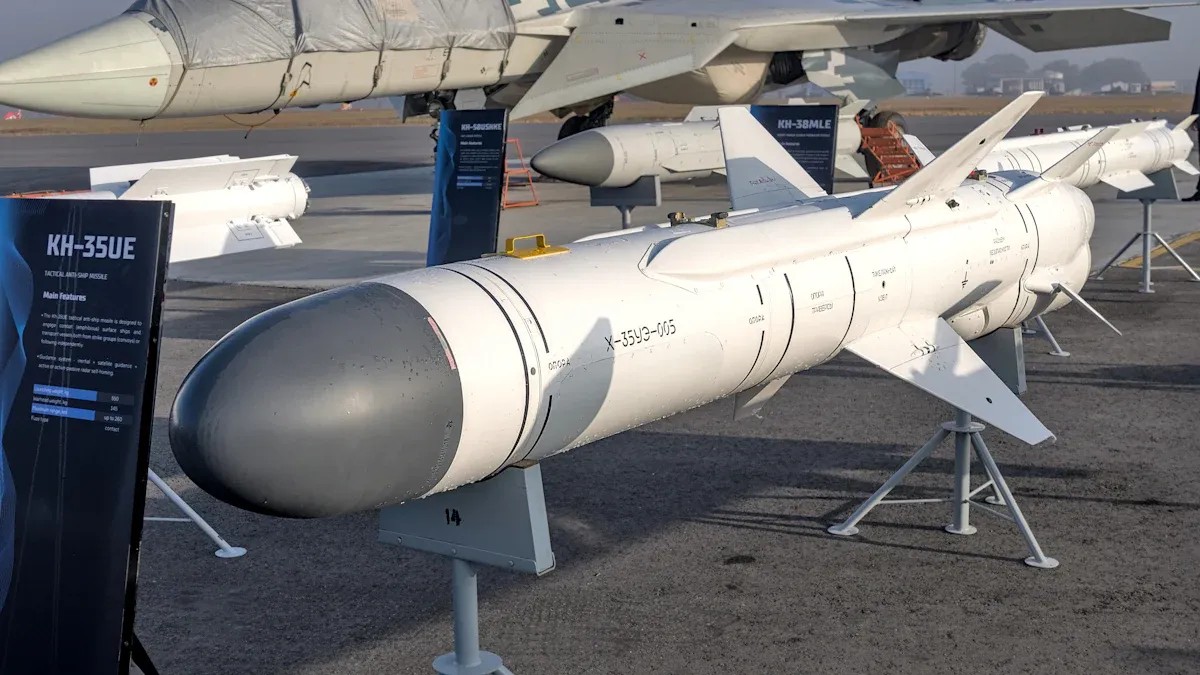
A 1064nm laser Precision-guided munition uses a powerful laser to mark targets for military strikes. This laser creates a precise point, allowing guidance systems to lock on and deliver accurate firepower. Forces rely on this technology to minimize errors and strike only intended targets. The 1064nm wavelength remains invisible to the naked eye, making it ideal for stealth operations and reducing the risk of detection.
Key Takeaways
- 1064nm lasers mark targets invisibly, allowing precise and stealthy military strikes.
- Laser seekers detect coded pulses to lock on the correct target, avoiding friendly fire.
- These lasers guide munitions accurately, reducing collateral damage and protecting civilians.
- The 1064nm wavelength travels well through fog, smoke, and dust, ensuring reliable targeting.
- Advanced hardware and coding improve system durability and performance in harsh conditions.
- Environmental factors like heavy rain and fog can reduce laser effectiveness, so weather matters.
- Next-gen lasers and AI-powered sensors boost accuracy, speed, and adaptability on the battlefield.
- Counter-countermeasures protect guidance systems from enemy jamming and sensor attacks.
1064nm Laser Precision-Guided Munition
Target Designation
Laser Marking
Military teams use a 1064nm laser Precision-guided munition to "paint" or mark a target with an invisible beam. This process involves an external laser designator, which can be handheld, vehicle-mounted, or airborne. The designator emits a focused 1064nm laser pulse directly onto the intended target. The laser spot remains invisible to the naked eye, ensuring stealth and reducing the risk of enemy detection. By marking the target with this specific wavelength, operators guarantee that only compatible munitions will recognize and engage the correct point.
Seeker Detection
The seeker head inside the munition plays a critical role in the targeting process. It detects the 1064nm laser radiation reflected from the designated target. Advanced silicon quadrant detectors, sensitive to short-wave infrared, pick up these reflections. The seeker analyzes the angular error between its current flight path and the laser spot, then generates guidance commands to correct its trajectory. To avoid confusion from decoys or countermeasures, the seeker matches the pulse repetition frequency (PRF) code of the laser designator. This coding ensures the munition locks onto the genuine target, even in environments with multiple laser spots or attempts to mislead the system. The seeker can withstand extreme conditions, including high G-forces and temperature swings, maintaining reliable performance in combat.
Tip: The use of coded pulses at 1064nm allows multiple targets to be engaged simultaneously, each with a unique code, reducing the risk of friendly fire or misidentification.
Guidance Process
Homing Mechanism
Once the seeker locks onto the reflected 1064nm laser signal, the munition begins its homing phase. The guidance system continuously adjusts the munition's flight path, steering it toward the laser spot. This process relies on real-time feedback from the seeker, which tracks the position of the laser reflection and corrects any deviation. The high power and precision of the 1064nm laser ensure a strong signal-to-noise ratio, even at long distances or in challenging environments.
Impact and Detonation
As the 1064nm laser Precision-guided munition approaches the target, the seeker maintains lock on the laser spot until the final moments. The munition's onboard systems calculate the optimal point of impact, ensuring maximum effectiveness and minimal collateral damage. Upon reaching the designated spot, the munition detonates with pinpoint accuracy. This level of precision allows military forces to neutralize threats while protecting nearby civilians and infrastructure.
| Operational Scenario | Description and Technical Details |
|---|---|
| Long-distance targeting (up to 10 km) | 1064nm pulsed lasers enable precise illumination and engagement over extended ranges. |
| Laser 'painting' for multiple targets | Unique PRF codes allow simultaneous engagement of several targets, each marked by a different laser code. |
| Operation in complex environments | Integration with IR systems enables targeting through smoke, fog, or haze, maintaining accuracy in adverse conditions. |
| Compact, robust system design | Lightweight, multispectral optics support deployment on various platforms, including drones and vehicles. |
| High power output for clear designation | Strong laser pulses improve detection and guidance, even in cluttered or contested environments. |
A 1064nm laser Precision-guided munition delivers unmatched accuracy, flexibility, and reliability in modern combat. Forces that adopt this technology gain a decisive edge, ensuring every strike counts.
Technical Principles
Nd:YAG Laser Emission
1064nm Wavelength
Nd:YAG lasers stand at the core of modern military laser systems. These lasers emit light at a wavelength of 1064 nanometers, which falls in the near-infrared spectrum. This wavelength remains invisible to the naked eye, making it ideal for covert operations. The 1064nm wavelength also travels efficiently through the atmosphere, even in challenging weather conditions. This ensures that the laser signal reaches its target with minimal loss, supporting reliable performance in the field.
The technical characteristics of Nd:YAG lasers make them the preferred choice for military applications. The table below highlights key properties:
| Characteristic | Description / Value |
|---|---|
| Laser Emission Wavelength | 1064 nm |
| Pump Wavelength | 808 nm (efficient diode pumping) |
| Thermal Conductivity | 14 W·m⁻¹·K⁻¹ @ 25°C |
| Damage Threshold | >750 MW/cm² @ 1064 nm, 10 ns, 10 Hz |
| Absorption Bandwidth | 730-760 nm and 790-820 nm |
| Fluorescence Lifetime | 230 µs |
| Refractive Index | 1.8197 @ 1.064 µm |
| Optical and Mechanical Properties | High gain, high efficiency, low threshold, excellent durability |
These features allow Nd:YAG lasers to deliver high power, resist damage, and operate reliably in harsh environments. Military teams trust these lasers for their durability and consistent output.
Pulse Modulation
Pulse modulation transforms a continuous laser beam into a series of rapid pulses. This technique increases the laser’s peak power and improves detection by the munition’s seeker. Diode-pumped Nd:YAG lasers, using efficient 808 nm pumping, achieve high energy output with less heat. This means the system can operate longer and with greater reliability in the field. Pulse modulation also supports coding, which is essential for secure and accurate target designation.
Note: Diode-pumped systems require less cooling and offer longer lifetimes, making them perfect for field deployment.
Detection and Coding
Modulated Codes
Military operators use coded laser pulses, known as pulse repetition frequency (PRF) codes, to mark targets. Each code acts like a digital signature, allowing the 1064nm laser Precision-guided munition to recognize and lock onto the correct target. The seeker inside the munition detects only the laser spot with the matching code, ignoring all others. This prevents confusion and ensures that only the intended target receives the strike.
Multiple Target Engagement
PRF coding enables forces to engage multiple targets at the same time. Each target receives a unique code, so several munitions can operate in the same area without interference. This system prevents friendly fire and increases mission flexibility. Operators often use imaging devices with “see-spot” capability, such as FLIR thermal imagers, to verify the laser spot and confirm correct target designation.
- Nd:YAG lasers emit at 1064 nm, providing a smaller focus area and higher intensity for precision tasks.
- High damage threshold and thermal shock resistance allow for high-energy pulsed operation.
- The crystal’s mechanical and optical properties ensure durability in demanding military environments.
A 1064nm laser Precision-guided munition combines these technical principles to deliver unmatched accuracy, security, and operational effectiveness. Forces that invest in this technology gain a decisive advantage on the battlefield.
Wavelength Selection
Atmospheric Transmission
Military teams demand reliable performance in every mission. The 1064nm wavelength offers excellent atmospheric transmission. This wavelength travels through air, fog, smoke, and dust with minimal loss. Operators can count on the laser to reach its target, even in challenging weather or battlefield conditions. The near-infrared spectrum, where 1064nm sits, faces less scattering and absorption than visible light. This advantage ensures that the laser signal remains strong and clear over long distances. Forces can engage targets up to 10 kilometers away with confidence.
Note: Superior atmospheric transmission means fewer missed targets and greater mission success.
Stealth and Security
Stealth remains a top priority for modern military operations. The 1064nm wavelength is invisible to the naked eye and most night vision devices. Enemy forces cannot easily detect or track the laser beam. This invisibility protects both the operator and the mission. Security improves because only munitions with compatible seekers can recognize the coded laser spot. Unauthorized detection becomes nearly impossible. The use of coded pulses adds another layer of security. Each target receives a unique code, so only the intended munition responds. This system prevents friendly fire and reduces the risk of enemy interference.
- Stealthy laser designation allows teams to operate undetected.
- Coded pulses ensure only authorized munitions engage the target.
Hardware Compatibility
The 1064nm wavelength matches perfectly with advanced detection and guidance hardware. Modern systems use highly sensitive photodiodes and quadrant detectors. These components respond quickly and accurately to the laser signal. The table below highlights key hardware types and their roles:
| Hardware Type | Description | Application in 1064nm Laser Systems in PGMs |
|---|---|---|
| Avalanche Photodiodes (Si, InGaAs) | High sensitivity detectors for low-level light and photon counting | Laser ranging, designating, target acquisition, laser spot tracking, missile guidance |
| YAG-Enhanced Photodiodes | High speed, responsivity, and quantum efficiency for photon detection (400-1700 nm) | Suitable for Nd:YAG laser detection and guidance |
| YAG-Enhanced Quadrant Photodiodes | High speed and quantum efficiency quadrant detectors for photon detection (400-1700 nm) | Terminal guidance detectors in precision munitions |
| 1064nm Long-Wavelength Enhanced Si APDs | Enhanced long-wave response with up to 40% quantum efficiency at 1060 nm | Optimized for 1064 nm laser detection in missile guidance |
| Laser Shutters (Electromechanical) | Manage timing, intensity, and exposure of laser output; protect optics and operators | Control and protection in Nd:YAG laser systems |
Electromechanical laser shutters play a vital role in these systems. They handle high-energy pulses and protect sensitive optics. Their integration with timing circuits ensures precise beam control. Durability and fail-safe operation keep the system running in harsh environments. Hardware compatibility with the 1064nm wavelength guarantees reliable performance and mission success.
Advantages
Precision
A 1064nm laser Precision-guided munition delivers unmatched accuracy on the battlefield. Modern systems use advanced optics and real-time data streams to ensure every strike lands exactly where intended. Forces benefit from technology that outperforms older guidance methods in every measurable way.
- 1064nm wavelength laser designators minimize atmospheric dispersion, which improves range and stability.
- These munitions achieve one-meter strike accuracy, a major leap from legacy systems that often miss by over 30 meters.
- First-round hit probability reaches 98.4% at 2 kilometers, compared to only 82% for older systems.
- Target acquisition happens fast—just 1.2 seconds for stationary targets.
- Environmental resilience stands out, with reliable operation from -40°F to 120°F thanks to ruggedized components.
- Real-time trajectory adjustments keep the munition on course, even if the target moves.
- Dual-mode seekers allow fallback to GPS if the laser signal is lost, ensuring mission completion.
- Field tests show a circular error probability as low as 0.8 meters against moving targets at 60 mph.
- Operational reliability exceeds 99%, supported by adaptive optics and advanced engineering.
- Modern systems reduce strike margins by a factor of 30, making missions safer and more efficient.
Precision saves lives and resources. Forces can trust these munitions to deliver results with every launch.
Range
Military teams require tools that reach distant threats without sacrificing accuracy. High-end military-grade 1064nm laser designators can illuminate targets up to 20 kilometers away under ideal conditions. In real-world missions, factors like weather, altitude, and target movement can reduce this range. However, the effective operational range of these munitions still far exceeds most alternatives. The guidance system depends on the laser designator’s ability to mark the target, so the munition’s maximum range aligns with the designator’s capabilities. This extended reach allows forces to engage threats from a safe distance, increasing mission flexibility and operator safety.
Minimized Collateral Damage
Precision targeting with a 1064nm laser Precision-guided munition dramatically reduces the risk of unintended damage. The system’s coded laser pulses ensure that only the intended target receives the strike, even in environments with multiple laser spots. Real-time guidance and high accuracy mean that munitions hit only what they are meant to destroy. This technology protects civilians, infrastructure, and friendly forces. By minimizing collateral damage, military teams can operate with greater confidence and uphold strict rules of engagement.
Accurate strikes build trust and support for military operations. Advanced laser guidance helps achieve mission goals while protecting what matters most.
Limitations
Environmental Factors
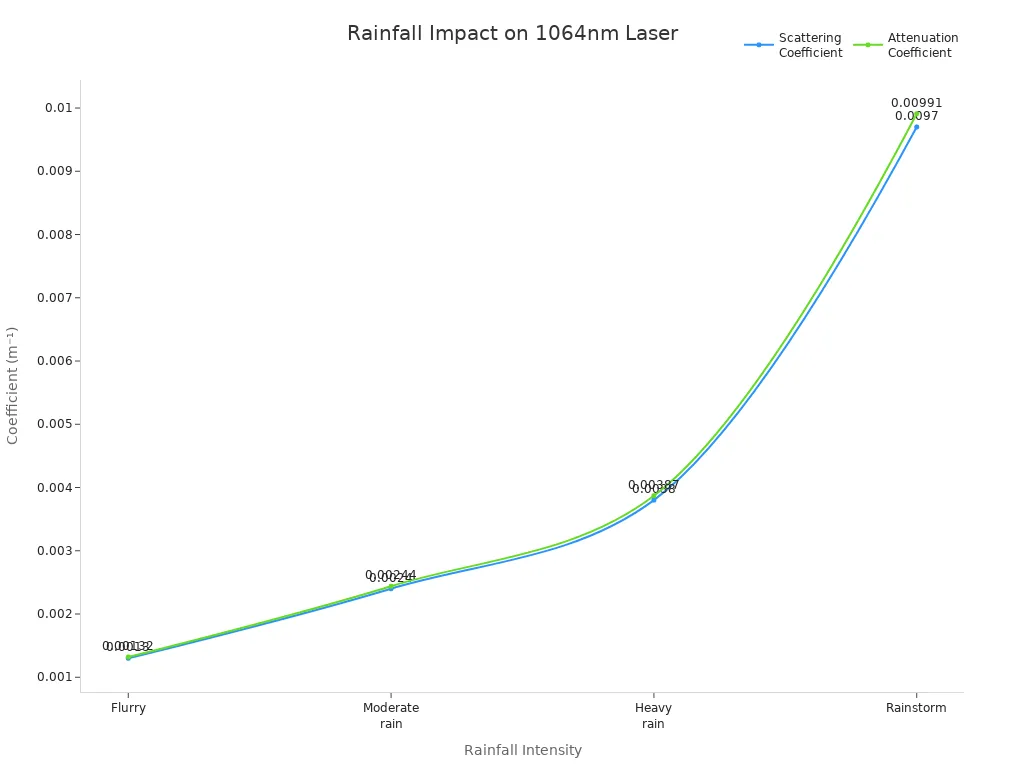
Weather and environmental conditions can significantly impact the effectiveness of laser-guided systems. Rain, fog, and dust all reduce the range and accuracy of laser targeting. As rainfall intensity increases, both scattering and attenuation coefficients rise, causing greater signal degradation. The table below demonstrates how different rainfall rates affect laser performance:
| Rainfall Intensity | Rainfall Rate (mm/h) | Scattering Coefficient (m⁻¹) | Attenuation Coefficient (m⁻¹) |
|---|---|---|---|
| Flurry | 5.00 | 0.0013 | 0.00132 |
| Moderate rain | 12.5 | 0.0024 | 0.00244 |
| Heavy rain | 25.0 | 0.0038 | 0.00387 |
| Rainstorm | 100 | 0.0097 | 0.00991 |
Other environmental challenges include:
- Rain causes absorption and scattering, reducing detection range.
- Dust particles scatter and absorb the laser, blocking objects behind them.
- Fog decreases optical power and visibility, limiting performance.
- Multiple scattering, reflection, and absorption degrade signal quality.
- Lasers at 1064nm may suffer significant attenuation in rain and fog, reducing detection range compared to some shorter wavelengths.
Weather conditions such as fog, smoke, or clouds can block or interfere with the laser beam. These factors disrupt navigation and targeting accuracy, making mission success more difficult.
Operators should always consider weather forecasts and environmental risks before deploying laser-guided munitions.
Countermeasures
Adversaries have developed advanced countermeasures to disrupt or defeat laser-guided munitions. Defensive systems use infrared countermeasures to confuse seeker heads, laser dazzling to degrade sensor performance, and high-power airborne lasers to disable or destroy incoming threats. Notable examples include the Russian Almaz HEL, Boeing Laser Avenger, Airborne Laser, Laser Weapon System (LAWS), and HELLADS. These technologies employ both "soft kill" methods, such as jamming or dazzling, and "hard kill" methods, like sensor destruction.
Pulsed lasers at 1064nm can dazzle or damage the electro-optical sensors that guide munitions. Laser dazzling temporarily blinds the sensor by saturating its pixels, while repeated or high-power pulses can cause permanent damage to sensor elements. Both approaches degrade or disable the guidance system, making it harder for the munition to reach its target. Continuous adaptation and research remain essential to counter evolving threats and maintain battlefield superiority.
Power and Durability
Military laser systems must operate reliably under harsh conditions. Power requirements and durability ratings reflect this need for robust performance. The table below outlines typical specifications for 1064nm laser systems:
| Parameter | Typical Values / Range |
|---|---|
| Power Input | 12V DC (2A) to 100-240 VAC, 50/60Hz |
| System Power Consumption | 10W to 35W |
| Laser Lifetime | Exceeds 8500 hours |
| Operating Temperature | 0 to 40°C |
| Storage Temperature | -10 to 60°C (some models wider range) |
| Vibration Resistance | Suitable for highway transportation vibration |
| Relative Humidity | Up to 80% |
| Cooling Methods | Water cooling, TEC refrigeration, radiator, fan |
Despite these robust specifications, several challenges persist:
- High power consumption can limit deployment in remote or mobile scenarios.
- Extreme temperatures or humidity may reduce system lifespan or reliability.
- Continuous operation in combat zones exposes equipment to vibration, shock, and dust.
- The high cost of precision-guided munitions restricts widespread use, especially for militaries with limited budgets.
Reliable power and durable construction are essential for mission success, but operators must weigh these factors against logistical and financial constraints.
Product Applications
Erdi 1064nm Laser Rangefinder
The Erdi 1064nm Laser Rangefinder stands out as a top choice for military targeting. Its compact design and advanced features deliver reliable performance in the field. Soldiers can depend on this device for fast and accurate distance measurements, even in harsh environments. The rangefinder’s lightweight build makes it easy to carry and mount on various platforms. Its high measurement accuracy ensures that every shot counts.
| Feature Category | Key Specifications and Features |
|---|---|
| Model | LDR20K1-03 |
| Laser Wavelength | 1064 nm (1.064 μm) |
| Pulse Energy | ≥ 20 mJ |
| Measurement Accuracy | ±1 meter |
| Weight | ≤ 290 grams |
| Operating Temperature Range | -40°C to +55°C |
| Ranging Frequency | 1 to 20 Hz |
| Maximum Measuring Distance | ≥ 5000 meters (visibility 13.5 km, target reflectivity 0.2, target size 2.3 m × 4.6 m) |
| Minimum Measuring Distance | ≤ 300 meters |
| Ranging Success Rate | 98% |
| Beam Divergence Angle | ≤ 0.6 mrad |
| Pulse Width | ≥ 15 ns ± 5 ns |
| Laser Energy Stability | Fluctuation within 10% during a target indication cycle |
| Control Functions | Serial interface commands, illumination mode, encoding, and more |
| Laser Coding | MIL-STD-810G compliant, user-expandable coding, precise frequency code |
| Environmental Adaptability | Vibration and shock resistant, suitable for military operational conditions |
| Power Requirements | 20V-28V operating voltage, average power ≤ 55W, peak power ≤ 100W |
| Dimensions | ≤ 92mm × 67mm × 53mm |
| Operating Modes | Ranging and target indication |
| Laser Target Designation | Short-cycle and long-period modes for flexible operation |
The Erdi rangefinder’s robust construction and advanced coding features help military teams achieve mission success with confidence.
Erdi Laser Designator
The Erdi Laser Designator empowers forces to mark and track targets with unmatched precision. This device emits a near-infrared laser beam tuned for compatibility with laser-guided bombs and missiles. Its closed-loop targeting system ensures that the weapon’s seeker detects the reflected signal and guides the munition directly to the target. Operators benefit from stabilization and tracking components, such as gimbals and gyro stabilization, which keep the laser locked on moving targets and compensate for environmental disturbances.
- The designator integrates a laser rangefinder and control interfaces for seamless connection with fire control systems.
- Its wavelength selection matches the sensors in guided weapons, boosting targeting accuracy and real-time illumination.
- The system’s components work together to provide continuous, precise guidance signals, ensuring the munition stays on course.
With the Erdi Laser Designator, military teams gain a decisive edge in dynamic combat scenarios.
Integration in Munitions
Modern munitions platforms achieve new levels of effectiveness by integrating 1064nm laser systems. Inertially stabilized platforms and advanced tracking sensors maintain precise line-of-sight, even on moving vehicles, aircraft, or ships. High-precision beam control systems deliver pointing accuracies in the microradian range, which is critical for effective targeting. Compact, efficient solid-state lasers with adaptive optics compensate for atmospheric disturbances, ensuring reliable performance in any environment.
Power and thermal management systems support sustained high-power operation, allowing laser weapons to engage targets accurately while on the move. Solid-state lasers, such as ceramic Nd:YAG models, offer ruggedness and compactness, making them ideal for integration into military vehicles and aircraft. These systems provide speed-of-light engagement, highly precise targeting, and low collateral damage. Their versatility across ground, naval, and aerial platforms gives military forces the flexibility to respond to any threat.
Integrating advanced 1064nm laser technology into munitions platforms increases mission success rates, reduces operational costs, and enhances operational flexibility.
Future Trends
Next-Gen Lasers
Military technology never stands still. Defense teams now invest in next-generation 1064nm laser systems that promise greater power, efficiency, and reliability. Solid-state lasers, especially those using Nd:YAG crystals, have become smaller and more energy-efficient. These improvements allow for compact laser range finders and target designators that soldiers can carry with ease. Fiber lasers also play a key role. They deliver high-quality beams and strong output power, making them perfect for both continuous and pulsed operations in the field. Semiconductor lasers now serve as efficient pump sources, boosting the performance of solid-state systems.
Material science drives many of these advances. Engineers have improved Potassium Dihydrogen Phosphate (KDP) and Potassium Titanyl Phosphate (KTP) crystals. These materials now offer higher frequency conversion efficiency and better resistance to damage. As a result, military lasers can operate at higher power levels and withstand harsh environments. These upgrades mean that future 1064nm laser systems will be more powerful, more durable, and more adaptable than ever before.
Next-generation lasers give forces a clear edge. Smaller, lighter, and more robust systems mean faster deployment and greater mission success.
AI and Sensors
Artificial intelligence transforms how military teams use 1064nm laser-guided munitions. AI-powered sensors now process data in real time, allowing for smarter target recognition and faster response. These sensors can distinguish between real targets and decoys, reducing the risk of error. Machine learning algorithms help systems adapt to changing battlefield conditions, such as moving targets or shifting weather.
Modern sensors also offer higher sensitivity and faster reaction times. They work seamlessly with advanced optics and guidance systems. Teams can now track multiple targets at once, assign unique codes, and coordinate complex strikes with precision. AI-driven analytics provide instant feedback, helping operators make better decisions under pressure.
- AI boosts accuracy and speed.
- Smarter sensors reduce mistakes and improve safety.
- Teams gain confidence with real-time data and adaptive targeting.
Counter-Countermeasures
Adversaries continue to develop new ways to disrupt laser-guided munitions. In response, military engineers focus on counter-countermeasures that protect guidance systems and ensure mission success. Advanced coding techniques now make it harder for enemies to jam or spoof laser signals. Seeker heads use encrypted pulse patterns and dynamic frequency changes to stay locked on the correct target.
Laser systems also feature hardened optics and sensors that resist dazzling and damage from hostile lasers. Improved materials, such as enhanced KDP and KTP crystals, increase resistance to high-energy attacks and environmental stress. Teams can now rely on robust guidance even in contested environments.
| Counter-Countermeasure | Benefit |
|---|---|
| Encrypted pulse coding | Prevents jamming and spoofing |
| Dynamic frequency hopping | Maintains lock on moving targets |
| Hardened optics and sensors | Resists dazzling and physical damage |
| Advanced materials | Withstands high power and harsh climates |
Forces that invest in these innovations stay ahead of threats. Reliable guidance and secure targeting protect both missions and lives.
A 1064nm laser Precision-guided munition empowers military teams with unmatched accuracy and stealth.
- Most laser designators use the 1064nm wavelength, invisible to the naked eye, supporting covert operations and high hit accuracy.
- This wavelength enables precise target designation, reliable guidance, and seamless integration with NATO standards.
- Erdi’s advanced rangefinders and designators deliver stable, long-range performance, even in challenging environments.
| Future Trends | Details |
|---|---|
| AI Integration | Smarter, adaptive targeting |
| Compact Designs | Lightweight, portable systems |
| Market Growth | Projected to double by 2033 |
Military technology continues to evolve. Teams that adopt 1064nm laser Precision-guided munition systems will lead the way in mission success and operational safety.
FAQ
What makes 1064nm lasers ideal for military targeting?
1064nm lasers offer high precision, strong atmospheric transmission, and invisibility to the naked eye. These features help military teams achieve accurate strikes while staying undetected. Forces gain a tactical advantage and reduce the risk of collateral damage.
Can 1064nm laser-guided munitions operate in bad weather?
Heavy rain, fog, or dust can reduce laser effectiveness. However, advanced systems like Erdi’s maintain strong performance in most conditions. Teams should always check weather forecasts before deployment for best results.
How do coded laser pulses prevent friendly fire?
Each target receives a unique pulse code. Only munitions programmed with the matching code respond. This system ensures that strikes hit the correct target, even when multiple teams operate in the same area.
Are 1064nm laser systems compatible with NATO standards?
Yes, most 1064nm laser designators and seekers follow NATO STANAG standards. This compatibility allows seamless integration with allied equipment and ensures reliable joint operations.
What platforms can use 1064nm laser guidance?
Forces can mount these systems on drones, vehicles, aircraft, and handheld devices. The technology adapts to many platforms, giving teams flexibility in any mission scenario.
Why should military teams choose Erdi’s 1064nm laser products?
Erdi’s rangefinders and designators deliver unmatched accuracy, durability, and coding flexibility. Teams benefit from robust construction, advanced features, and proven field performance. Choosing Erdi means higher mission success rates and greater operator safety.
Contact ERDI TECH
If you need technical information, specification sheets, prototype tests or customized solutions for the 1064nm laser target designator, please contact the ERDI TECH engineering team.
📧 yeva@erdimail.com (responses within 24 hours)
We will provide the most suitable laser technology solutions for your platform.