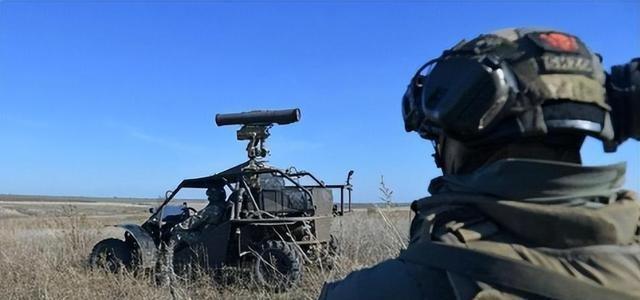
Drone Warfare: Laser Ranging Drives the 5km Offense and Defense
Aug 20, 2025
RangeFinder ERDI
When a PFV drone with a total cost of no more than 500 US dollars, controlled remotely by soldiers using a remote control and headphones, crossed the front line and precisely destroyed a tank worth millions of dollars based on the real-time images on the spot, it demonstrated the transformative role of drones in modern warfare. Since the Ukraine War, the positioning of drones in warfare has no longer been a special mission weapon, and the deployment scale has exploded. In the Russia-Ukraine conflict, drones have directly become the main force in the frontline war, and this change has also given rise to a series of new equipment demands, among which the 5km laser ranging device is the most, far exceeding the general prediction.
Drones "Ultra-Long-range Precision Strike": From Tactical Raid to Strategic Blockade
According to the latest report by ISW Publishing House on August 7th, the Russian army has carried out battlefield air interception (BAI) on Ukraine's ground transportation lines (GLOC) using tactical drones (UAVs), and has achieved certain results. — The Russian army has improved the range and strike accuracy of its tactical drones based on the reported information, and its attack range of tactical drones has exceeded 25 km. It has carried out regular strikes on Ukraine's roads, railways, bridges (GLOC infrastructure), command posts and other key logistical lines and facilities, which greatly restricted Ukraine's subsequent defense actions.This "ultra-long-range precise strike" has put the traditional defense system in an awkward situation: When the drone is launched from 5 km away in the woods, rooftops or concealed fortifications, the reaction time the defense side is often less than 30 seconds. The actual combat videos shared by Ukrainian soldiers on social media show that even experienced anti-air defense teams often miss the interception window due to being unable to timely determine the drone's distance.The Ukrainian response was equally radical. On April 7th, the Ukrainian Independent Drone System Unit used "suicide drones" under the command of the operator to attack the Russian Armored Air Defense System. In recent years, such situations have been frequent. With this "low cost + medium-range" combination, Ukraine forced the Russian army to detect targets at a greater distance — Russian soldiers deployed at the frontline of Kherson revealed that they relied more on wearable ranging devices, "being able to see a red dot (drone) from 5 km away, giving them an extra chance of survival".
The battle of offense and defense: Why is 5 km the "demarcation line"?
In the battlefield dominated by drones, 5 km is not an arbitrary number, but the result of repeated bargaining between the offensive and defensive sides.From the offensive perspective, this distance is both beyond the effective range of ordinary light weapons and can ensure that the drone operator can precisely strike the target within the controllable range of vision. The Ukrainian DJI Matrice 30T drone, with its laser ranging device, has an error within 1 meter within 5-7 kilometers, and combined with a thermal imaging lens, can provide precise coordinate information for artillery, significantly improving the strike accuracy of old-fashioned howitzers.The demand from the defense side is more urgent. The DJI AeroScope detection station deployed by the Russian army is representative: The wearable version can cover a range of 5 kilometers and simultaneously track 30 drones, recording their positions, speeds and even the operator's distance; The portable version has a detection range of up to 30 kilometers or more, but is too large to be carried by infantry, affecting its mobility. This "distance combination" deployment logic precisely indicates that 5 kilometers is the core radius of frontline defense. As stated in the report released by the defense industry group, when the domestically produced Leleka-100 drone transmits data over a 50-kilometer communication link, it still needs to rely on precise ranging within 5 kilometers to complete the final calibration of the target - "long-range reconnaissance relies on satellites, and close-range destruction relies on lasers" has become a battlefield consensus.
Technological evolution: A full-chain revolution from "seeing" to "blocking"
Modern anti-drone warfare is no longer simply "flying missiles", but a complex system that includes "detection - tracking - interception", and each link cannot do without the support of 5-kilometer-level ranging capabilities.The innovation in the detection layer is the most intuitive. The ieMHR radar provided by Israel to Ukraine has a detection range of 10 kilometers for small drones, but the operators deliberately set the warning threshold at 5 kilometers - this distance can filter out invalid signals and provide sufficient time for subsequent actions. In the Zaporozhye battle, this system detected the Russian "Lyouta" drone at 5.2 kilometers and guided the electronic warfare unit to successfully interfere with its navigation signal.The technical breakthrough in the interception layer is more dramatic. Ukrainian military enterprises integrated commercial laser ranging modules into modified drones, enabling them to lock onto targets within 3 kilometers, and combined with a 100-watt laser weapon to achieve "silent killing". This "using drones to counter drones" tactic has extremely strict requirements for ranging accuracy to ±0.1 meters; otherwise, the laser beam would miss the target due to distance calculation errors.The Russian forces' countermeasures are equally precise. Their "Krasusha-4" electronic warfare system dynamically adjusts power based on the target distance: using strong power directional interference for drones within 5 kilometers and wide-area suppression for more distant targets. This "meticulous calculation" mode is based on tactical optimization using real-time ranging data.
Practical verification: Moments that rewrite the rules on the battlefield
In the 2025 May battle of the Donbas stalemate, the Russian forces launched a swarm attack with 273 drones, and the Ukrainian forces relied on 16 sets of improved radars to establish a warning line 5km away, ultimately causing 128 drones to lose control due to being preemptively interfered with. This case was rated by "Jane's Defence Weekly" as a classic example of "distance detection equipment determining the course of the battle".More disruptive is the "cross-level coordination" model. When Ukraine conducted an 850km drone raid on the Caspian Sea port, the tactical reconnaissance stage of its operation was completed by the Leleka-100 drone at 5 km away to determine the target coordinates. These data were encrypted and directly transmitted to the rear command center, ultimately guiding remote drones to carry out "surgical strikes". This "strategic target, tactical ranging" combination completely blurs the front and rear boundaries of traditional warfare.The Russian forces' innovations are also worthy of attention. They modified agricultural drones as "decoys", simulating attack formations 5 kilometers away to expose the positions of the Ukrainian air defense forces, and then guiding the real drones to carry out counter-kills. The core of this tactic is precisely the utilization of the high sensitivity of the Ukrainian ranging equipment within 5 kilometers.
Future battlefield: Whoever controls distance, whoever controls the initiative
The practice of the conflict between Ukraine and Russia is proving a new rule: In the drone era, the ability to control "distance" will determine the initiative on the battlefield. The popularization of ranging equipment above 5 kilometers is not only the result of technological iteration but also an inevitable trend of the evolution of the war form.From the "ranging rifle" of Ukrainian front-line soldiers to the dynamic power adjustment of the Russian electronic warfare system, and to the flight route planning algorithms of both sides' drones, ranging data has permeated every aspect of the operation. As military experts have pointed out: "When the flight range of drones exceeds the horizon, the equipment capable of accurately measuring this distance becomes the new ruler of warfare."This silent technological competition may better predict the future of warfare than the gunfire on the front line - where a centimeter-level measurement error could determine the outcome of the battle
Want to learn about the latest laser rangefinder technologies and solutions? Please contact our sales team: yeva@erditechs.com