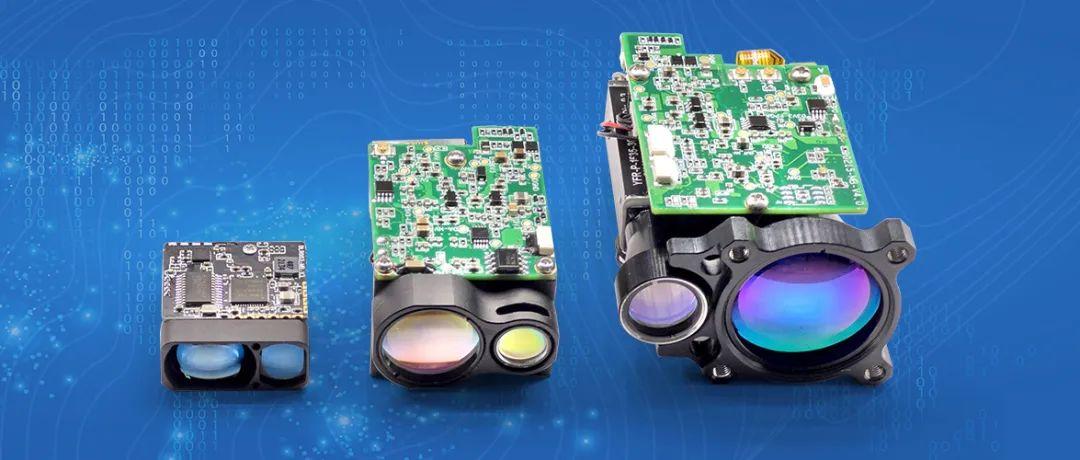
In the field of precision measurement, laser ranging equipment is an indispensable tool. Whether it is UAV aerial surveying, industrial mapping, or military optoelectronic systems, laser rangefinder modules play an important role as "eyes", helping users quickly and accurately obtain target distances. However, when faced with various models of laser rangefinder modules on the market, how to select the one that best fits their own system has become a concern for many R&D personnel and integrators.
ERDI TECH, which focuses on the R&D and production of laser rangefinder modules, combines years of industry experience to break down the selection logic of meter-level precision ranging modules from five core dimensions: needs, cost, scenarios, integration, and after-sales service. It is hoped that this will help you avoid selection misunderstandings and efficiently match the optimal solution.
1. Clarify "Ranging Needs": Accurately Locate Core Indicators
The first step in selection is always to "figure out what you need". The core performance of a laser rangefinder module is directly determined by two major indicators:
1.1 Ranging Range and Precision: Define the "Measurement Boundary" First
Meter-level precision modules are not a "one-size-fits-all" solution, but are divided into two categories: hundred-meter-level and <strong>kilometer-level</strong>:
- If you need it for UAV short-range inspection or small equipment positioning, hundred-meter-level precision (e.g., 0-2000 meters, error ±1 meter) is sufficient to meet the needs, with lower costand lower power consumption;
- For long-distance field monitoring or large-scale engineering mapping, kilometer-level precision (10 kilometers, error ±2 meters) is a must, which can avoid system errors caused by distance deviations.
It is recommended to first sort out the "maximum measurement distance" and "allowable error range" of the project, and then screen models based on this. Blindly pursuing "longer precision" will only increase unnecessary costs.
1.2 Target Size: Match the "Beam Divergence Angle"
You may not have noticed that the same laser rangefinder module can produce vastly different results when measuring "a building" and "a small part". The key lies in the beam divergence angle—the smaller the divergence angle, the more concentrated the laser beam, and the more accurate the measurement of small targets; if the divergence angle is too large, the laser beam is likely to "cover" areas outside the target, leading to data deviations.
Taking ERDI's customer needs as an example, for a 0.3m×0.3m target 1 kilometer away for UAVs, a laser rangefinder module with a divergence angle of <0.5mrad is preferred; for measuring large buildings 100 meters away, a divergence angle of ≤1mrad can also meet the needs. Remember: the smaller the target, the higher the requirement for "beam concentration".
2. Calculate the "Cost Account": Choosing the Right Laser Reduces Costs by Half
The laser emitter is the "heart" of the laser rangefinder module and the component with the highest cost proportion. Currently, mainstream lasers on the market are divided into three categories with huge cost differences. Choosing the wrong one may directly exceed the budget:
Laser TypeCost LevelCore AdvantagesApplicable ScenariosSemiconductor Laser (LD)LowEasy access to materials, mature production process, large-scale effect, high cost-effectivenessConsumer electronics, lightweight UAVs, portable rangefindersSolid-State LaserMedium-HighHigh power, strong anti-interference ability, suitable for complex environmentsIndustrial heavy equipment, long-distance mappingGas LaserHighStable wavelength, extremely high precision, but large size and high maintenance costMilitary high-end systems, laboratory precision measurement
For most civilian and industrial scenarios (such as UAVs and portable equipment), semiconductor lasers (LD) are the optimal choice—they can not only meet precision requirements but also control costs. Only in extreme environments or high-end military scenarios do solid-state or gas lasers need to be considered.
3. Adapt to "Application Scenarios": Ensure the Module "Withstands Tests"
A good laser rangefinder module must not only "measure accurately" but also "perform stably". Environmental differences in different scenarios directly determine the "survival ability" of the module:
3.1 Harsh Environments: Focus on "Protection Performance"
If the laser rangefinder module needs to work in field, high-altitude, high-temperature, or high-humidity environments, pay close attention to these two parameters:
- <strong>Operating temperature range</strong>: Ordinary modules mostly support -10℃~60℃; if used in cold northern regions or deserts, choose a wide-temperature model that supports -40℃~70℃;
- In addition, for harsh working environments, the laser rangefinder module's anti-vibration and anti-electromagnetic interference designs should also be considered.
3.2 Safety Level: "Class I" is a Must for Human Contact
If the laser rangefinder module is used in consumer electronics (such as handheld rangefinders) or public place monitoring, it must comply with eye safety levels—according to international standards, Class I lasers are harmless to human eyes, and even long-term direct viewing will not cause risks; while Class IIIB and above have potential safety hazards and are only suitable for unattended industrial or military scenarios.
Be sure to confirm the product's safety certification during selection to avoid project rework due to safety issues.
4. Emphasize "Integration Convenience": Saving Time and Effort is the Key
After selecting performance and cost, it is also necessary to consider "whether the laser rangefinder module can be easily integrated into your own system"—cumbersome integration will greatly increase R&D cycles and costs:
4.1 Interface Compatibility: Prioritize "Universal Interfaces"
Currently, mainstream laser rangefinder module interfaces include UART (TTL 3.3V/5V) and RS-422:
- The UART interface is small in size and low in power consumption, suitable for lightweight scenarios such as UAVs and small equipment;
- The RS-422 interface has strong anti-interference ability and long transmission distance, suitable for long-distance data transmission scenarios such as industrial workshops and field monitoring.
It is recommended to first confirm the interface type of your own system and prioritize "plug-and-play" laser rangefinder modules to avoid additional adapters.
4.2 Development Support: Modules withSDK Save 30%of Time Compared to "Bare Modules"
High-quality manufacturers provide SDK (Software Development Kit) and testing software (e.g., the Windows testing tool supporting ERDI TECH's laser rangefinder modules). Developers do not need to write drivers from scratch and can quickly implement ranging functions by calling API interfaces, which can significantly shorten the development cycle.
In addition, if your project has special needs (such as customized size or wavelength adjustment), pay attention to whether the manufacturer supports OEM/ODM customization—for example, ERDI TECH can provide full-wavelength customization from 905nm to 1535nm to meet the special wavelength needs of different industries for laser rangefinder modules.
4.3 Size and Weight: Adapt to the"Load Capacity" of the Equipment
Scenarios such as UAVs and handheld devices have high requirements for "lightweight"—oversized or overweight laser rangefinder modules will affect the battery life and operational stability of the equipment. Currently, mainstream meter-level precision laser rangefinder modules can be controlled within 50g in weight and are the size of a lighter, which can be easily adapted to small equipment.
5. Selection Summary<strong>: 5-</strong>Step Process to Avoid Hesitation
After reading the above dimensions, some people may still feel that "there istoo much information and they don't know where to start". Don't worry—ERDI TECH has summarized a "foolproof selection process" for laser rangefinder modules; following it can quickly define your needs:
- Define needs: Clarify the ranging range (hundred-meter/kilometer level), precision error, and target size, and define the performance boundary;
- Check safety: If the laser rangefinder module involves human contact, choose Class I eye-safe modules without exception;
- Adapt to scenarios: Select laser rangefinder module models with corresponding protection levels based on the environment (temperature, protection, electromagnetic interference);
- Verify compatibility: Confirm whether the interface (UART/RS-422), size, and weight of the laser rangefinder module are compatible with your own equipment, and prioritize modules with SDK;
- Compare services: Prioritize manufacturers that provide laser rangefinder modules with military standard certifications (e.g., GJB), offer prototype testing, and have fast after-sales response.
Conclusion: Selection is Not About "Choosing the Best", But "Choosing the Most Suitable"
The selection of laser rangefinder modules has never been a single game of "comparing parameters and competing for performance", but a comprehensive balance of distance, precision, safety, power consumption, and integration convenience. Even a laser rangefinder module with extremely strong performance is a "useless thing" if it is not compatible with your scenario and budget.
If you are looking for a stable and reliable meter-level precision laser rangefinder module, you may visit the official website of ERDI TECH—here, there is a complete product line from 905nm to 1535nm, supporting prototype testing and OEM customization, and providing one-on-one selection consultation services for laser rangefinder modules. Let professionals help you choose the right module to make your system perform more efficiently and accurately.
Finally, a reminder: Be sure to clarify your "core needs" before selecting a laser rangefinder module, and avoid blindly following the trend to choose "high-end models". After all, the one that suits you best is the best.
Contact ERDI TECH
If you need technical information, specification sheets, prototype tests or customized solutions for the 1064nm laser target designator, please contact the ERDI TECH engineering team.
📧 yeva@erdimail.com (responses within 24 hours)
We will provide the most suitable laser technology solutions for your platform.