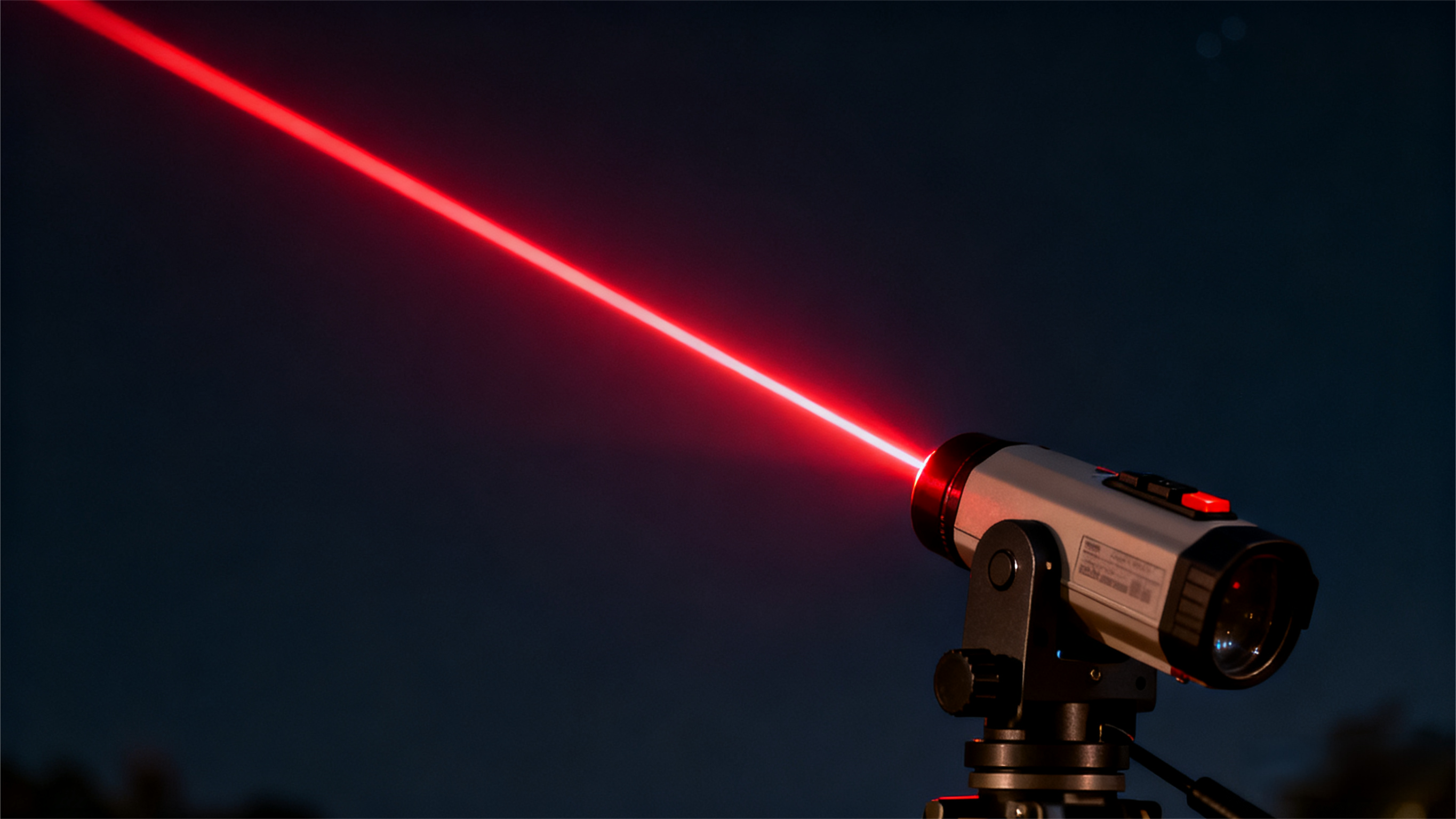
Among military laser ranging systems, single-pulse laser, with its unique characteristics, has become the mainstream choice for military laser ranging systems. Almost all long-range reconnaissance, target indication, and unmanned aerial vehicle (UAV) pod systems prefer this technology. This preference is not accidental but has certain inevitable reasons. As a laser rangefinder manufacturers, ERDI will analyze this phenomenon from three aspects: the principle, advantages of single-pulse laser ranging, and the core requirements of military scenarios.
The meaning and advantages of single-pulse laser
Single-pulse laser is a ranging technology that calculates the distance between the target and the ranging system by using the time difference between the laser pulse being emitted and reflected back to the receiving lens. Essentially, it is a typical time-of-flight (TOF) ranging technology.
Compared with multi-pulse laser ranging and continuous laser ranging, single-pulse laser ranging has several significant features. From the principle, single-pulse laser only requires one valid echo to complete the ranging task, so the duration, energy intensity, ranging speed, and ranging accuracy of single-pulse laser ranging have advantages - single-pulse laser can release high-intensity energy in an extremely short time and ensure accurate ranging.
Adaptability of military scenarios and single-pulse laser
In military scenarios, ranging is an auxiliary means, mainly serving the functions of identification and perception, and assisting in attacks. However, harsh battlefield environments and rapidly changing battlefield situations all have high requirements for ranging.
Firstly, in battlefield target ranging, how to quickly obtain long-distance target data in a very short time and achieve "discovery then lock, lock then attack" is very important. This requires the ranging system to have a fast data acquisition and feedback capability, and this precisely fits the characteristics of single-pulse laser, which "measures once" and quickly. It can assist soldiers in quickly obtaining target data and lay the foundation for achieving attacks.
Secondly, in distance control, generally speaking, the target distance on the battlefield is not short. Military systems need to identify, scout, and perform fire control correction on long-distance targets, for example, to achieve attacks in combination with UAV systems, there is at least a distance of 3km to 10km. Based on this, military laser ranging systems require a wide range of coverage for long-distance, which means the laser must have sufficient energy to ensure the reception of the echo. Single-pulse laser has concentrated energy and high energy output, which can exactly meet this requirement. Taking ERDI's 1664nm wavelength military laser target indicator as an example, with a high-energy pulse output of 20mJ to 160mJ, it can cover a range of up to 30km for ranging.
Moreover, from the application perspective, the battlefield is full of various interference factors, such as smoke, rain, fog, dust, laser interference, and vibration and impact situations. These will affect the stability of the laser signal. And the signal characteristics and structure mode of single-pulse laser can well adapt to this.
Firstly, single-pulse laser adopts: narrow pulse + peak power design, with high output energy and concentration, which can significantly reduce the impact of external factors on the laser signal
Secondly, the single-pulse laser's characteristic of transmitting once and quickly can also prevent the signal from being interfered with and captured, improving the stability of the laser signal on the battlefield;
Finally, the structure of single-pulse laser is simple, with short working time, low power consumption, strong environmental adaptability and reliability, and can adapt to the complex and changeable environment on the battlefield. Taking the ERDI 1535nm LRF series as an example, it has strong outdoor shock resistance according to the MIL-STD-810G testing standard. Moreover, the 1535nm wavelength laser is less affected by the environment and is more suitable for complex battlefield conditions.
In summary, the single-pulse laser, with its fast, concentrated and stable characteristics, can endow military laser ranging with long-distance, fast, stable and reliable ranging capabilities, and is the best choice for military ranging systems!
Contact ERDI TECH
If you need technical information, specification sheets, prototype tests or customized solutions for the 1064nm laser target designator, please contact the ERDI TECH engineering team.
📧 yeva@erdimail.com (responses within 24 hours)
We will provide the most suitable laser technology solutions for your platform.