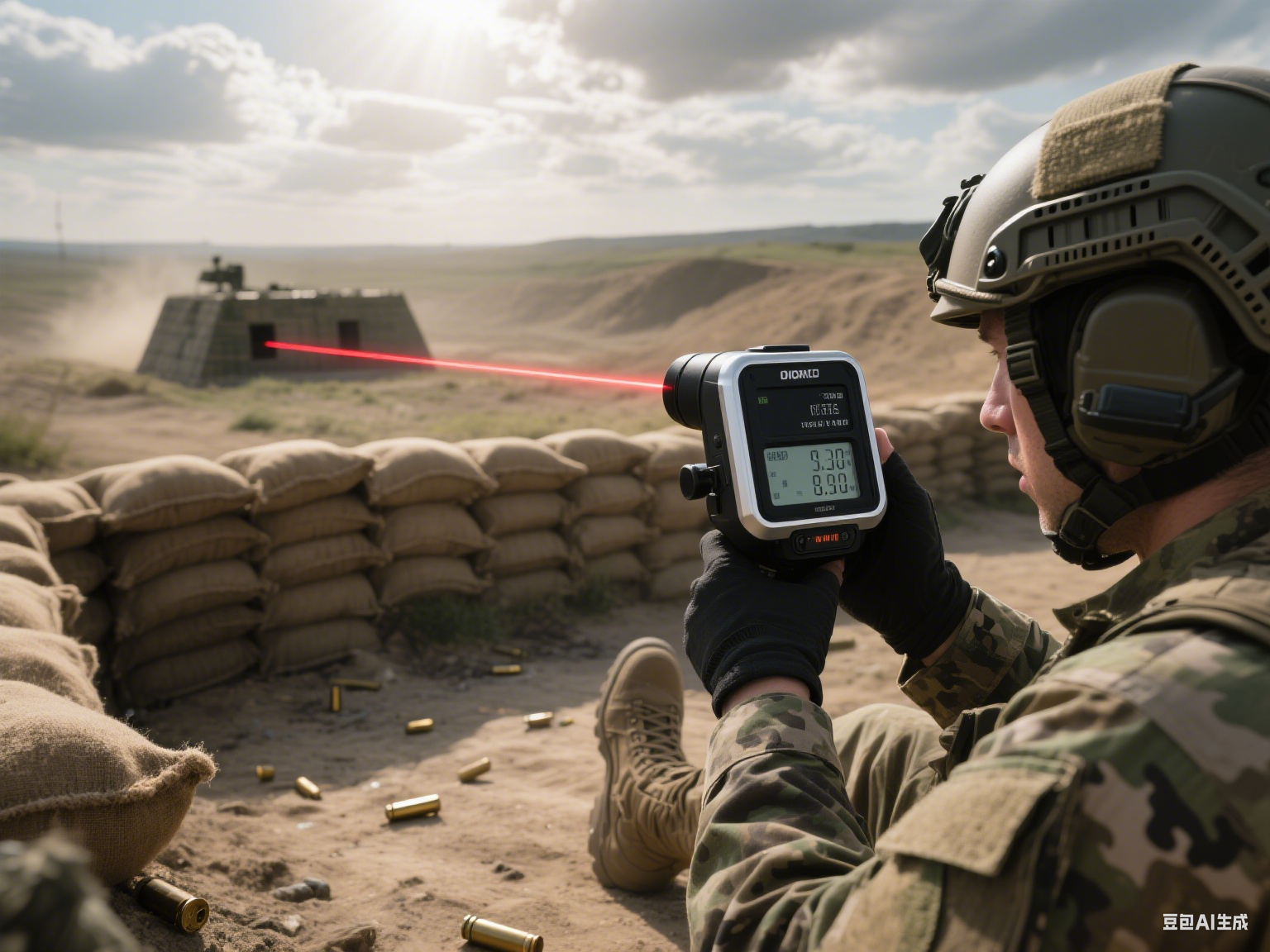
As laser rangefinder technology evolves, it’s become indispensable for professionals and hobbyists across construction, hunting, golf, and outdoor exploration. But with so many brands and models available, how do you choose the right one? This comprehensive guide breaks down everything you need to know about laser rangefinders—from how they work to what features actually matter—so you can make a smart, informed decision.
1. Define Your Needs: Match the Range to Your Application
Indoor Use: For tasks like home improvement, interior design, or furniture layout, a compact handheld laser rangefinder with a range under 50m is ideal. These devices are lightweight, accurate, and easy to use.
Outdoor & Industrial Projects: For long-distance applications like surveying, hunting, or large-scale construction, opt for high-performance tools. Models using 1535nm or 905nm lasers are capable of measuring distances from hundreds of meters to several kilometers—even in low-visibility conditions like fog or dust.
2. Introduction: Exploring the world of laser rangefinders
Laser rangefinders use advanced technology to emit a laser beam, measure the time it takes to reflect back, and calculate distance based on the speed of light. These devices, known for their small size and simplicity, are essential for activities like golfing, hunting, surveying, and construction
Modern laser rangefinders offer impressive accuracy, often measuring distances down to yards or feet. Take ERDI’s 905nm series, for example: at a distance of 1200 yards or feet, these devices can achieve a ranging accuracy of ±1 meter.
Thanks to ongoing advancements, modern rangefinders are increasingly able to minimize the effects of weather conditions, target surface reflectivity, and user handling errors through improved calibration and operating techniques.
Looking ahead, laser rangefinders are expected to integrate even more features to meet diverse industry demands. Whether you're an outdoor enthusiast, sports shooter, or professional surveyor, a single press of a button delivers fast, accurate distance measurements—enhancing efficiency and precision in every application.
3. Key Features to Look For
Modern rangefinders offer far more than just distance readings. Consider these features based on your needs:
-
Angle Measurement – For slope calculations or height estimation.
-
Area/Volume Calculation – Ideal for real estate, renovation, or logistics.
-
Bluetooth or App Integration – Sync data to your phone or tablet for seamless reporting.
-
Memory Storage – Save measurements for later reference, especially useful in construction and surveying.
Don’t overspend on features you won’t use, but don’t miss out on essentials either—especially for professional-grade work.
4. Durability and Environmental Resistance
For rugged or outdoor environments, durability is critical:
-
IP54 and above ratings offer resistance to dust, rain, and drops.
-
Temperature tolerance is vital for cold climates or hot job sites.
-
Eye safety compliance, such as IEC 60825-1 Class 1, ensures safety for both users and bystanders—especially with 1535nm laser models used in hunting or defense applications.
5. Understanding How Laser Rangefinders Work
Laser rangefinders operate by emitting a beam of light and measuring the time it takes to bounce off a target and return. That time is used to calculate distance using the speed of light. The more stable the beam and the better the optics, the more accurate the measurement.
Advanced models can also:
-
Measure angles and elevation
-
Adjust for slope
-
Track multiple targets
-
Provide real-time feedback through connected apps or displays
6. Factors That Affect Accuracy
Several factors can impact measurement accuracy:
-
Optics quality: Better lenses provide clearer and more reliable readings.
-
Laser beam stability: Essential for pinpoint accuracy over long distances.
-
Electronics and signal processing: Faster chips provide quicker and more accurate feedback.
-
Environment: Fog, rain, and extreme temperatures can interfere with readings.
-
Maintenance: Regular calibration and proper care ensure long-term performance.
7. Tips for Using a Laser Rangefinder
-
Hold the device steady.
-
Keep the target stationary.
-
Maintain a clear line of sight.
-
Avoid using in extreme weather unless rated for such conditions.
-
Use reflective targets when necessary.
-
Practice under different lighting conditions to understand performance variances.
8. Comparing Technologies
| Technology | Strengths | Limitations |
|---|---|---|
| Laser | High accuracy, long range | Higher cost |
| Optical | Simple and manual | Lower accuracy, user-dependent |
| Ultrasonic | Low cost, good for indoors | Affected by obstacles, limited range |
Laser rangefinders stand out for their speed, precision, and adaptability.
9. Real-World Applications
-
Construction – Distance, area, and volume measurements.
-
Surveying – Mapping terrain and verifying elevations.
-
Hunting & Golf – Slope and range targeting.
-
DIY Projects – Quick and accurate home measurements.
Laser rangefinders are used anywhere precise, fast measurements are essential.
10. Reviews of Popular Models (2025 Edition)
| Brand / Model | Max Range | Accuracy | IP Rating | Key Features | Best For |
|---|---|---|---|---|---|
| Leica DISTO D2 | 100m (330ft) | ±1.5mm | IP54 | Bluetooth, area/volume, indirect measurement | Indoor use, interior design |
| Bosch GLM 50 C | 50m (165ft) | ±1.5mm | IP54 | Bluetooth, color screen, inclinometer | DIY, home renovation |
| DeWalt DW099S | 30m (100ft) | ±1.5mm | IP40 | Simple interface, compact design | Entry-level, indoor tasks |
| Makita LD080PI | 80m (262ft) | ±1.5mm | IP54 | Stake-out, timer, memory function | Construction professionals |
| ERDI's LDM905-1200 | 1200m (3937ft) | ±1m | IP65 | Long range, 905nm laser, rugged, Class 1 eye-safe | Outdoor survey, hunting, LRF modules |
| Leica DISTO X4 | 150m (492ft) | ±1mm | IP65 | Outdoor screen, point finder camera | Outdoor professionals |
| Mileseey S9 Pro | 200m (656ft) | ±2mm | IP65 | 2.4-inch display, angle sensor, fast measurement | Budget outdoor users |
| Fluke 414D | 50m (165ft) | ±2mm | IP40 | Simple functions, auto calculation | Electricians, maintenance techs |
11. Future Trends in Laser Rangefinder Technology
-
Bluetooth & GPS integration – Better tracking and smart connectivity.
-
Ballistic compensation – Especially useful for hunters.
-
AI enhancements – Auto-detection, object tracking, and smart measurements.
-
Smarter UI – Improved touch interfaces and data sync with cloud systems.
-
Durability improvements – Better weather resistance and longer battery life.
Final Thoughts
Laser rangefinders have evolved from simple point-and-shoot tools to multifunctional, intelligent instruments. Whether you're a professional tradesperson or a weekend explorer, selecting the right model means understanding your application, evaluating accuracy and features, and choosing a reliable brand.
The next time you’re facing a wall of choices—don’t panic. Use this guide to find the perfect tool and range with confidence.