In recent years, driven by the popularization of manufacturing automation and the concept of Industry 4.0, the global market scale of laser sensors has increased significantly. This is not only due to their important role in precision measurement and quality sensing, but also because the demand for non-contact sensing technology continues to grow across various industries. Among these technologies, industrial laser distance measurement, with its high-precision and non-contact distance measurement capabilities, has become the "sensory organ" in automated industrial production systems, laying a solid foundation for improving the precision and efficiency of automation.
The Key Role of Laser Distance Measurement in Automation
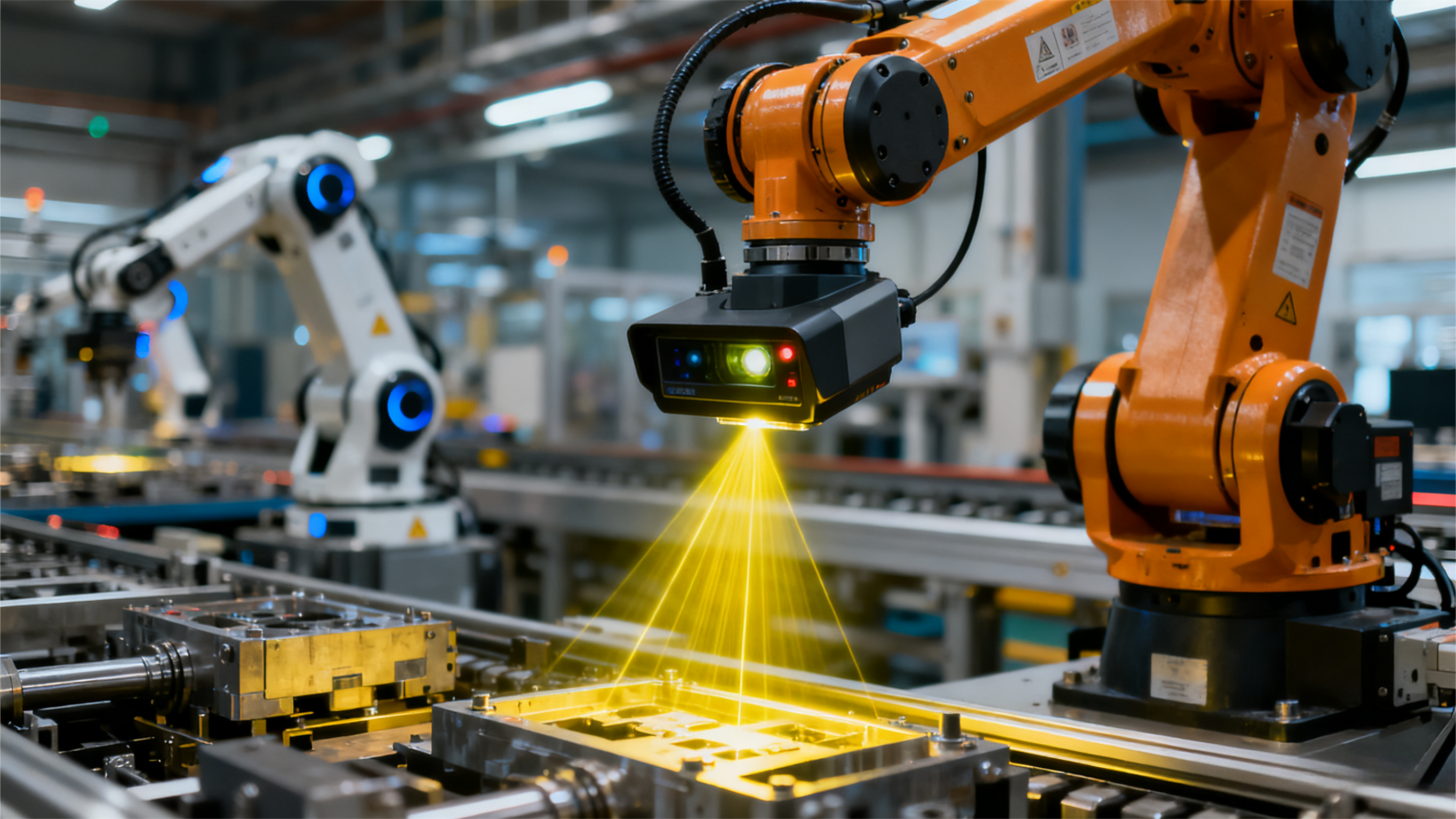
The core value of industrial laser ranging lies in converting "distance" in the physical world into digital signals, providing real-time and reliable basis for judgment for automated systems.
-
Real-time Position Data Feedback: Industrial high-frequency ranging modules can measure moving targets in real time. Based on the distance information of the targets, they ensure that equipment operates according to the preset trajectory, reduce the error rate in automated production, improve production efficiency, and are widely used in the positioning and calibration of robots.
-
Dynamic Data Detection: In automated production lines, product quality needs to be detected efficiently under the condition of high line speed. Relying on the advantages of high-precision and high-frequency ranging, industrial laser ranging modules can quickly detect the quality of products and achieve high detection efficiency.
-
Status Monitoring and Early Warning: During the automated production process, the positions of key components need to be closely monitored. Once the distance exceeds the normal range, it is easy to cause equipment overload or damage. The ranging capability of industrial laser ranging modules can quickly identify the displacement data of components, trigger fault early warnings, and reduce unnecessary component loss during production.
Adapting to Market Trends and Realizing Intelligent Analysis
In recent years, laser sensors have been developing in multiple directions, with integration, intellectualization, and multi-functionality as the main development orientations. Integrating artificial intelligence and machine learning functions into a laser sensing system is an important way to achieve more intelligent industrial automated production. In addition, the market is gradually shifting towards the development of laser sensors for emerging applications. Laser sensors will be gradually applied in smart city traffic management, infrastructure monitoring and other fields. Furthermore, the demand for automotive lidar sensors is also growing, especially for Advanced Driver Assistance Systems (ADAS) and autonomous vehicles. It is believed that driven by these market trends, laser sensors will continue to innovate and expand in the future.
Conclusion: Future Outlook
It can be seen that industrial laser ranging in automated production is gradually developing from "precision sensing" to "intelligent sensing". It is believed that in the future, with the gradual expansion of the laser sensor market, the development and innovation of industrial laser ranging will reach a new height.
Contact ERDI TECH
At ERDI TECH, we specialize in laser distance measurement and a wide range of laser products. If you require customized product manufacturing, please feel free to contact us.📧 yeva@erdimail.com (responses within 24 hours)