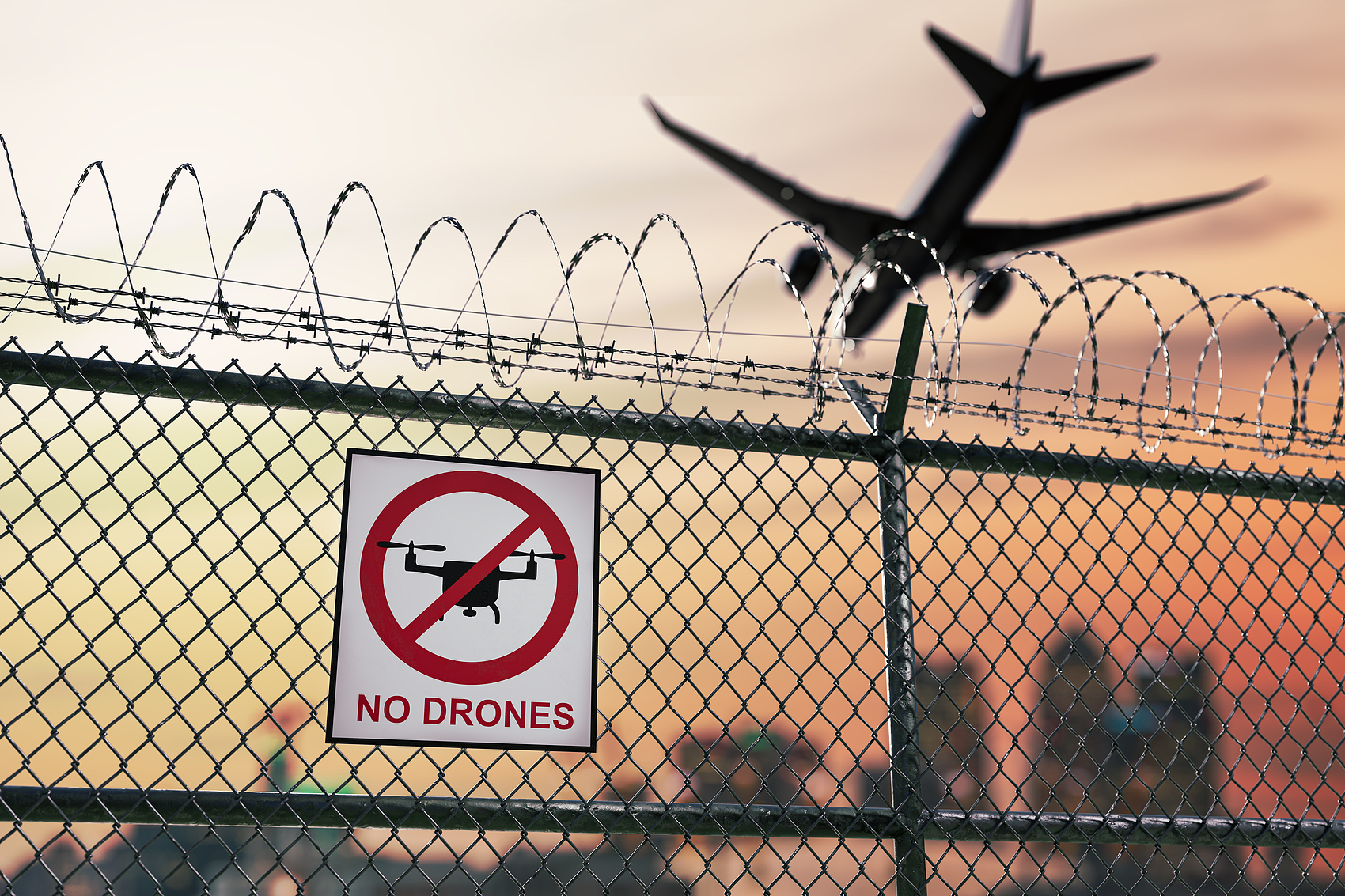
In recent years, the modernization process of border surveillance systems in Europe, North America, and the Middle East has been accelerating. Governments in these regions are increasingly deploying autonomous patrol drones and vehicles equipped with advanced electro-optical (EO) and infrared (IR) devices to enhance the real-time situational awareness of borders.
During this process, remote precise detection plays a crucial role and is a core requirement of border protection systems. For this, vehicle and drone systems need to operate normally in night, foggy, and other weather conditions, accurately detecting and locating moving targets. According to the reports of the European Union Border and Coast Guard Agency (Frontex) and defense investment plans, long-range laser rangefinder capability is now regarded as a key capability of autonomous and semi-autonomous border platforms, especially when adopting sensor fusion architectures.
Challenges of traditional sensing technologies
Radar, cameras, and short-range lidar, as traditional means of border surveillance, were widely used in the past. However, with the development of modern technology and the intensification of international conflicts, their limitations have gradually become apparent.
- Radar: It has a wide detection range, but its spatial resolution is limited, making it difficult to identify specific targets in chaotic environments.
- Cameras can capture high-resolution images, but they are ineffective in low-light conditions or in bad weather (such as foggy, dusty, or rainy conditions).
- Short-range lidar can perform precise distance measurement, but its effective range is usually limited to only a few hundred meters, which is far from sufficient for long-range border monitoring.
To overcome these limitations, modern border surveillance systems are increasingly adopting laser detection technology, which can provide high-precision ranging over a longer range - this is crucial for autonomous patrol vehicles and drones performing surveillance tasks.
Advantages of long-range laser rangefinder
Long-range laser rangefinder has several unique advantages in border surveillance applications:
- Detection range: Generally, long-range laser rangefinder can detect distances of several kilometers, with an error typically within ±2 meters.
- Capability to cope with complex environments: Long-range laser ranging modules have strong penetration capabilities compared to other tools, and long-range laser ranging can effectively detect in dust, low-reflective light conditions, and heavy rain.
- Application: Compared to traditional radar ranging, laser detection systems are small in size, low in power consumption, easy to integrate and lightweight for deployment, and convenient to use.
- Resistance to interference: Laser ranging uses light signal propagation, has strong anti-interference ability, and is less affected by complex environments and electromagnetic interference, ensuring stable ranging.
In summary, the core advantages of long-range laser detection stem from the inherent physical properties of lasers, including high precision, anti-interference, long range, and lightweight, which make it stand out in complex scenarios where traditional detection technologies are inadequate, gradually becoming the core technical solution for border surveillance. Industry trend reports from the defense market confirm that more and more budgets are being invested in sensor fusion architectures that include long-range laser ranging as a core technology.
Laser modules for autonomous border surveillance
Modern long-range laser rangefinder modules are designed for integration into drones, ground vehicles, and fixed observation stations. This article mainly introduces two types widely used in defense laser ranging:
- 1535nm laser rangefinder module
- 1064nm high-energy laser target designator
1535nm Eye-safe Laser Rangefinder Module
- Optimized for remote drone surveillance and autonomous patrol systems.
- Has high atmospheric transmittance in dusty, foggy, and humid environments.
- IEC Class I safe field of view, suitable for operations near civilian areas.
- Can detect targets with low reflectivity in harsh environments, with a detection range exceeding 3 kilometers.
Application case (taking the latest test results of ERDI as an example): In the recent integration project, ERDI Technology Company provided support for a border surveillance drone project deployed at high-altitude areas. The humidity and dust in this region severely affected the signal transmission performance. By optimizing the split control and return signal filtering, this system was able to achieve a detection range of over 3 kilometers for low-reflection moving targets (vehicle size) when the humidity was below 60% and there was slight haze. Now explore this module: 3km Laser Rangefinder Module
1064nm High-energy Laser Target Designator
- High pulse energy, suitable for integration with electro-optical/infrared onboard equipment.
- Stable performance in vibration and thermal stress environments, ideal for mobile or vehicle-mounted applications.
- Supports advanced false alarm reduction and anti-interference algorithms.
- Includes digital interface for real-time distance reporting and control.
- Equipped with reverse polarity and overvoltage protection circuits.
Application case:
ERDI’s LDR40K3 1064nm laser target designator achieved 20 Hz synchronous marking and continuous distance feedback in a border surveillance deployment.
| Feature | 1535 nm Eye-Safe Module | 1064 nm High-Energy Module |
| Detection Range | >3 km low-reflectivity target | >5 km medium-reflectivity target |
| Accuracy | ±2 m | ±2 m |
| Pulse Frequency | 10–20 Hz | 20 Hz |
| Eye Safety | IEC Class I | IEC Class I |
| Environmental Range | -40 °C to +60 °C | -40 °C to +60 °C |
| Integration | UAV, autonomous vehicles | EO/IR payloads, vehicle-mounted |
| Special Features | Signal filtering, low-reflectivity optimization | Laser marking, anti-interference algorithms |
Disclaimer: This article is based on publicly available defense market analysis reports and international standards for laser products. Certain technical characteristics are derived from mature solutions used in actual ERDI Tech applications.
References & Standards
- IEC 60825-1: International Standard for Laser Safety
- Frontex Border Security Technology Investment Report
- MIL-STD-810 vibration and thermal shock compliance
Author / Review Information
- Reviewed by ERDI Tech R&D Team
- Product compliance certifications(CE、RoHS、MIL-STD)
Contact ERDI TECH
If you need technical information, specification sheets, prototype tests or customized solutions for the 1064nm laser target designator, please contact the ERDI TECH engineering team.
📧 yeva@erdimail.com (responses within 24 hours)
We will provide the most suitable laser technology solutions for your platform.
Related Articles:
Why Long-Range Laser Rangefinder Is Becoming Essential in Border Surveillance
Global Trends in Defense and Autonomous UAVs 2026: Why Laser Ranging Matters
Advanced Laser Ranging & Counter-Drone Integration: Key Defense Technology Trends in 2026
Why Precise Laser Ranging Data Is Critical for Modern Anti-UAV Systems