
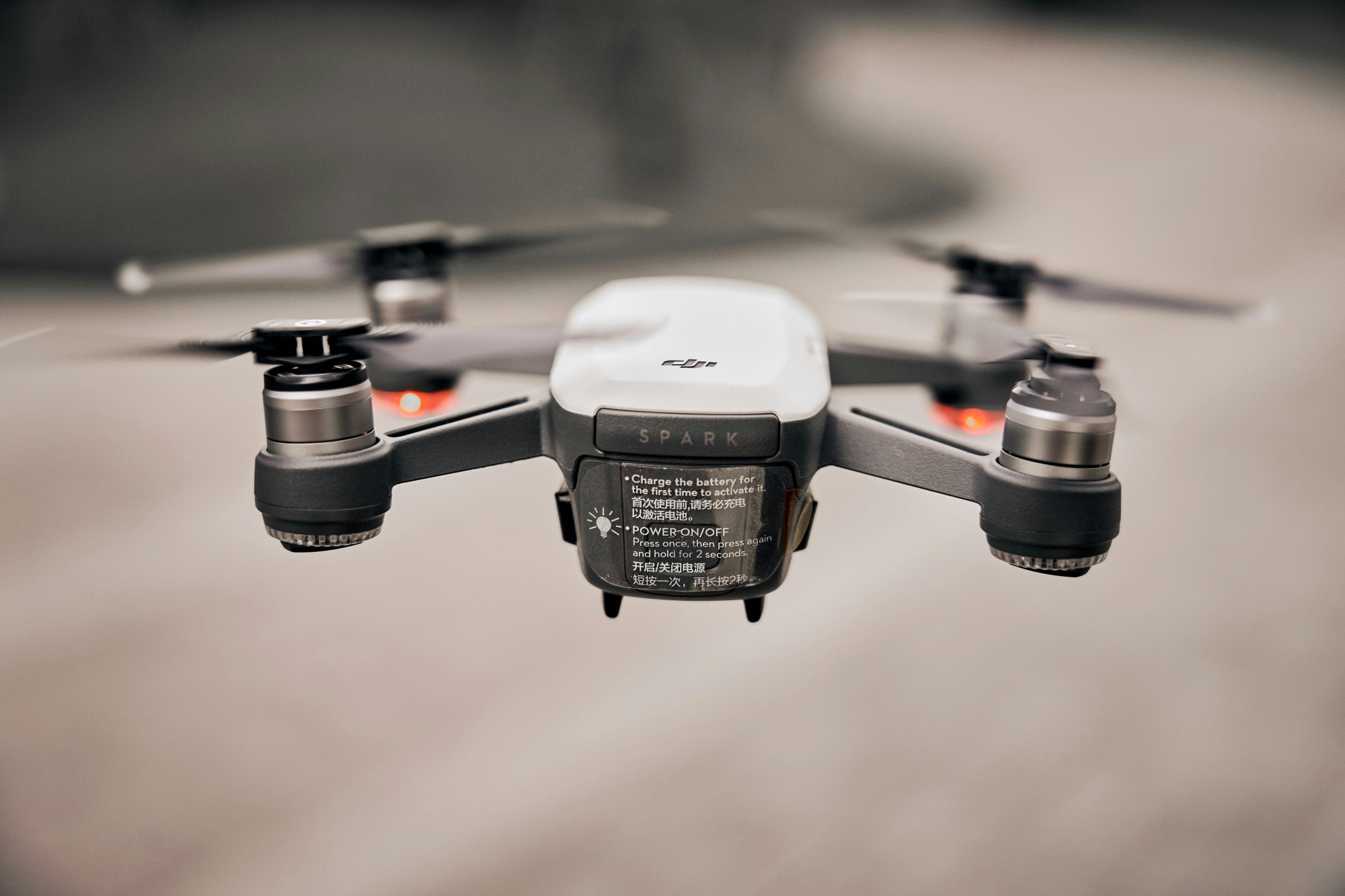
In recent years, with the continuous advancement of UAV technology, lasers have become a key component in enhancing the intelligence and precision of UAVs, leading to an unprecedented surge in demand for lightweight, high-performance sensors. As a leading expert in laser ranging solutions, ERDI's 905nm diode pulsed lasers offer significant advantages in precision, integration, and energy efficiency, gaining widespread attention and practical application in core UAV fields such as ranging, obstacle avoidance, and mapping. This article systematically analyzes the outstanding advantages of 905nm diode pulsed lasers in high-precision UAV applications and showcases, through real-world cases, how they enhance aerial sensing and mapping capabilities across various industries.
I. Why 905 nm Diode Pulsed Lasers Excel in UAVs
905 nm wavelength offers optimized atmospheric transmission and performance in varied conditions. Thanks to AlGaAs semiconductor design, these lasers deliver high reliability, stable temperature behavior, and superior beam quality—critical for reliable data in flight.
Their inherent advantages include:
-
Ultra-compact & lightweight: Modules like the LRF2000A-03 measure just 25×26×13 mm and weigh ~10 g—ideal for payload-constrained UAV systems
-
Low power consumption & eye safety: Class 3R or Class I ratings, draw ≤1.5 W, and integrate with low-voltage UAV power systems with minimal heat.
-
High peak power pulses (tens to hundreds of watts) enable centimeter-to-meter precision over ranges up to 2 km. Thanks to multi-junction designs, their pulse control and fast response enable accurate Time-of-Flight ranging and high signal-to-noise ratio.
-
Cost-effective Integration: Use of silicon APD detectors reduces cost and complexity compared to 1550 nm systems that require InGaAs detectors.
II. Technical Advantages for UAV Sensors
| Advantage | Benefit in UAV Applications |
|---|---|
| Compact & light | Saves payload weight & volume |
| High-frequency pulses | Enables fast ToF measurement & real-time scanning |
| High peak power | Extends detection range to 2000 m at ±1 m accuracy |
| Efficient thermal behavior | Maintains accuracy in varying flight environments |
| Silicon detector compatibility | Reduces system cost & simplifies design |
III. Real-World Case: ERDI’s LRF2000A‑03 Module
ERDI’s flagship LRF2000A-03 is a 905 nm diode pulsed laser module designed for small UAVs:
-
Size: 25×26×13 mm; Weight: ~10 g
-
Range: 5–2000 m with ±1 m accuracy; ≥98% precision, ≤1% false alarm rate
-
Power: ≤1.5 W consumption; operates on DC 3–5 V
-
Interface: UART TTL for easy drone integration and second‑stage development
-
Reliability: IP67, wide operating temp, strong shock/vibration resilience
👉 Explore ERDI’s 905nm laser rangefinder module
IV. Broader UAV Applications
-
Obstacle avoidance: Delivers fast, accurate environmental sensing for dynamic navigation
-
3D mapping & LiDAR: Produces precise point clouds during aerial surveys
-
Inspection & public safety: Provides reliable measuring and positioning in law enforcement, agriculture, and infrastructure monitoring
V. Future Trends & Technical Challenges
Despite their promise, 905 nm modules must continue to improve in:
-
Increasing maximum range and pulse efficiency
-
Enhancing environmental robustness
-
Reducing cost through mass manufacturing
When combined with edge AI, 5G connectivity, and autonomous systems, these lasers will support smarter UAV operations across defense, logistics, agriculture, and rescue domains.