
Abstract
This article explores the working principles and core components of fiber lasers, with a focus on their growing importance in laser manufacturing, communication, and medical fields. It highlights their technical advantages and wide applicability as a foundation for modern photonics and precision technology.
1. Introduction
As laser technology continues to evolve, fiber lasers have emerged as a transformative solution across industries—from precision manufacturing and medical surgery to optical communications and defense systems. Their outstanding efficiency, beam quality, and integration flexibility make them a key player in next-generation laser applications.
2. Working Principle of Fiber Lasers
A fiber laser generates laser light by amplifying a pump beam within a rare-earth-doped optical fiber. These fibers are doped with ions such as ytterbium (Yb³⁺), erbium (Er³⁺), or thulium (Tm³⁺), and are energized using a semiconductor laser diode. Through stimulated emission and optical feedback, the laser beam builds up and exits the fiber at high intensity.
Example: ERDI TECH's Er/Yb co-doped fiber lasers enhance performance by improving pump absorption efficiency, enabling higher output power and improved energy conversion.
3. Core Components of Fiber Lasers
3.1 Gain Medium
-
Yb³⁺-doped fibers (1030–1080 nm): Known for high output power and efficiency; ideal for cutting, welding, and marking.
-
Er³⁺-doped fibers (1530–1565 nm): Eye-safe and optimized for optical communication and LIDAR. Co-doping with Yb³⁺ prevents ion clustering and enhances performance.
-
Tm³⁺-doped fibers (1900–2000 nm): Absorbed strongly by water, making them ideal for medical, sensing, and biological applications.
3.2 Pump Source
Compact, efficient semiconductor laser diodes are used to excite the doped ions and drive population inversion, making fiber lasers compact and energy-efficient.
3.3 Resonator
-
Fiber Bragg Gratings (FBGs): Reflect selected wavelengths for stable single-wavelength output.
-
Fiber ring mirrors: Enable simple system design and improve beam stability through internal circular reflection.
4. Core Advantages of Fiber Lasers
4.1 Superior Beam Quality
Thanks to waveguide confinement and an all-fiber architecture, fiber lasers achieve:
-
Single-mode beam quality (M² ≈ 1.0)
-
High spatial coherence
-
Precision in tasks like micromachining, 3D scanning, and optical sensing
4.2 High Efficiency and Low Energy Consumption
Fiber lasers offer energy conversion efficiencies of over 30%, significantly outperforming CO₂ and solid-state lasers. Reduced cooling needs and high output make them ideal for green manufacturing.
4.3 Compact and Flexible Design
Fiber’s natural flexibility allows for:
-
Compact, lightweight systems
-
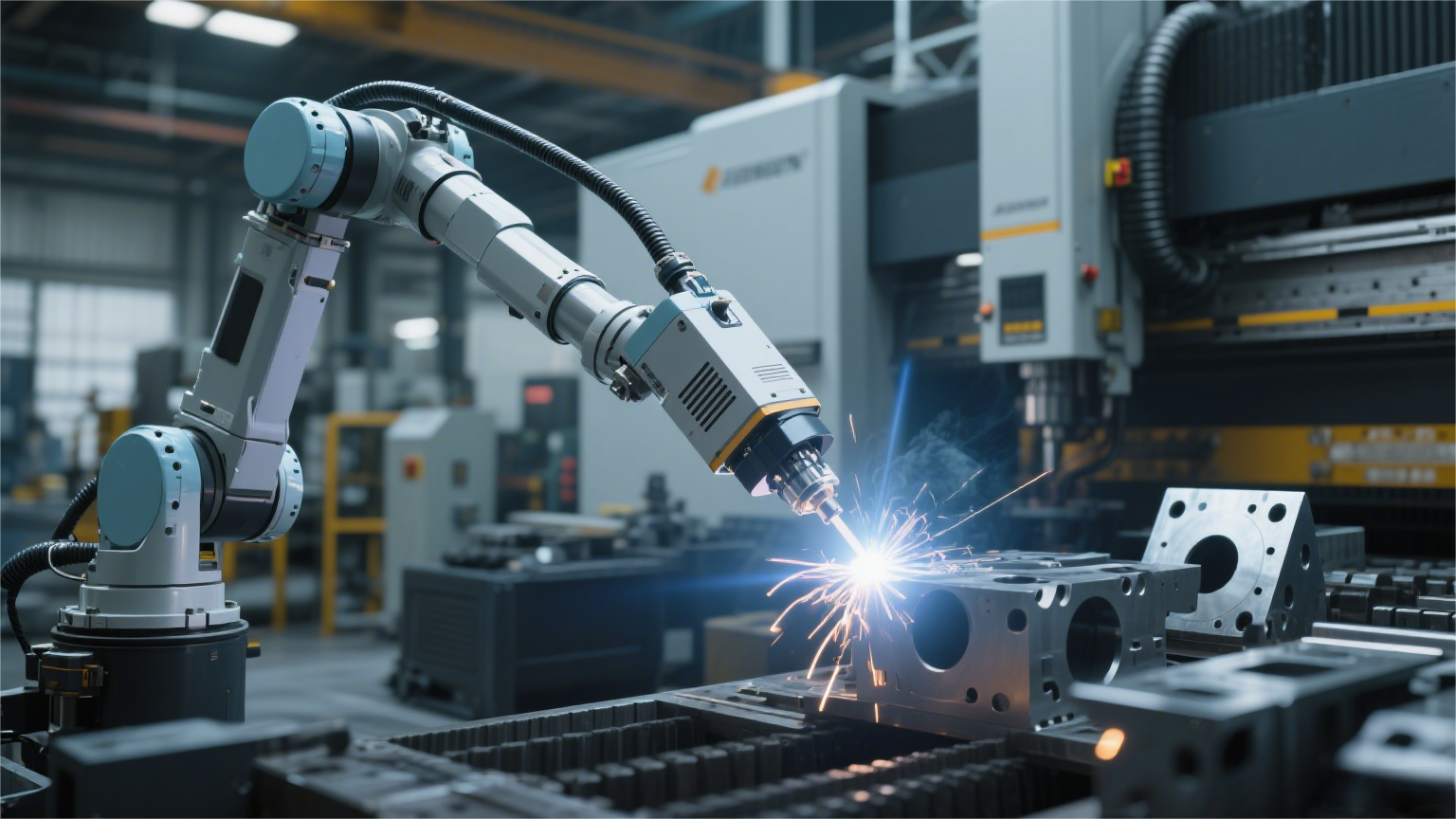
Easy integration into robotic arms, portable devices, and UAV platforms
5. Conclusion
Fiber lasers represent a leap forward in laser technology, combining power, precision, and efficiency in a scalable and compact format. As laser innovation continues, fiber lasers will drive breakthroughs in smart manufacturing, communication, aerospace, defense, and medicine.
Want to learn more about laser technology?
Visit www.erditechs.com for detailed solutions on Er:Yb fiber lasers, high-power modules, and custom laser development.