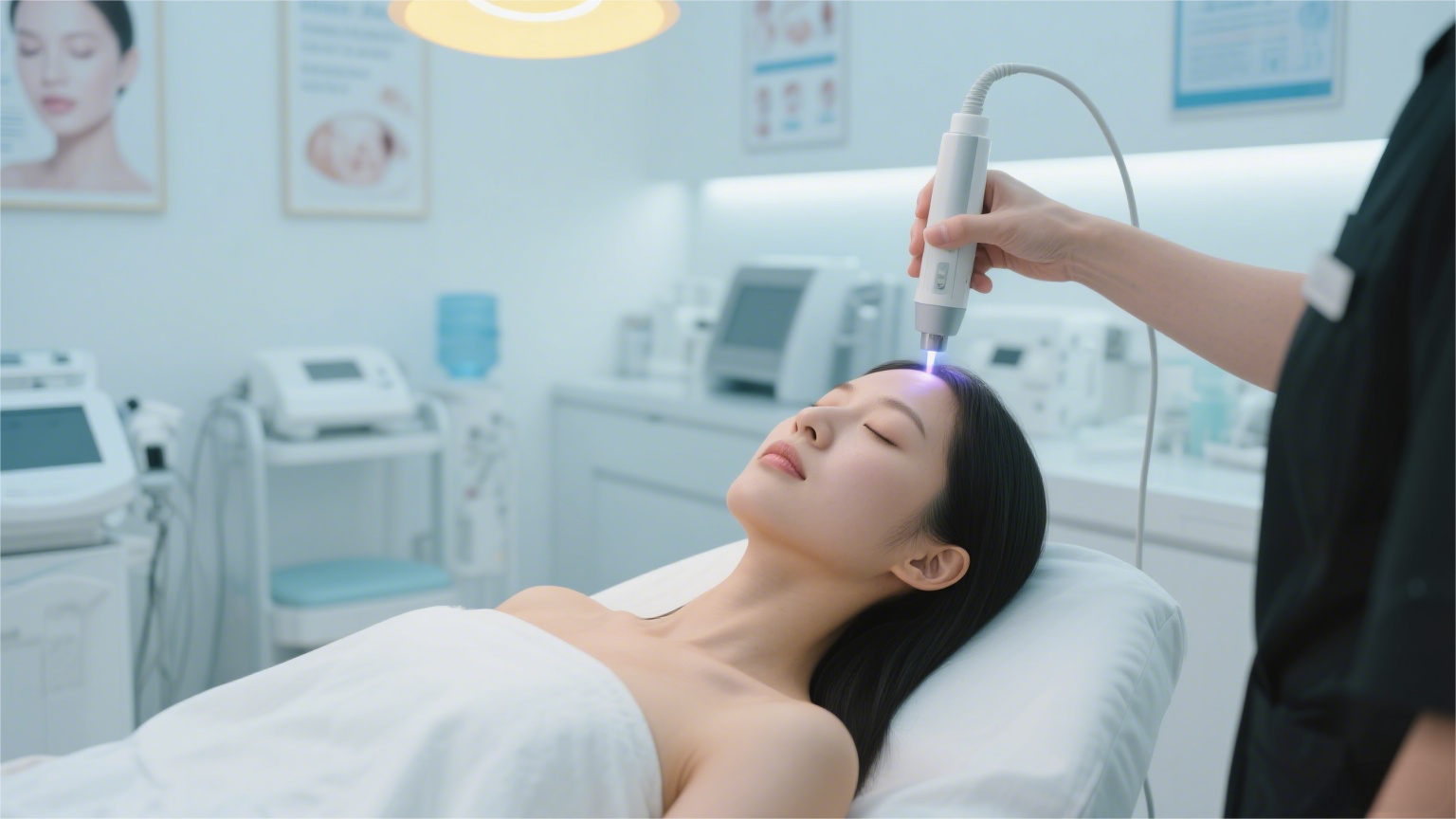
Laser cosmetology has become an indispensable tool in modern dermatology, renowned for its efficiency, safety, and precision. From fading wrinkles and removing pigmentation to rejuvenating and whitening the skin, lasers offer non-invasive or minimally invasive solutions for beauty seekers. As various types of laser equipment continue to evolve, cosmetic outcomes have become increasingly diversified and personalized. Among these, erbium laser and CO₂ laser stand out as the two most widely used types in the cosmetic laser market, exhibiting significant differences in principles, characteristics, and application scenarios. This article introduces their fundamental properties, application scenarios, and cosmetic effects to help practitioners select precise treatment plans and enable consumers to make informed choices.
I. Basic Knowledge of Erbium Lasers and CO₂ Laser
Erbium Laser:
A solid-state laser that uses erbium (Er³⁺)-doped glass as its gain medium, primarily emitting light at a wavelength of 1550 nm in the near-infrared spectrum. Its most notable feature is its high affinity for water molecules, allowing it to act on both the epidermis and dermis with micron-level precision. This promotes collagen regeneration and skin renewal.
Due to its highly concentrated energy absorption, the thermal damage zone of erbium lasers is extremely small—typically controlled within 50–100 μm. It works like a highly precise scalpel, "sculpting" the skin with minimal damage to surrounding tissues. Its key advantages include minimal trauma, rapid recovery, mild discomfort, and a generally comfortable treatment experience.
CO₂ Laser:
A CO₂ laser that uses carbon dioxide (CO₂) as the working medium, emitting at a wavelength of 10.6 μm in the mid-infrared range. It delivers higher energy and is more readily absorbed by water in the skin’s surface layer, making it ideal for vaporization and cutting. Unlike erbium lasers, CO₂ lasers produce stronger thermal effects, with thermal damage typically limited to the 10–20 μm depth of the epidermis. They function more like a "rapid vaporizer," effectively removing superficial lesions.
As a result, CO₂ lasers are commonly used for ablative resurfacing, penetrating deeper into the dermis to treat deep wrinkles, scars, and pigmentation issues.
II. Targeted Application Scenarios
Applications of Erbium Lasers:
Erbium laser treatments are known for their gentle, minimally invasive effects and are ideal for anti-aging and skin rejuvenation—especially for individuals with sensitive skin or younger consumers. By stimulating collagen regeneration in the superficial and mid-dermal layers, they can reduce fine lines and improve the appearance of enlarged pores. With minimal tissue damage and short recovery (typically 2–7 days), patients can quickly resume normal activities.
Applications of CO₂ Lasers:
In contrast, CO₂ lasers are better suited for addressing more persistent and deep-seated skin issues. Their strong penetration and ablative power make them effective in removing thick dead skin and deeply damaged collagen tissue. Common applications include the removal of warts, moles, and lesions such as seborrheic keratosis. CO₂ lasers can also be used to treat acne scars and superficial burn scars. By adjusting parameters, they stimulate collagen remodeling to improve texture and appearance significantly.
However, due to the greater thermal damage, patients often experience scabbing and peeling post-treatment, with a recovery period of 7–14 days. Strict post-care is required to avoid infection or pigmentation.
III. Advantages, Disadvantages, and Suitable Candidates
Erbium Laser
-
Advantages: High safety profile, minimal side effects, ideal for sensitive skin or those with low pain tolerance. Offers fast recovery and a comfortable treatment experience.
-
Disadvantages: Shallower penetration limits effectiveness for severe conditions. May require more sessions, increasing overall treatment cost.
CO₂ Lasers
-
Advantages: Remarkable therapeutic results for stubborn skin problems. Delivers rapid, visible improvements.
-
Disadvantages: Higher risk of thermal injury. Not ideal for darker skin tones prone to pigmentation or those with poor wound healing. Recovery takes longer and requires diligent care.
IV. How to Choose the Right Laser Treatment
When choosing a laser cosmetic plan, consider the following:
-
Identify the type of skin issue (e.g., fine lines, deep wrinkles, pigmentation, scars).
-
Evaluate your skin type, tone, and medical history.
-
Decide between rapid results or gradual improvement, and assess pain tolerance.
-
Seek treatment at certified medical institutions with qualified dermatologists.
-
Practice proper skincare before and after treatment, including sun protection and hydration.
V. Frequently Asked Questions
Q1: Is laser cosmetology painful?
A: Erbium laser treatments typically cause only mild discomfort. CO₂ laser treatments may cause stinging during the procedure and a burning sensation afterward. Both can be managed with topical anesthesia.
Q2: Which laser has fewer side effects?
A: Erbium lasers have fewer side effects and are more suitable for first-time users or individuals with sensitive skin. CO₂ lasers are more aggressive and require careful post-treatment care due to higher risks of bleeding or pigmentation.
Q3: What is the recovery period for laser treatments?
A: Recovery usually takes 2–7 days for erbium laser treatments and 7–14 days for CO₂ laser procedures, depending on individual conditions and treatment areas.
VI. Conclusion: Making an Informed Choice in Laser Cosmetology
In conclusion, both erbium laser and CO₂ laser have unique advantages. There is no one-size-fits-all solution in cosmetic dermatology. Medical institutions should select appropriate laser types and treatment protocols based on patients' skin conditions, goals, and tolerance. Consumers should fully understand their options, consult professionals, and formulate personalized plans for optimal results. With ongoing technological advancements, these lasers will continue to play increasingly important roles in providing safe and effective aesthetic treatments.
VII. Recommended Further Reading
-
Common Misconceptions in Laser Cosmetology
-
Considerations for Different Skin Types in Laser Treatments
Contact ERDI TECH
If you need technical information, specification sheets, prototype tests or customized solutions for the 1064nm laser target designator, please contact the ERDI TECH engineering team.
📧 yeva@erdimail.com (responses within 24 hours)
We will provide the most suitable laser technology solutions for your platform.