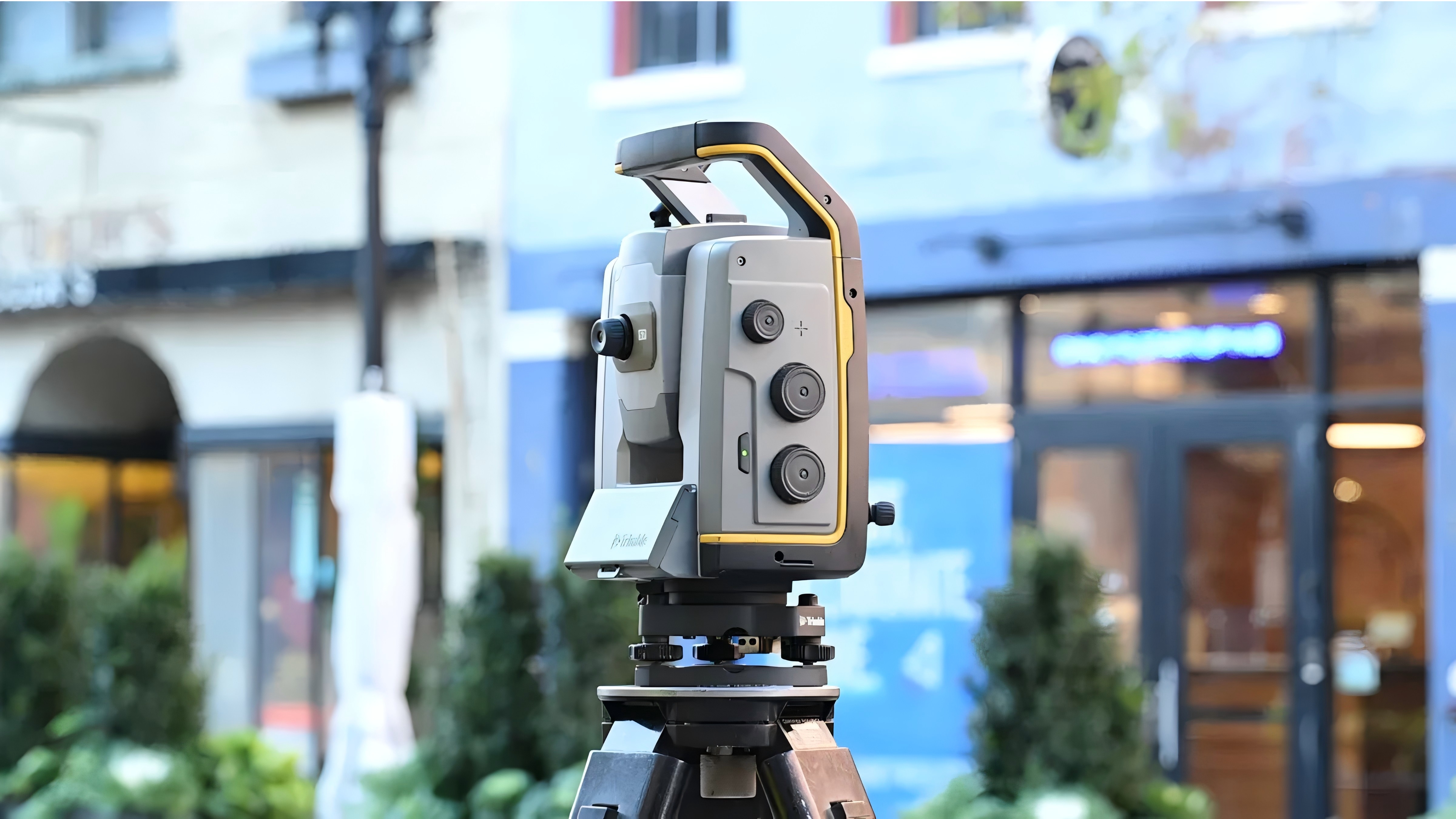
A 905nm laser is very important in LiDAR systems. It sends out short and strong pulses. These pulses help measure distances very accurately. Recent tests show these lasers can reach up to 200m. They can measure with a precision of 0.05m. The table below shows some important facts:
|
Spot Area |
20×10cm(100m) |
|||
|
Weight |
<50g |
|||
|
Power Supply Voltage |
24V(9V~36V) |
|||
|
Specification Range |
0.05-50m |
0.05-100m |
0.05-150m |
0.05-200m |
|
Measurement Accuracy |
±0.05m |
±0.05m + (L-50) × 0.1%, where L is the measurement distance |
||
|
Standard Measuring Range |
0.05m ~ 200m @ 80% reflectivity & visibility > 10km |
|||
|
Distance Resolution |
1cm |
|||
|
Absolute Accuracy |
±0.05m@50m |
|||
|
Output Interface |
3.3V TTL serial port output |
|||
Scientists use the 905nm wavelength to map plants. It also helps them check plant health. This is because it works well with chlorophyll. It lets scientists study plants in detail.
Key Takeaways
-
905nm lasers send out fast, strong light bursts. They can measure distances within at least 200 m. It's highly suited for outdoor use.
-
This wavelength works with cheap, common silicon detectors. This helps LiDAR systems stay small, low-cost, and dependable.
-
905nm lasers are safe and work well. They follow eye safety rules. They also give good accuracy and range for many jobs.
-
These lasers work well in light rain, fog, and dust. Special coatings and smart designs help keep the signal strong.
-
905nm LiDAR is used a lot in cars, robots, and factories. It is popular because it is cheap, safe, and works well. The market for it is growing fast.
905nm Laser in LiDAR
Function in Distance Measurement
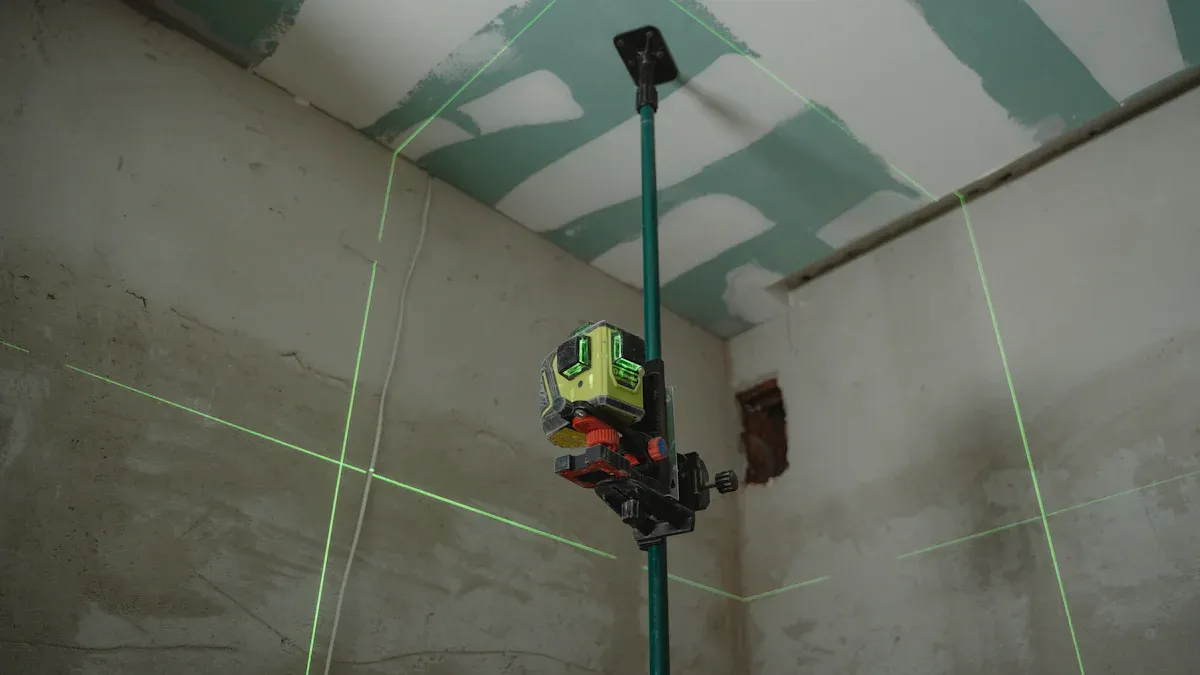
A 905nm laser is very important in LiDAR. It sends out quick flashes of light. The system checks how long each flash takes to hit something and come back. This is called time-of-flight measurement. The system knows how fast light travels. It uses this to work out the distance to things. This helps LiDAR make detailed maps of places.
Researchers have tried 905nm laser LiDAR in real life. For example, the RS-LiDAR-32 from Robosense gathered data on point clouds and intensity from 20 to 100 metres. They found more point clouds when the target was closer. Intensity stayed steady, even when the car moved at different speeds or in light rain. Only heavy rain made it work less well. These results show that 905nm laser LiDAR is good for mapping, even when things get tough.
Scientists have also measured how 905nm lasers send out pulses. Some lasers can make pulses as short as 18 nanoseconds and reach up to 20 watts. Other systems use pulses around 100 nanoseconds, with peak power up to 220 watts. These short, strong flashes help measure distances quickly and accurately. A 905nm laser rangefinder can measure up to 1,000 metres with millimetre accuracy. It works well in fog, dust, and other hard conditions.
Importance of Wavelength
The wavelength you pick matters a lot for LiDAR. The 905nm wavelength has many good points:
-
Pulsed diode lasers at 905nm are easy to find, small, and not expensive. This makes them good for cars and other vehicles.
-
The 905nm wavelength lets the system be safe for eyes. The beams move fast, so they do not hurt eyes, even at high power.
-
Silicon detectors are common and cheap, and they work well with 905nm light. They can see light up to about 1100nm, so 905nm is a good fit.
-
The human eye lets 905nm light reach the retina, so safety rules limit the power and range. This range, usually up to 100 metres, is good for city driving.
Longer wavelengths like 1550nm can be safer for eyes and go farther. But 905nm lasers are still used a lot because they are easy to make, cost less, and meet safety rules. The way the beam moves also helps keep eyes safe, as it sweeps across the eye in about a millisecond.
Note: The 905nm wavelength gives a good mix of performance, safety, and cost, so it is a top pick for many LiDAR uses.
Why 905nm Laser
Technical Benefits
A 905nm laser gives LiDAR systems many good features. This wavelength works in lots of weather types. Scientists checked how rain and fog change laser beams. They saw that polycarbonate covers let most 905nm light through when dry. But water drops on the cover can bend and spread the light. This makes it harder for LiDAR to see. Special coatings, like superhydrophobic ones, stop water from sticking. This helps keep the signal strong.
Researchers use fog chambers to test how fog changes the beam. They use models to see how small air particles scatter and soak up the light. Small particles and thick fog scatter the beam more. This makes the laser weaker. The 905nm laser still works well because its wavelength helps with these problems. The table below shows how scientists study these effects:
|
Aspect |
Description |
|---|---|
|
Experimental Setup |
|
|
Theoretical Model |
Mie scattering theory to model how particles affect the beam |
|
Particle Size Impact |
Small, dense particles cause more scattering and weaker signals |
|
Scattering vs Absorption |
Scattering changes direction; absorption takes energy away |
|
Attenuation Coefficient |
Measures how much the beam weakens over distance |
|
Relevance to 905 nm |
Wavelength choice helps balance scattering and absorption |
Another good thing is detector compatibility. Silicon detectors can pick up 905nm light easily. These detectors are common, work well, and do not cost much. This helps make LiDAR systems that work well and are not too expensive.
Safety and Cost
The 905nm laser is also good for safety and cost. Many LiDAR systems use this wavelength because it is safer for eyes than some others. The light from a 905nm laser can reach the retina. So, strict safety rules limit the power of each beam. To follow these rules and still work well, engineers use many small lasers, not one big one. This keeps the system safe and spreads out heat. This helps the device last longer.
Manufacturers pick the 905nm laser to save money. Silicon detectors work well with this wavelength and are used in many places. This means companies can use old factories and supply chains. This lowers the price of each LiDAR unit. Systems that use 1550 nm lasers need special detectors made from costly materials. These systems also need more cooling and take up more space.
-
905nm lasers help make LiDAR systems smaller, lighter, and cheaper.
-
Silicon detectors for 905nm are easy to find and cost less than other types.
-
The technology for 905nm lasers is mature, so companies can make many units quickly.
-
905nm LiDAR works well for cars, robots, and other uses where moderate range and accuracy are enough.
Note: The 905nm laser gives a good mix of safety, cost, and performance. This makes it a top choice for mass-produced LiDAR systems.
Performance Comparison
905nm vs 1550nm
Engineers look at both 905nm and 1550nm lasers for LiDAR. Each one has good and bad points. The table below shows how they compare in important ways:
|
Performance Metric |
905nm LiDAR Characteristics |
1550/1535nm LiDAR Characteristics |
|---|---|---|
|
Eye Safety |
Limited power due to safety constraints |
Enhanced eye safety allowing higher power usage |
|
Detection Range |
Shorter range due to power limits |
Longer detection range enabled by higher safe power |
|
Weather Performance |
More affected by sunlight and adverse weather |
Better performance in fog, rain, dust; less affected by sunlight |
|
Ambient Light Interference |
Higher susceptibility to interference from sunlight |
Reduced interference from ambient light sources |
|
Material Penetration |
Standard interaction with materials |
Slightly better penetration through particulates or surfaces |
|
Cost |
More cost-effective, uses common components |
Higher cost due to specialised, less common components |
A 1550nm LiDAR can use more power and still be safe. This means it can spot things that are farther away. This is helpful for self-driving cars that need to see far ahead. The 1550nm system also works better in fog, rain, and bright sun. But it costs more because it needs special parts. The 905nm laser system is still popular because it is cheaper and uses easy-to-find parts. But it cannot see as far or work as well in bad weather as the 1550nm system.
Note: 905nm LiDAR is good if you want to save money. 1550nm LiDAR is better for jobs that need long range and good weather performance.
Environmental Factors
Weather and light can change how well LiDAR works. Scientists have tested 905nm laser LiDAR in labs and outside. They checked how rain, fog, and sunlight affect the system. Here are some important results:
-
Weather chambers can make rain from 20 to 40 mm/h and different light, from day to night.
-
Tests show rain and fog make fewer point clouds and less accurate distance readings. This is because water and fog scatter the laser pulses.
-
Real tests over months show rain, snow, and fog all make detection weaker and less accurate.
-
The system also has more trouble in bright sun, which can cause problems.
-
Engineers check performance by counting point clouds, checking detection strength, and measuring distance accuracy.
These tests help designers know what 905nm laser LiDAR can and cannot do. Then they can make it better or pick the right type for each job.
LiDAR System Types
Time-of-Flight
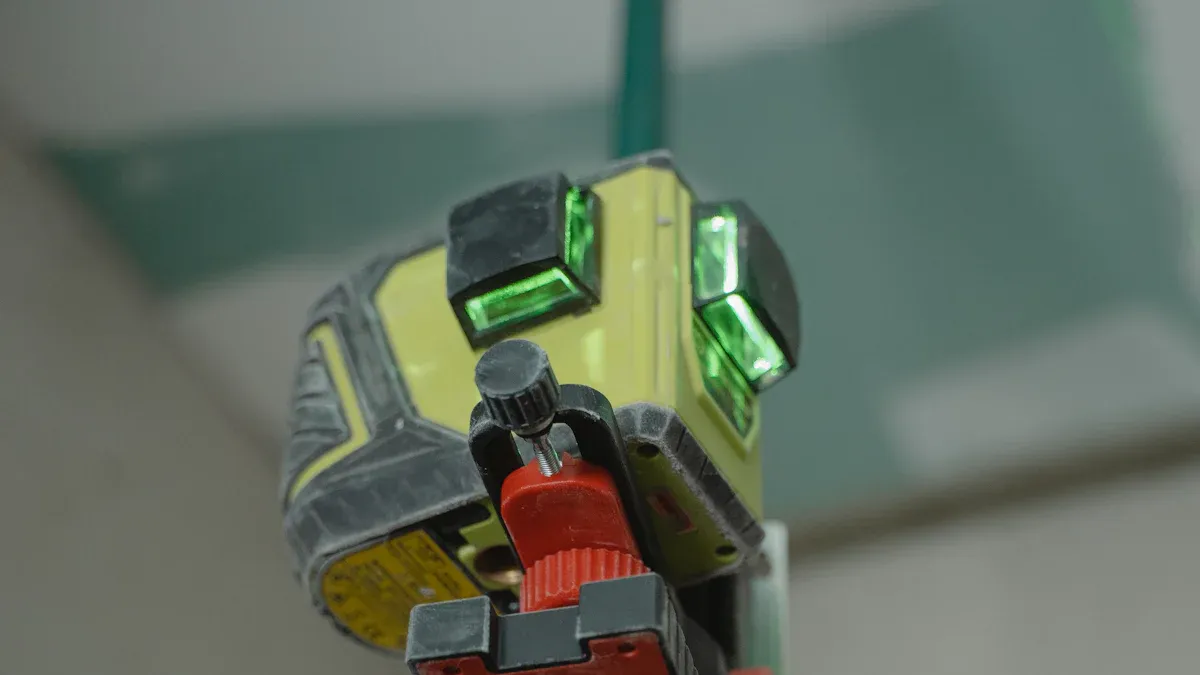
Time-of-Flight LiDAR uses short light bursts to find distances. The system sends a 905nm laser pulse. It checks how long the light takes to return. This helps make 3D maps and spot things in the way. ToF LiDAR has a laser diode, an avalanche photodiode, and a time-to-digital converter. These parts work together to measure distance fast.
Scientists found ToF LiDAR with 905nm lasers works for many jobs. These systems are simple and do not break easily. They help track drones and map places. ToF LiDAR is liked because it is cheap and safe. The 905nm wavelength fits well with silicon detectors, which are easy to get and not costly.
The table below lists main features of 905nm ToF LiDAR systems:
|
Parameter |
Description |
|---|---|
|
Laser Wavelength |
905nm, works with silicon detectors |
|
Detection Range |
Good for many uses, depends on how well objects reflect light |
|
Safety Level |
Meets Class 1 safety standards |
|
Field of View |
Up to 360° with rotating systems |
|
Ranging Accuracy |
High, supports detailed 3D mapping |
|
Angular Resolution |
0.01° to 1°, allows fine detail |
|
Point Rate |
Tens to hundreds of thousands per second |
|
Number of Beams |
Multi-beam setups give a better view of the environment |
|
Lifespan |
Mechanical: thousands of hours; solid-state: up to 100,000 hours |
|
Emission Mode |
Works with both rotating and solid-state (Flash, MEMS, phased array) emission methods |
ToF LiDAR systems with 905nm lasers give good accuracy, safety, and price. This makes them a top pick for many jobs.
Flash and Hybrid
Flash LiDAR takes a picture of a whole scene at once. It sends out one wide pulse of 905nm laser light. The sensor collects the light that bounces back from every spot. This is good for fast jobs, like military targeting or sorting things in factories. Flash LiDAR has no moving parts, so it is strong and quick.
Hybrid solid-state LiDAR mixes fixed and moving parts. It often uses tiny mirrors or prisms to move the 905nm laser beam. These systems scan the area in small parts. Hybrid LiDAR is smaller and lasts longer than old mechanical types. It is also easier to put together.
A hybrid solid-state LiDAR, such as the CH128 series, works very well:
|
Parameter |
CH128 Series Hybrid Solid-State LiDAR (905nm) |
|---|---|
|
Detection Range |
200m (160m at 10% reflectivity) |
|
Angular Resolution |
0.2° horizontal, 0.25° vertical |
|
Scan Rate |
5–20 Hz |
|
Field of View |
120° horizontal × 25° vertical |
|
Data Points Generated |
760,000 per second |
|
Structure |
Almost solid-state, only prism moves |
|
Advantages |
High reliability, compact size, easy assembly |
Hybrid and Flash LiDAR systems with 905nm lasers scan fast and well. They are good for cars, robots, drones, and many factory jobs.
Applications and Trends
Automotive and Robotics
The car and robot industries use 905nm laser LiDAR more each year. Many car makers pick this wavelength for its clear images and safe use. It also measures distance well. The table below lists important facts and rules that help this trend:
|
Description / Impact |
|
|---|---|
|
Dominance of 905nm wavelength |
Most widely used wavelength in automotive LiDAR due to high resolution, range, and eye safety. |
|
Market Growth CAGR |
Global market expected to grow at ~29.8% CAGR from 2024 to 2030. |
|
Demand Drivers |
Increasing adoption of ADAS and autonomous vehicles requiring reliable environmental sensing. |
|
Government Regulations |
Mandates and funding promoting LiDAR adoption for vehicle safety. |
|
Technological Advancements |
Development of compact, low-cost, rugged LiDAR sensors integrated with other sensors accelerates adoption. |
|
Industry Dynamics |
Strategic partnerships, R&D investments, mergers, and acquisitions indicate expanding market activity. |
|
Standardisation Efforts |
Compliance with international safety and interoperability standards reduces barriers and lowers costs. |
Car companies use 905nm LiDAR for driver help and self-driving cars. Robot makers use these sensors to help robots move and avoid things. Safety and price are big reasons why 905nm lasers are popular in these areas.
Industrial and Consumer
Many industries use 905nm LiDAR for different jobs. These include mapping land, checking the environment, and helping in disasters. Smart home gadgets and drones also use this technology. The market is growing fast in Asia-Pacific, North America, and Europe. Companies save money because making 905nm lasers is cheaper.
-
Main users: aerospace, defence, transport, environment, building, mining, utilities, and power.
-
Uses: mapping, city planning, checking the environment, and disaster help.
-
Growth by region: Asia-Pacific has many new projects, while North America and Europe keep growing.
-
Market growth: new ideas, government rules, and what people want all help.
Manufacturers see steady need for 905nm LiDAR in factories and homes. The technology is flexible and not expensive, so it is a favourite choice.
Future Developments
The future for 905nm laser LiDAR looks bright. Companies spend money to make sensors better, smaller, and cheaper. New rules help products sell in more countries. The market should keep growing, with almost 30% growth each year until 2030. As more cars, robots, and gadgets use LiDAR, the need for safe and cheap sensors will go up.
Tip: Look out for better detectors and new safety rules. These could change how 905nm laser LiDAR works in the future.
The 905nm laser is still picked often for LiDAR systems. It works well, is safe, and does not cost much. This helps it get used in cars, robots, and factories. Many companies use it to map places and find objects. New detector ideas and safety rules might change LiDAR in the future. Engineers are making LiDAR better and trying out new wavelengths.
Tip: Keep an eye out for better detectors and changes in which wavelengths are used soon.
FAQ
What makes 905nm lasers popular in LiDAR systems?
Engineers pick 905nm lasers because they cost less and are safe for eyes. They also work well with silicon detectors. These lasers help keep LiDAR systems small and light. Many industries use them for these reasons.
Are 905nm LiDAR systems safe for human eyes?
Most 905nm LiDAR systems follow strict eye safety rules. The laser beams move fast and use low power. This design helps keep people’s eyes safe during normal use.
How far can a 905nm LiDAR system measure?
A normal 905nm LiDAR can measure up to 120 metres. Some better models can reach 200 metres or more. The real range depends on weather, how well the target reflects, and the system’s design.
Can 905nm LiDAR work in bad weather?
905nm LiDAR works in light rain, fog, and dust. Heavy rain or thick fog can make it less accurate. Engineers use special coatings and smart software to help it work better in tough weather.
What industries use 905nm LiDAR technology?
Many sectors use 905nm LiDAR. These include cars, robots, mapping, farming, and electronics for consumers. The technology helps with navigation, safety, and checking the environment.