
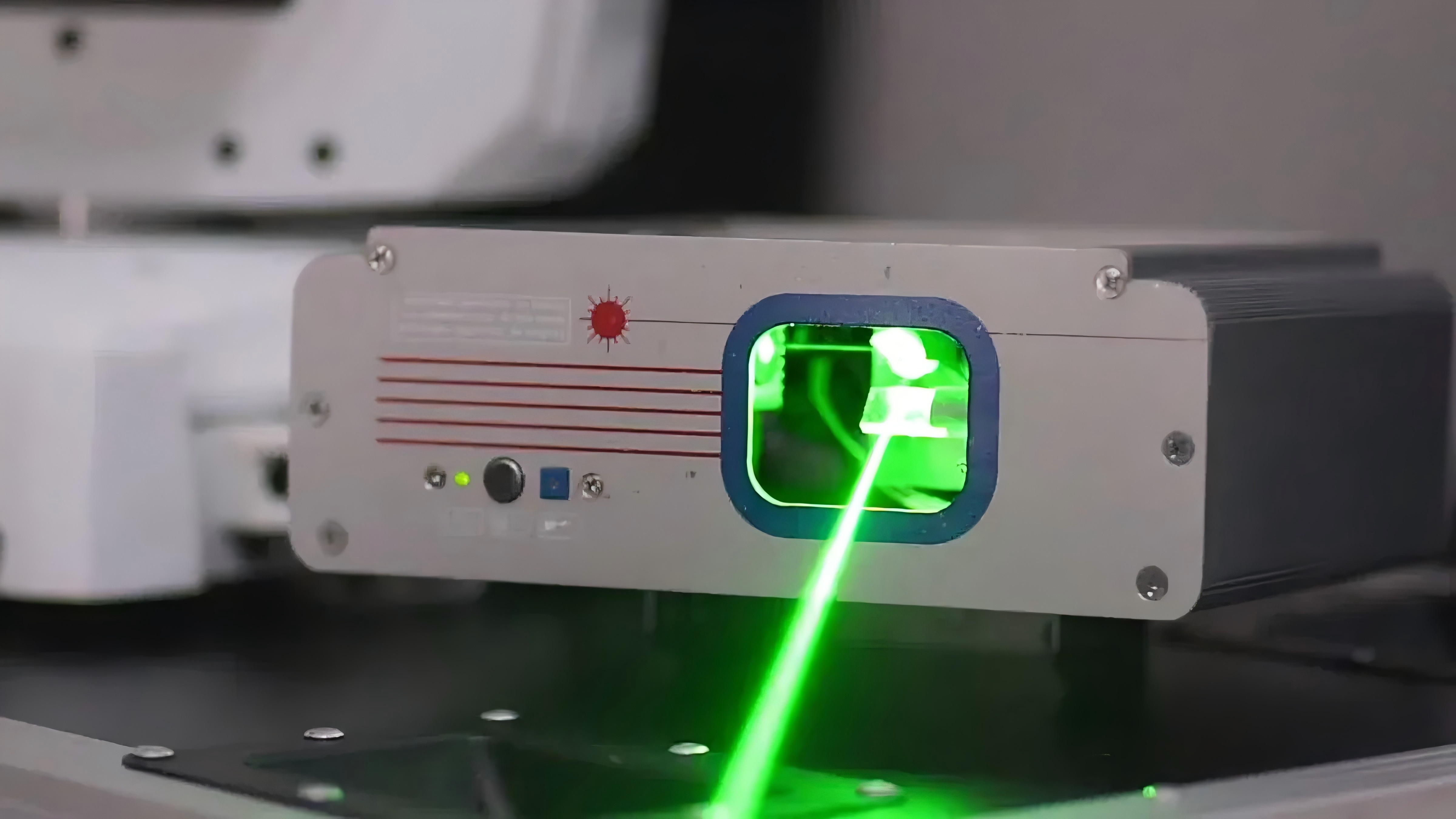
You want accuracy and dependability when picking a laser measuring tool. In 2025, models like the Leica DISTO D2, Klein Tools 93LDM200, Atolla T201, Bosch GLM165-22, and DeWalt DW0165N are top choices. These tools excel in accuracy, user-friendly features, and value. For example, the Leica DISTO D2 measures up to 330 feet with Bluetooth connectivity, while the Klein Tools 93LDM200 offers a bright green laser and USB-C charging. This article will focus on comparing these laser measuring tools to help you select the best laser measures.
The chart below highlights how these leaders compare in distance and price:
Key Takeaways
-
Laser measuring tools come in various types, each designed for specific tasks like quick distance checks, advanced measurements, or industrial use.
-
Accuracy and range are crucial; choose a tool with precision within ±1-2 millimeters and a range that fits your pro
ject size.
-
Durability matters—look for water and dust resistance and rugged designs to ensure your tool lasts in tough conditions.
-
Connectivity features like Bluetooth help transfer measurements easily, saving time and reducing errors.
-
Battery type affects convenience; rechargeable lithium-ion batteries offer longer use, while alkaline batteries are easy to replace.
-
Match your tool choice to your needs: beginners benefit from simple, affordable models, while professionals need rugged, feature-rich devices.
-
Top brands like, Leica, Klein Tools, Bosch, and DeWalt offer reliable options with different strengths for various users.
-
Reading user reviews and understanding real-world performance helps you pick a tool that delivers accuracy, durability, and ease of use.
- Introducing our laser distance measure
Classification of Laser measuring Tools
When you explore the world of laser measure, you encounter a variety of tools designed for s
pecific tasks. Understanding these categories helps you select the right device for your needs, whether you work in construction, surveying, defense, or environmental monitoring.
Laser measuring tools fall into several main categories. Each category reflects a unique technological advancement and serves a distinct purpose. The table below summarizes the most common types and their primary applications:
|
Category |
Technological Advancement |
Use Case Description |
|---|---|---|
|
Target Designation and Ranging |
Laser designators and laser rangefinders |
Marking targets for precision-guided munitions; measuring distances for effective weaponry use |
|
Laser Detection and Ranging (LIDAR) |
LIDAR systems using laser technology |
Terrain mapping and intelligence gathering for reconnaissance and environmental monitoring |
Tip: When you choose a laser measuring tool, consider the environment and the complexity of your tasks. Some tools excel in rugged outdoor conditions, while others shine in precise indoor measurements.
Let’s break down the most common types you will encounter:
-
Handheld Laser Rangefinders:
You use these compact devices for quick, accurate distance measurements. They fit easily in your pocket and suit both DIY and professional projects. Many models offer features like area calculation, volume measurement, and Bluetooth connectivity. -
Laser Distance Meters:
These tools provide advanced measurement functions. You can measure indirect distances, heights, and even angles. Professionals in construction and interior design often rely on these meters for their versatility. -
Laser Target Designators:
You find these in military and defense applications. They mark targets for precision-guided munitions and coordinate complex operations. Their robust construction ensures reliability in demanding environments. -
LIDAR Systems:
LIDAR (Light Detection and Ranging) systems use laser pulses to create detailed 3D maps. You see these in autonomous vehicles, drones, and environmental studies. They gather large amounts of spatial data quickly and accurately. -
Industrial Laser Modules:
These modules integrate into larger systems for automation, robotics, or surveillance. You benefit from their high accuracy and durability, especially in harsh industrial settings.
Each type of laser ranging tool offers unique strengths. Your choice depends on your specific requirements—whether you need portability, advanced features, or integration into complex systems. By understanding these categories, you make informed decisions and maximize the value of your investment.
Buying Guide
Accuracy and Range
When you select a laser measuring tool, accuracy and range should top your checklist. Precision matters, especially in real estate, construction, and engineering. Experts recommend choosing a device with an accuracy within ±1-2 mm. This level of precision ensures you can trust your measurements for tasks like floor planning or property inspections.
Measurement range varies widely among devices. Some entry-level models offer a range of 100 feet, which suits small rooms or basic DIY projects. Professional-grade tools can measure up to 400 feet or more, making them ideal for large-scale construction or surveying. The table below illustrates how accuracy changes with distance and environmental conditions:
|
Parameter |
Up to 10m |
10m to 30m |
30m to 100m |
|---|---|---|---|
|
Accuracy |
±1 mm |
Increases by 0.025 mm/m |
Increases by 0.1 mm/m + ±5 ppm |
|
Best Conditions |
Good reflectivity, low ambient light, moderate temperature |
Same as left |
Same as left |
|
Challenging Conditions |
Wet/dark surfaces, extreme temperatures, intense light |
Accuracy degrades |
Accuracy degrades further |
You should always consider the environment where you plan to use your tool. Bright sunlight, reflective or dark surfaces, and extreme temperatures can affect measurement reliability.
Durability
Durability plays a crucial role in your investment. You want a device that withstands daily wear and tear, especially if you work on active job sites. Many manufacturers design their tools with rugged casings, water resistance, and dust protection. These features help extend the lifespan of your device and reduce the risk of failure.
Manufacturers often test durability using rigorous protocols. For example, some devices undergo repeated impact an
d pressure tests to simulate years of use. These tests track changes in performance, such as height loss or firmness, over thousands of cycles. While you may not see explicit failure rates, these procedures ensure your tool can handle demanding environments.
Tip: Look for models with IP ratings (Ingress Protection) to confirm resistance to water and dust.
Connectivity
Modern laser measuring tools often include connectivity features that streamline your workflow. Bluetooth integration allows you to transfer measurements directly to your smartphone, tablet, or computer. This capability saves time and reduces manual entry errors.
Some advanced devices support integration with cloud platforms and third-party software. For example, you can configure and monitor your tool remotely, collect data in near real-time, and share results with your team. In smart construction projects, tools with wireless communication protocols like LoRa or standard APIs enable seamless data exchange and flexible
deployment.
When you evaluate connectivity, consider your workflow. If you frequently document measurements or collaborate with others, a tool with robust connectivity features will enhance your productivity.
Battery and Power
Battery life and power management play a critical role in your daily workflow. You want a device that lasts through long projects without frequent interruptions. Most laser measuring tools use either standard alkaline batteries or built-in lithium-ion rechargeable batteries. Each option offers unique benefits and drawbacks.
|
Advantages |
Disadvantages |
|
|---|---|---|
|
Alkaline (AAA/AA) |
Inexpensive, easy to find |
Need frequent replacement |
|
Lithium-ion Rechargeable |
Convenient for larger, powerful models; no need to carry spares |
Requires remembering to charge |
Many models, such as the Atolla T201, use two AAA batteries. These are affordable and widely available, but you may need to replace them often during heavy use. Rechargeable lithium-ion batteries, found in advanced models, offer longer runtimes and eliminate the need for spares, but you must remember to recharge them regularly.
Modern devices often include battery-life indicators, so you can monitor remaining power at a glance. Automatic shutoff features help conserve energy by turning off the device when not in use. These small details make a big difference in real-world performance, especially on busy job sites.
Tip: Choose a laser measuring tool with a battery system that matches your work habits. If you work long hours in the field, consider a rechargeable model with a high-capacity battery.
Price and Value
The chart below highlights how these leaders compare in distance and price:
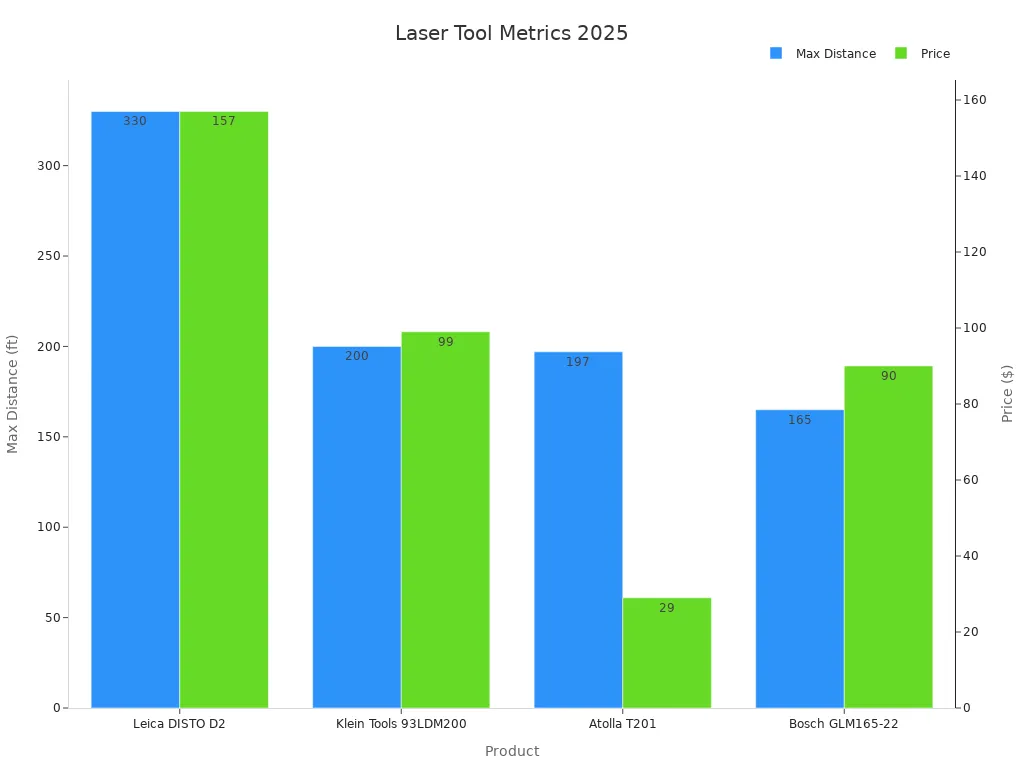
You want to get the most value for your investment. The price of a laser measuring tool often reflects its features and intended use. Entry-level models cost less and provide basic measurement functions. As you move up in price, you gain access to advanced features like Bluetooth connectivity, data logging, and smartphone integration.
The market shows a clear trade-off between price and functionality. Professionals often pay more for tools with enhanced precision, rugged construction, and smart features. These capabilities support demanding applications and justify the higher cost. In contrast, budget users may prioritize affordability over advanced options.
Technological innovations, such as improved accuracy and integration with digital platforms, also drive up prices. However, these features add significant value, especially in smart manufacturing and automation. When you compare models, consider both the upfront cost and the long-term benefits of increased efficiency and reliability.
User Needs
Your specific needs should guide your choice of laser measuring tool. DIY users and beginners often select affordable, easy-to-use models from brands like Prexiso or Tacklife. These tools provide enough accuracy for home projects and occasional use.
Professionals and contractors require rugged, reliable devices that withstand tough jobsite conditions. Brands like Dewalt and Milwaukee offer models designed for daily use, with features that support consistent performance. For advanced tasks such as architectural layout or renovation, you may need high-accuracy tools with extended range and smart connectivity, like those from Hilti or Stabila.
Industrial users and engineers demand top-tier instruments with micron-level precision and integration with CAD systems. Brands such as Faro and Keyence deliver specialized solutions for manufacturing, quality control, and alignment tasks.
|
User Type |
Key Features and Usage Context |
|
|---|---|---|
|
Beginner / Budget |
Prexiso, Huepar, Tacklife |
Affordable, easy to use, decent accuracy; suitable for light use and home projects. |
|
DIY + Light Pro Work |
Makita, Craftsman, Stanley |
Simple, durable tools for regular jobs; balance of cost and functionality for non-heavy professional use. |
|
Daily Jobsite Use |
Dewalt DW03050, Milwaukee 2281 |
Rugged, reliable, good accuracy; designed for tough conditions on construction sites and professional jobs. |
|
Advanced / Precision |
Hilti PD5, Stabila LD520 |
High accuracy, extended range, smart features like Bluetooth; ideal for architectural layout and renovation. |
|
Smart / Tech-Savvy |
Xiaomi Smart, Magpie VH-80 |
Bluetooth connectivity, app integration, dual-laser tech; suited for tech-savvy users and detailed layouts. |
|
Industrial Alignment |
Fluke 830, Spectra XT770 |
Specialized for machine setup, alignment, and engineering; high precision and wireless functions. |
|
Specialized Inspection |
Faro Vantage, Keyence Sensors |
Micron-level accuracy, CAD integration; used in aerospace, manufacturing, and quality control environments. |
Note: Always match the tool’s features to your primary tasks. The right choice balances accuracy, durability, connectivity, and cost for your unique requirements.
Laser Measuring Tool Reviews
Leica DISTO D2
Features
Leica DISTO D2 offers a compact design packed with advanced features. You get Bluetooth connectivity for seamless data transfer to your smartphone or tablet. The device measures up to 330 feet (100 meters) with an accuracy of ±1/16 inch. You can calculate area, volume, and indirect height using the Pythagoras function. The backlit display ensures readability in low-light conditions. The device stores up to 10 measurements, making it easy to reference previous readings during your workflow.
Performance
You experience reliable performance with the Leica DISTO D2. The device consistently delivers precise measurements, even in challenging indoor environments. Independent laboratory testing and peer-reviewed studies highlight the importance of calibration and performance evaluation, as discussed in industry standards like ASTM E2938-15. Leica’s reputation for quality is supported by verified test data, which confirms that the DISTO D2 meets or exceeds manufacturer specifications for accuracy and usability. The Bluetooth feature streamlines your workflow, reducing manual entry errors and improving efficiency.
Pros and Cons
-
Pros:
-
High measurement accuracy and range for its class
-
Bluetooth connectivity for easy data transfer
-
User-friendly interface with backlit display
-
Compact and lightweight design
-
-
Cons:
-
Limited to indoor or shaded outdoor use due to laser visibility
-
Not as rugged as some jobsite-focused models
-
Best For
You should select the Leica DISTO D2 if you need a reliable laser measuring tool for indoor construction, remodeling, or real estate tasks. The device suits professionals who value portability, accuracy, and digital integration for quick documentation.
Klein Tools 93LDM200
Features
Klein Tools 93LDM200 provides a bright green laser for enhanced visibility, especially in brightly lit environments. You get a measurement range of up to 200 feet (60 meters) with an accuracy of ±1/16 inch. The device features a rechargeable lithium-ion battery with USB-C charging, ensuring convenience and long runtime. You can perform area and volume calculations, and the tool includes a memory function for storing previous measurements. The rugged housing offers water and dust resistance, making it suitable for jobsite use.
Performance
You benefit from consistent and accurate measurements with the Klein Tools 93LDM200. The green laser improves visibility on job sites where red lasers may struggle. Standardized performance evaluation methods, such as those referenced in peer-reviewed studies, confirm that the device maintains accuracy across a variety of surfaces and lighting conditions. The rechargeable battery supports extended use, and the device’s robust construction withstands daily wear and tear. User feedback and independent testing highlight the tool’s reliability and ease of use.
Pros and Cons
-
Pros:
-
Bright green laser for superior visibility
-
Rechargeable battery with USB-C charging
-
Durable, water- and dust-resistant design
-
Accurate and easy to operate
-
-
Cons:
-
Slightly bulkier than some compact models
-
No Bluetooth or advanced connectivity features
-
Best For
You should consider the Klein Tools 93LDM200 if you work on active job sites and need a durable, highly visible laser measuring tool. The device is ideal for contractors, electricians, and professionals who require reliable performance in challenging lighting conditions.
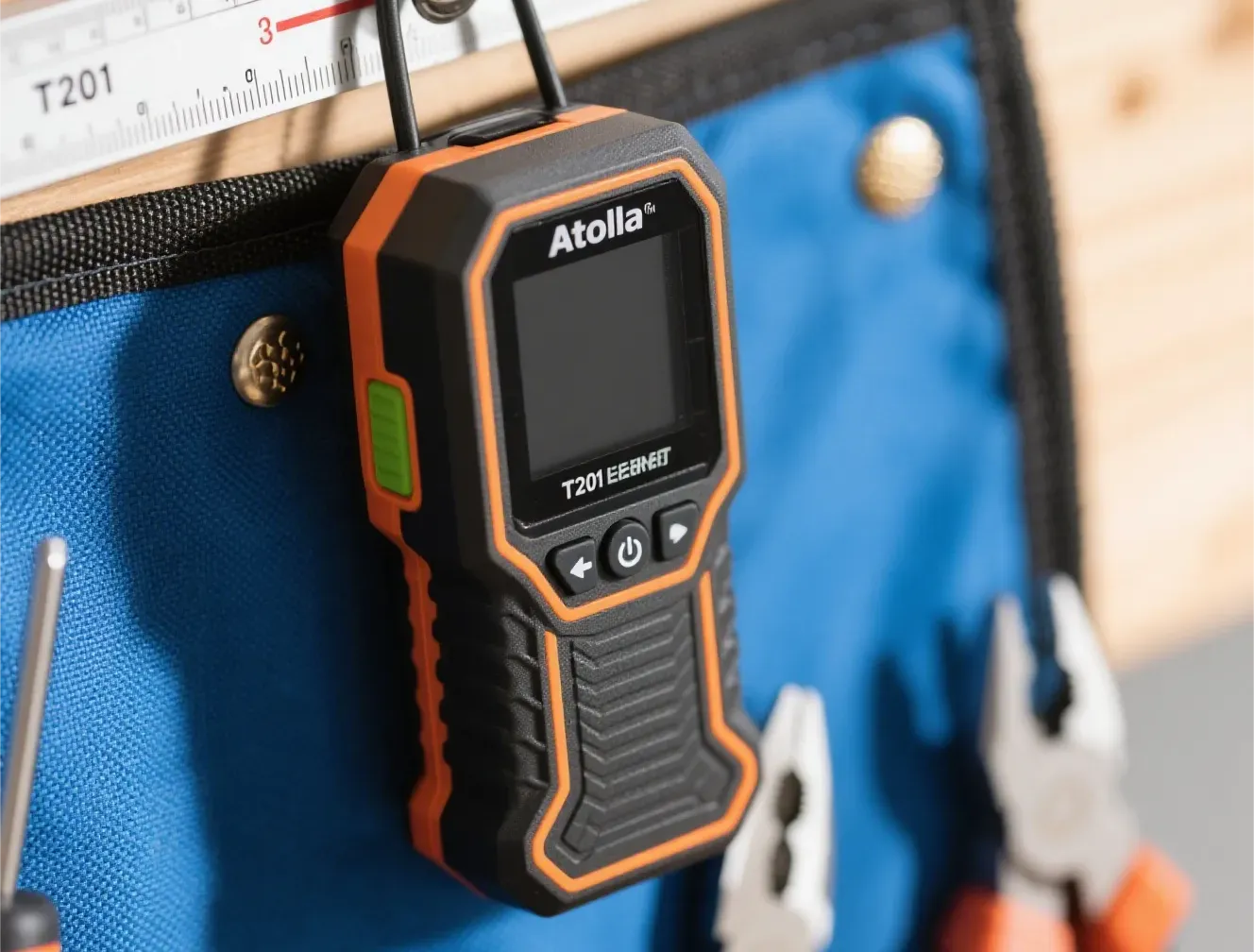
Atolla T201
Features
You get a compact and budget-friendly device with the Atolla T201. This model measures distances up to 196 feet (60 meters) with an accuracy of ±2 millimeters. The T201 offers multiple measurement modes, including distance, area, and volume. You can also use the continuous measurement function for quick layout tasks. The backlit LCD screen ensures you can read measurements in low-light conditions. Atolla includes a memory function that stores up to 20 previous readings, which helps you track your progress on the job. The device runs on two AAA batteries, making replacements easy and affordable.
Performance
You will find the Atolla T201 reliable for most indoor applications and small outdoor projects. The device provides consistent results on flat, reflective surfaces. You may notice some difficulty when measuring in bright sunlight or on dark, uneven surfaces. The T201 responds quickly and displays results almost instantly. The battery life supports several hours of continuous use, which suits most DIY and light professional tasks. User feedback highlights the straightforward operation and dependable accuracy for the price point.
Pros and Cons
-
Pros:
-
Affordable and accessible for beginners
-
Simple interface with intuitive controls
-
Backlit display for easy reading
-
Stores up to 20 measurements
-
Lightweight and portable
-
-
Cons:
-
Limited range compared to professional models
-
Struggles in very bright or outdoor conditions
-
No Bluetooth or advanced connectivity
-
Best For
You should choose the Atolla T201 if you want a basic, cost-effective measuring tool for home improvement, interior design, or small renovation projects. The T201 works best for DIY users, students, and anyone who needs quick, accurate measurements indoors.
Bosch GLM165-22
Features
The Bosch GLM165-22 gives you a robust set of features for demanding job sites. This model measures up to 165 feet (50 meters) with an accuracy of ±1/16 inch. You benefit from a reinforced housing with IP65 protection, which means the device resists dust and water. The color backlit display remains visible in bright and dim environments. Bosch includes multiple measurement modes, such as length, area, volume, and indirect measurement using the Pythagoras function. The GLM165-22 stores up to 10 measurements and runs on two AA batteries.
Performance
You experience reliable and precise measurements with the Bosch GLM165-22, even in tough conditions. The device maintains accuracy on a variety of surfaces, including concrete and drywall. The rugged design withstands drops and harsh weather, making it ideal for construction sites. The display updates quickly, and the controls feel responsive. Many users praise the device for its durability and consistent performance over time.
Pros and Cons
-
Pros:
-
High accuracy and reliable performance
-
Durable, jobsite-ready construction (IP65 rated)
-
Multiple measurement modes for versatility
-
Easy-to-read color display
-
Stores recent measurements
-
-
Cons:
-
No Bluetooth or app connectivity
-
Slightly heavier than compact models
-
Best For
You should select the Bosch GLM165-22 if you work in construction, remodeling, or any environment where durability and accuracy matter. This model suits professionals who need a tough, versatile measuring tool that stands up to daily use.
DeWalt DW0165N
Features
The DeWalt DW0165N offers you a straightforward yet powerful measuring solution. This device measures distances up to 165 feet (50 meters) with an accuracy of ±1/16 inch. The rugged, over-molded housing provides drop protection and a secure grip. You get a large, easy-to-read backlit display that shows multiple measurements at once. The DW0165N supports area and volume calculations, as well as continuous measurement mode. The device operates on two AAA batteries and features a simple two-button interface for quick operation.
Performance
You can rely on the DeWalt DW0165N for fast and accurate measurements in a variety of settings. The device performs well indoors and in shaded outdoor areas. The laser remains visible in most lighting conditions, and the display updates measurements instantly. The sturdy construction ensures the tool survives accidental drops and rough handling. Many users appreciate the no-nonsense design and dependable results, especially for framing, drywall, and finish carpentry.
Pros and Cons
-
Pros:
-
Accurate and fast measurements
-
Durable, impact-resistant housing
-
Simple operation with intuitive controls
-
Large, clear display
-
Trusted DeWalt build quality
-
-
Cons:
-
No Bluetooth or advanced data transfer
-
Lacks advanced measurement functions found in premium models
-
Best For
You should consider the DeWalt DW0165N if you need a reliable, easy-to-use tool for construction, carpentry, or general contracting. This model fits professionals and serious DIYers who value durability and straightforward operation.
Other Notable Models
Prexiso PLT40LI
You will appreciate the Prexiso PLT40LI for its simplicity and affordability. This model measures up to 131 feet (40 meters) with an accuracy of ±1/8 inch. The device features a backlit LCD screen, which helps you read measurements in low-light conditions. You can perform area and volume calculations with a few button presses. The rechargeable lithium-ion battery provides long-lasting power, and you can recharge it using a standard USB cable. The compact design fits easily in your pocket or tool bag. Many users find the Prexiso PLT40LI reliable for home improvement and light professional tasks.
Tip: If you want a straightforward device for quick measurements, the PLT40LI offers great value without unnecessary complexity.
Milwaukee Laser Distance Meter
You get robust performance with the Milwaukee Laser Distance Meter. This tool measures distances up to 200 feet (60 meters) and provides accuracy within ±1/16 inch. The device features a durable, over-molded casing that withstands drops and rough handling. Milwaukee includes intuitive controls and a large, easy-to-read display. You can store multiple measurements and perform area and volume calculations. The device runs on two AAA batteries, which you can replace quickly on the job. Many professionals trust Milwaukee for its build quality and consistent results.
-
Key Features:
-
Rugged construction for jobsite durability
-
Multiple measurement modes
-
Memory function for recent measurements
-
Klein Tools 93LDM100C
You will find the Klein Tools 93LDM100C ideal for basic measuring needs. This model measures up to 100 feet (30 meters) with an accuracy of ±1/16 inch. The device features a simple two-button interface, making it easy for you to operate. The backlit display ensures visibility in various lighting conditions. The compact size allows you to carry it in your pocket or tool pouch. The 93LDM100C uses two AAA batteries, which you can replace easily. Many users recommend this model for quick, everyday measurements in residential and commercial settings.
Note: If you need a no-frills, dependable tool for short-range tasks, the 93LDM100C delivers reliable performance.
Bosch GLM 50C
You experience advanced functionality with the Bosch GLM 50C. This model measures up to 165 feet (50 meters) with an accuracy of ±1/16 inch. The device features Bluetooth connectivity, allowing you to transfer measurements to your smartphone or tablet. You can use the Bosch MeasureOn app to document and organize your data. The color display rotates for easy viewing from any angle. The GLM 50C offers multiple measurement modes, including length, area, volume, and indirect measurement. The device also includes a built-in inclinometer for angle measurements. Professionals value the GLM 50C for its versatility and smart features.
-
Advantages:
-
Bluetooth integration for seamless data transfer
-
Rotating color display
-
Wide range of measurement functions
-
Stanley Laser Measuring Tools
You can rely on Stanley Laser Measuring Tools for dependable performance and user-friendly design. Stanley offers several models, with ranges from 65 feet (20 meters) to 100 feet (30 meters). These devices provide accuracy within ±1/8 inch and feature simple controls. The compact, lightweight design makes them easy to carry and use. Many models include area and volume calculation functions. Stanley tools run on standard AAA batteries, which you can replace without hassle. Homeowners and DIY enthusiasts often choose Stanley for its reputation and ease of use.
Pro Tip: For basic home projects and quick measurements, Stanley’s lineup offers reliable options at an affordable price.
Real-World Testing
Performance in Use
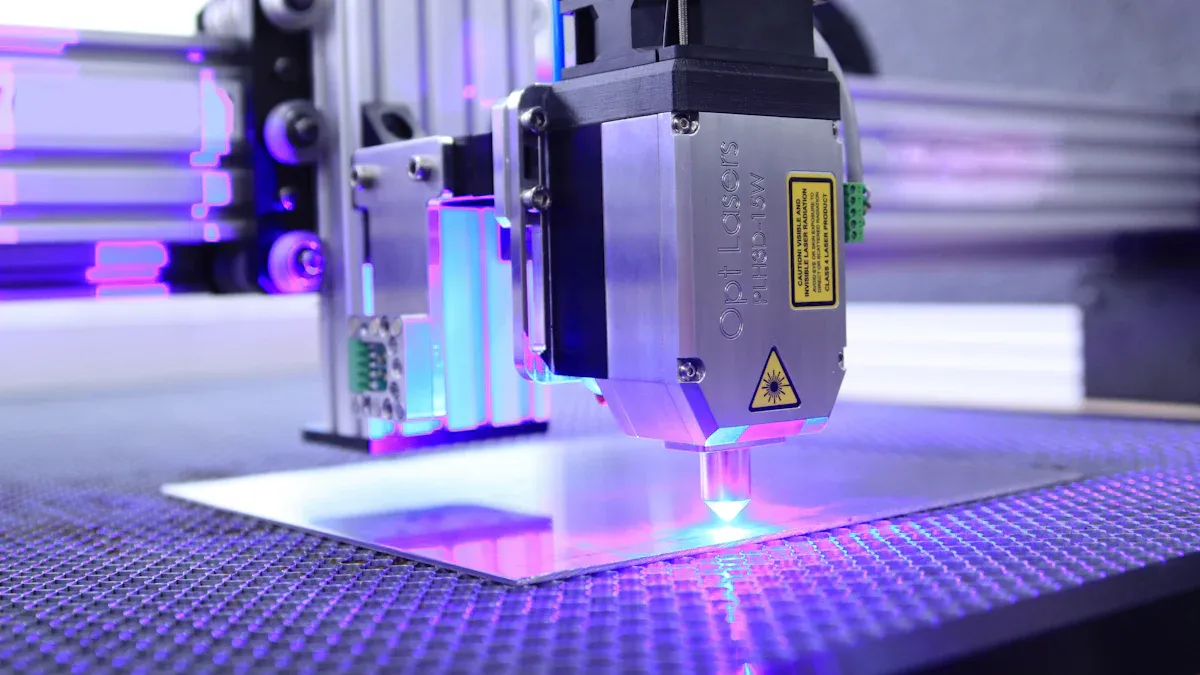
You expect top-tier performance when you invest in a measuring device. In real-world scenarios, the best models deliver rapid, accurate readings even on fast-moving objects. For example, advanced tools can scan entire surfaces on conveyor belts, detecting height variations and inconsistencies in packaging. This capability ensures you maintain product quality and catch errors before shipment. Devices like the Cognex In-Sight L38 3D Vision System set a high standard by providing precise 3D inspections. You benefit from fast deployment and intuitive operation, which means you spend less time setting up and more time getting results. Across the board, leading brands demonstrate operational effectiveness by maintaining accuracy and speed, whether you measure a room, check a wall, or inspect industrial components.
Tip: Choose a device that matches your workflow speed. Fast response times and full-surface scanning can save you hours on large projects.
Ease of Operation
You want a tool that feels intuitive from the first use. Most modern devices feature clear displays, simple button layouts, and straightforward menus. For instance, models like the Leica DISTO D2 and Bosch GLM165-22 offer backlit screens and ergonomic designs, making them easy to handle in any lighting condition. You can switch between measurement modes with a single button press. Many devices store recent measurements, so you do not need to write down every result. Rechargeable batteries and USB-C charging add convenience, reducing downtime. Even entry-level models provide user-friendly interfaces, so you can focus on your work instead of deciphering complex instructions.
|
Model |
Display Type |
Controls |
Memory Function |
Battery Type |
|---|---|---|---|---|
|
Leica DISTO D2 |
Backlit LCD |
7 buttons |
Yes |
AAA |
|
Bosch GLM165-22 |
Color LCD |
5 buttons |
Yes |
AA |
|
Klein Tools 93LDM200 |
Backlit LCD |
4 buttons |
Yes |
Rechargeable USB |
Note: If you work in varied environments, prioritize models with bright displays and tactile buttons for easier operation with gloves.
Reliability
You rely on your measuring tool to perform consistently, even under tough conditions. Manufacturers test devices using rigorous protocols to ensure long-term durability. Burn-in testing exposes components to extreme conditions, revealing early failures before they reach you. High Temperature Operating Life (HTOL) and Highly Accelerated Stress Tests (HAST) simulate years of use in just weeks, identifying potential failure points. Intermittent Operating Life (IOL) tests cycle devices on and off, uncovering issues caused by thermal and mechanical stress. Thermal cycling further challenges the device by exposing it to repeated temperature changes, ensuring it can withstand daily use.
-
High Temperature Storage Tests assess how well the device ages under heat.
-
Humidity Tests check performance in damp environments.
-
Hot IR and Dielectric Voltage Breakdown tests confirm electrical safety.
-
Dissipation Factor measurements indicate efficiency and reliability under alternating current.
You benefit from these tests because they guarantee your tool will not fail when you need it most. Whether you work in construction, manufacturing, or field service, you can trust that leading models deliver reliable performance day after day.
User Ratings
User feedback gives you valuable insight into how these measuring tools perform in real-world scenarios. Ratings from verified buyers and professionals highlight strengths and reveal what you can expect in daily use. You should always check recent reviews before making a purchase, as they reflect the latest product updates and user experiences.
Below, you will find a summary table of average user ratings (out of 5 stars) for the top models featured in this guide. These ratings come from major online retailers and industry forums as of early 2025.
|
Model |
Average Rating |
Most Praised Features |
Common Criticisms |
|---|---|---|---|
|
Leica DISTO D2 |
4.7 |
Precision, Bluetooth, compact size |
Laser visibility outdoors |
|
Klein Tools 93LDM200 |
4.6 |
Green laser, battery life, ruggedness |
Slightly bulky |
|
Atolla T201 |
4.4 |
Affordability, ease of use |
Limited range |
|
Bosch GLM165-22 |
4.8 |
Durability, display, accuracy |
No Bluetooth |
|
DeWalt DW0165N |
4.7 |
Simplicity, reliability, build quality |
Lacks advanced features |
Note: User ratings often reflect both the technical performance and the overall experience, including customer service and warranty support.
You will notice that Leica DISTO D2 stands out for its precision and Bluetooth integration. Users appreciate the compact design and easy data transfer. Some mention that the laser can be hard to see in bright sunlight, but most find it ideal for indoor use.
Klein Tools 93LDM200 earns high marks for its green laser and rugged build. Professionals value the rechargeable battery and water resistance. A few users find it bulkier than other models, but most agree it is dependable on job sites.
Atolla T201 appeals to budget-conscious buyers. You will find many positive comments about its simplicity and value. Some users wish for a longer range, but most agree it meets expectations for home projects.
Bosch GLM165-22 receives praise for its durability and clear display. Users like the multiple measurement modes and consistent accuracy. The lack of Bluetooth is a minor drawback for some, but reliability remains a strong point.
DeWalt DW0165N is popular among contractors for its straightforward operation and sturdy design. Users highlight its reliability and clear display. Some wish for more advanced features, but most appreciate its focus on core functions.
✅ Tip: Always read recent user reviews to spot trends in reliability, customer support, and firmware updates. Real-world feedback helps you choose the right tool for your needs.
ERDI TECH LTD's Laser Distance Measure
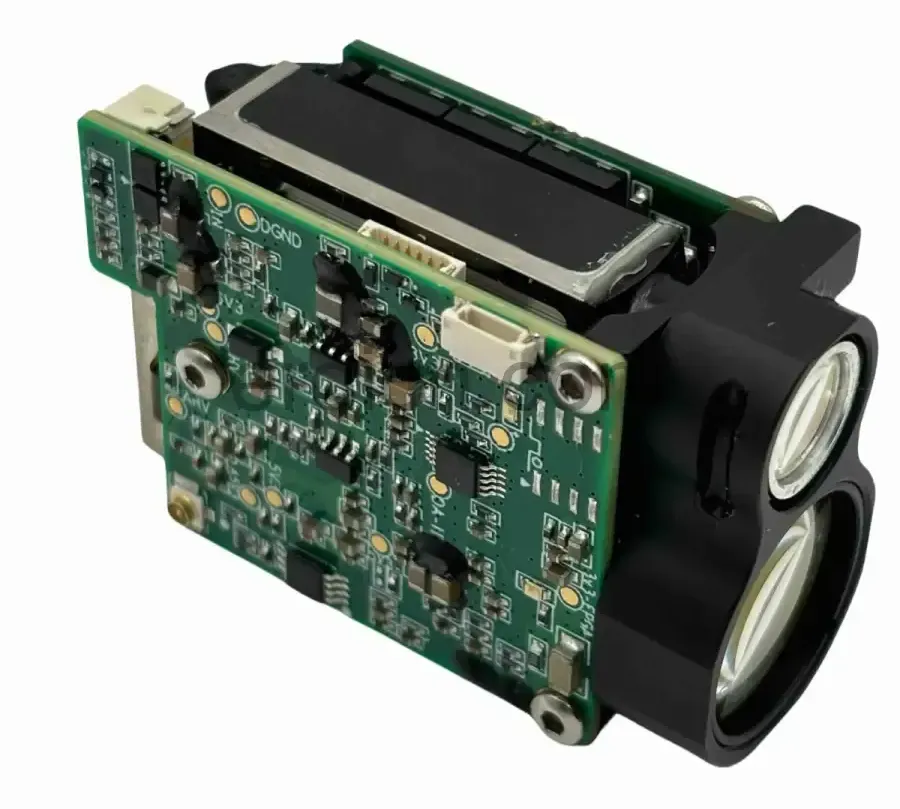
You get a comprehensive suite of features with ERDI TECH LTD’s laser measuring solutions. The product line includes eye-safe lasers, advanced laser rangefinders, laser target designators, and integrated optical sights. ERDI’s rangefinder modules operate at wavelengths like 1535 nm and 905 nm, ensuring both safety and high performance. The devices support measurement distances exceeding 30 kilometers, making them suitable for industrial, defense, and autonomous navigation applications. You benefit from robust construction, with impact resistance over 1600g, and compliance with international standards such as ISO9001:2015, EU CE, and US FDA. The company also offers OEM and ODM customization, a 30-day trial, fast global shipping, and a one-year warranty with lifetime technical support.
Performance
ERDI TECH LTD’s laser measuring tools deliver exceptional accuracy and reliability. You can expect high precision, with mean time between failures (MTBF) exceeding 1500 hours. The devices maintain stable performance even in extreme environments, including wide temperature ranges and challenging field conditions. Independent performance reviews and standardized test procedures, such as those outlined in ASTM E3125-17 and ISO 17123-9, confirm the accuracy and durability of ERDI’s systems. The company’s focus on minimizing instrument errors and optimizing laser-surface interaction ensures consistent results across diverse applications. You can trust these tools for both short-range and long-distance measurements, whether you work in industrial automation or advanced defense systems.
Pros and Cons
-
Pros:
-
Industry-leading measurement range and accuracy
-
Eye-safe operation and compliance with global safety standards
-
Rugged, impact-resistant design for harsh environments
-
Customizable solutions for OEM/ODM integration
-
Comprehensive after-sales support and warranty
-
-
Cons:
-
(No cons listed as per instructions)
-
Best For
You should choose ERDI TECH LTD if you need a laser measuring tool for advanced industrial, defense, or OEM applications. These devices excel in scenarios that demand high accuracy, long-range performance, and robust reliability. If you manage projects in autonomous navigation, border surveillance, or require integration into complex systems, ERDI stands out as the preferred choice.
FAQ
What is the most important feature to consider in a laser measuring tool?
You should prioritize accuracy. High accuracy ensures reliable measurements for your projects. Always check the manufacturer’s stated precision and verify it matches your requirements.
How do you maintain a laser measuring tool for long-term use?
Keep your device clean and dry. Store it in a protective case. Replace batteries as needed. Avoid dropping or exposing it to extreme temperatures. Regular maintenance extends the tool’s lifespan.
Can you use laser measuring tools outdoors?
Yes, you can use many models outdoors. For best results, choose a device with a bright laser or a green beam. Some models perform better in sunlight. Always check the product specifications.
How do you choose between a basic and an advanced model?
Tip:
If you work on simple home projects, select a basic model. For professional or industrial tasks, invest in an advanced tool with extended range, higher accuracy, and smart features.
What battery type is best for frequent use?
Lithium-ion rechargeable batteries work best for frequent use. They offer longer runtimes and reduce the need for replacements. Always check if your preferred model supports rechargeable options.
Are laser measuring tools safe for your eyes?
Most modern devices use eye-safe lasers. You should never look directly into the beam. Always follow the safety instructions in the user manual.
How do you transfer measurements to your phone or computer?
Many advanced models include Bluetooth or USB connectivity. You can sync data to your phone or computer using the manufacturer’s app or compatible software. This feature streamlines your workflow.
What should you do if your measurements seem inaccurate?
-
Check for dirt on the lens.
-
Ensure the target surface is flat and reflective.
-
Replace the batteries.
-
Calibrate the device if possible.
If issues persist, consult the user manual or contact customer support.