
This article reflects industry-level analysis of security and autonomous systems. It does not promote or evaluate specific commercial products.
Introduction: Global Security Is Shifting from Detection to Decision
Across modern defense, border security, and autonomous systems, the challenge is no longer simply detecting a target or anomaly. The real determinant of operational success lies in how quickly and accurately a system can transform sensor data into reliable decisions.
Whether confronting low-altitude unmanned aerial systems (UAS), monitoring vast and complex borders, or enabling autonomous platforms to operate in contested environments, security architectures increasingly depend on high-confidence distance and spatial data. Precision ranging has therefore moved from a supporting function to a foundational system capability.
This report synthesizes recent developments in counter‑UAS, autonomous platforms, and border surveillance to examine why accurate ranging data is becoming a critical enabler of modern security and autonomy.
1. Counter‑UAS Systems: Why Distance Accuracy Determines Intercept Success
In counter-UAS operations, distance accuracy is not a measurement detail. It directly shapes engagement timing, intercept geometry, and overall system effectiveness. The rapid proliferation of low-cost, low-altitude drones has fundamentally altered airspace security. These targets are often characterized by small radar cross-sections, irregular flight paths, and operation within cluttered environments.
In this context, detection alone is insufficient. Counter‑UAS systems must rapidly determine:
- Whether a detected object represents a credible threat
- Its precise spatial position and trajectory
- The optimal engagement window for mitigation or interceptio
Accurate ranging data directly influences fire‑control calculations, threat classification, and system response timing. Even modest distance errors can propagate into significant targeting inaccuracies, reducing intercept probability or increasing the risk of collateral effects.
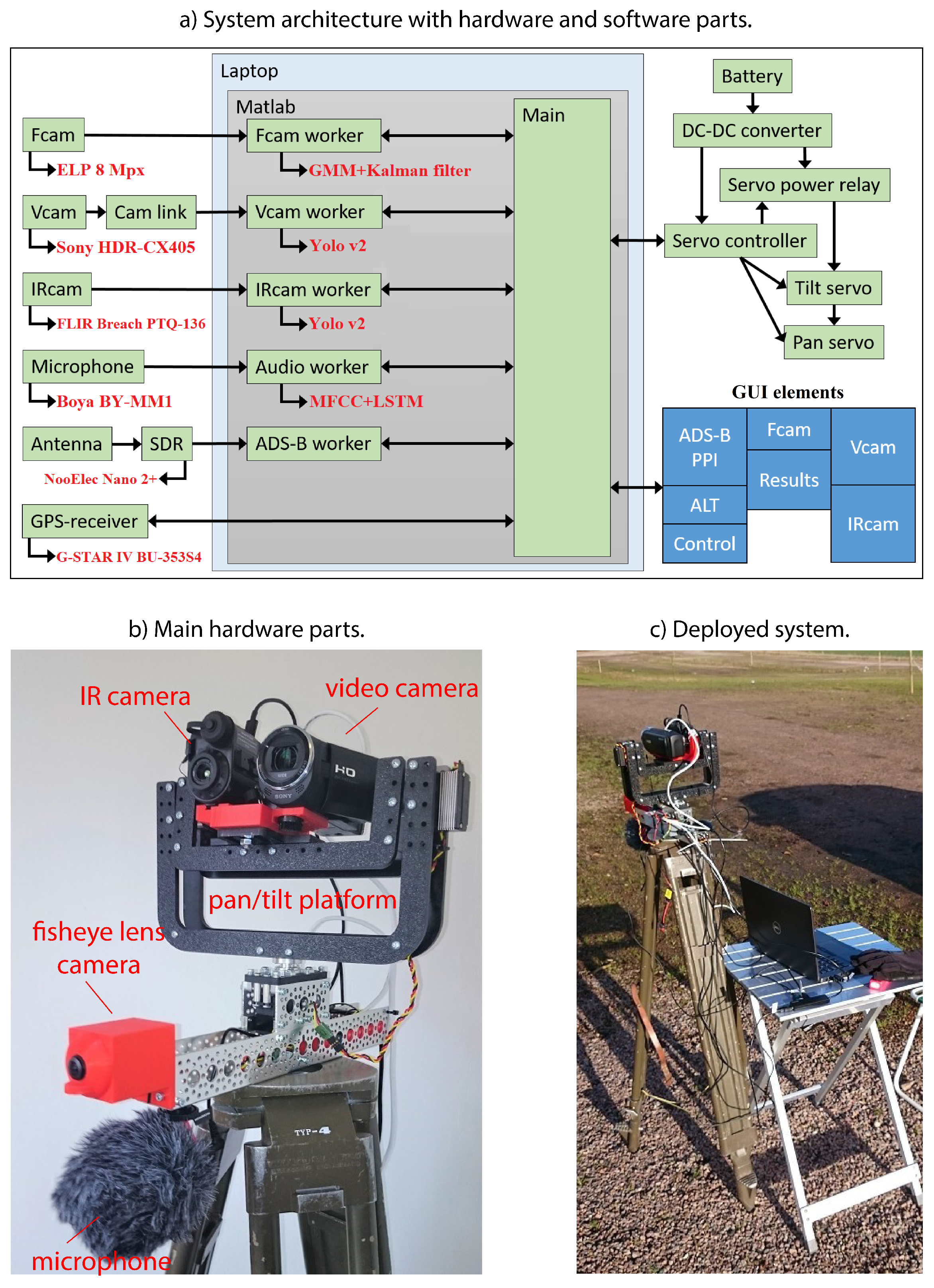
![MODEAS – a Counter-UAV System with Optical and Radar Sensors[v1] | Preprints.org](https://img-va.myshopline.com/image/store/1728356751512/ba16ff40cae24938aa440d8ca3b8011e.png?w=3144&h=1653)
As a result, modern counter‑UAS architectures increasingly prioritize precision ranging as a decision-quality input, rather than treating it as a secondary measurement.
2. Autonomous UAVs: Precision Ranging as a Prerequisite for Autonomy
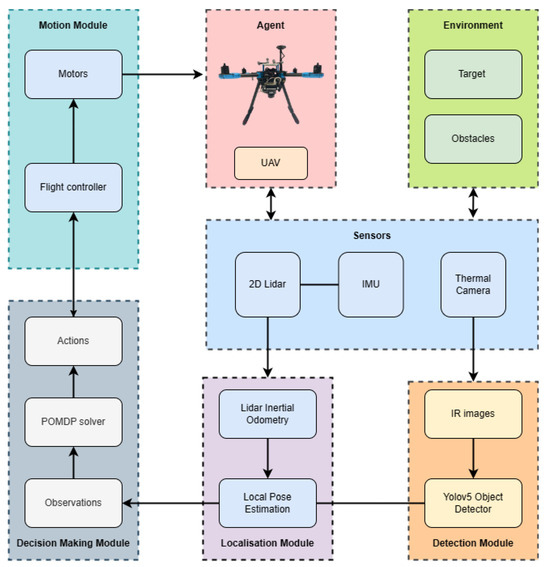
Autonomous aerial systems rely on layered capabilities: perception, interpretation, and decision-making. Among these, perception quality sets the upper limit for all higher-level autonomy.
High-precision ranging contributes to autonomy in several critical ways:
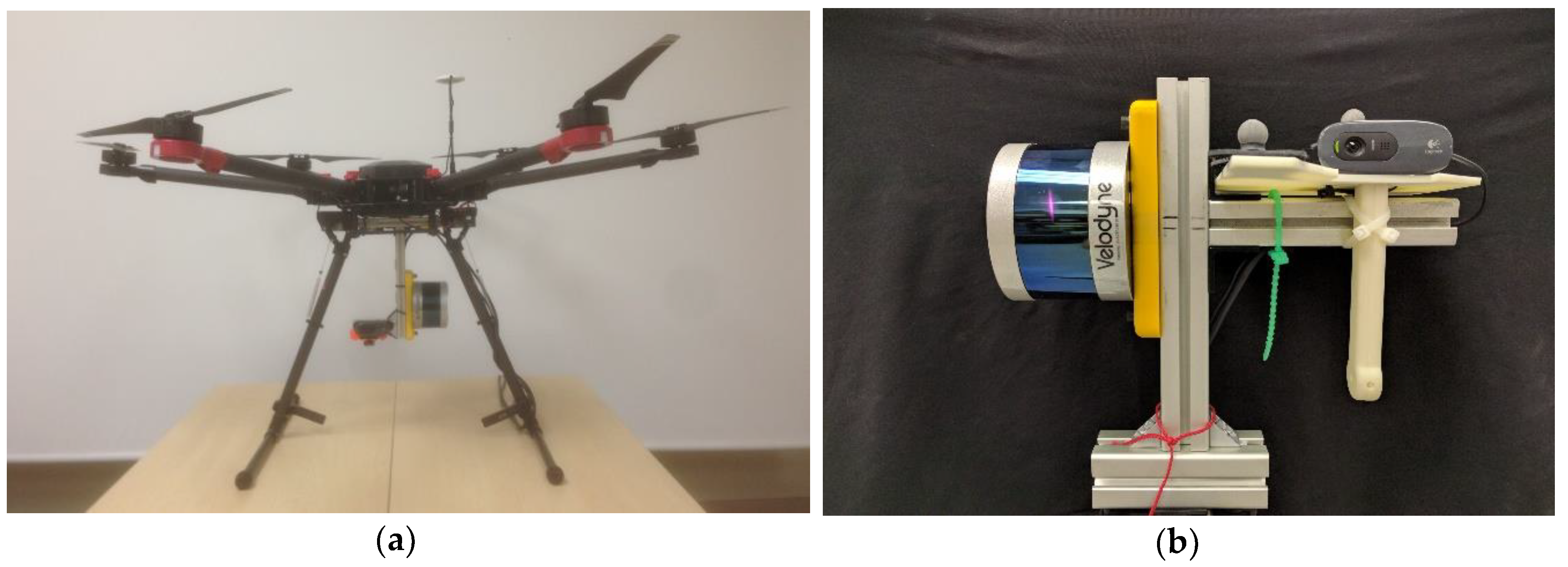
-
Three-dimensional environmental modeling
-
Collision avoidance and terrain-following
-
Cooperative operations and formation flight
-
Navigation resilience in degraded or denied GNSS environments
As autonomy levels increase, tolerance for uncertain or low-resolution spatial data decreases. Industry trends indicate that ranging data is evolving from an auxiliary sensor input into a core element of autonomous decision logic, particularly in safety‑critical or defense-related missions.
3. Border Surveillance: Long Range Without Compromising Precision
Global border and perimeter security systems are undergoing rapid modernization. Authorities face growing pressure to monitor wider areas while maintaining reliable identification and low false-alarm rates.
Traditional long-range surveillance solutions often involve trade-offs between coverage and accuracy. However, advances in precision ranging technologies are helping close this gap by enabling:
- Accurate distance measurement at extended ranges
- Improved target discrimination and behavior analysis
- Enhanced coordination between optical, infrared, and radar sensors
In border surveillance, precise ranging supports not only detection but also contextual understanding—distinguishing between benign activity and genuine security threats in complex environments.
4. Industry-Wide Shift: From Hardware Metrics to System Capability
Across defense and security domains, a clear pattern is emerging. Evaluation criteria are shifting away from isolated hardware specifications toward system-level performance and data reliability.
Key industry trends include:
-
Multi-sensor fusion replacing single-sensor optimization
-
Algorithm-driven decision-making demanding high-integrity inputs
-
Greater emphasis on stability, repeatability, and resistance to environmental interference
Precision ranging is increasingly assessed not by peak performance claims, but by its ability to deliver consistent, trustworthy data under real operational conditions.
5. Outlook: The Next 3–5 Years
Looking ahead, several developments appear likely:
- Precision ranging will become a baseline requirement in counter‑UAS architectures
- Autonomous platforms will integrate ranging data more deeply into navigation and control loops
- Border security systems will rely on accurate distance data to reduce false alarms and improve response efficiency
Competitive differentiation in the sector will move beyond maximum range or output power toward data quality, system compatibility, and operational robustness.
Conclusion: Precision Ranging as a Strategic Enabler
Over the next three to five years, precision ranging will increasingly be evaluated as a system-level enabler rather than a standalone sensor capability. Modern security and autonomy systems are evolving from device-centric designs toward integrated, data-driven architectures. In this transformation, precision ranging is no longer a supplementary feature—it is a strategic enabler of reliable perception and effective decision-making.
As global security challenges grow more complex, systems capable of delivering accurate, dependable ranging data will play a decisive role in shaping the next generation of integrated security and autonomous operations.
Weekly Global Security & Autonomy Report is an independent insight series focused on security architecture, autonomous systems, and technology integration trends.
Related Articles:
How Global Border Security Upgrades Drive Demand for Long-Range Laser Rangefinders
Why Long-Range Laser Rangefinder Is Becoming Essential in Border Surveillance
Global Trends in Defense and Autonomous UAVs 2026: Why Laser Ranging Matters
Advanced Laser Ranging & Counter-Drone Integration: Key Defense Technology Trends in 2026
Why Precise Laser Ranging Data Is Critical for Modern Anti-UAV Systems